
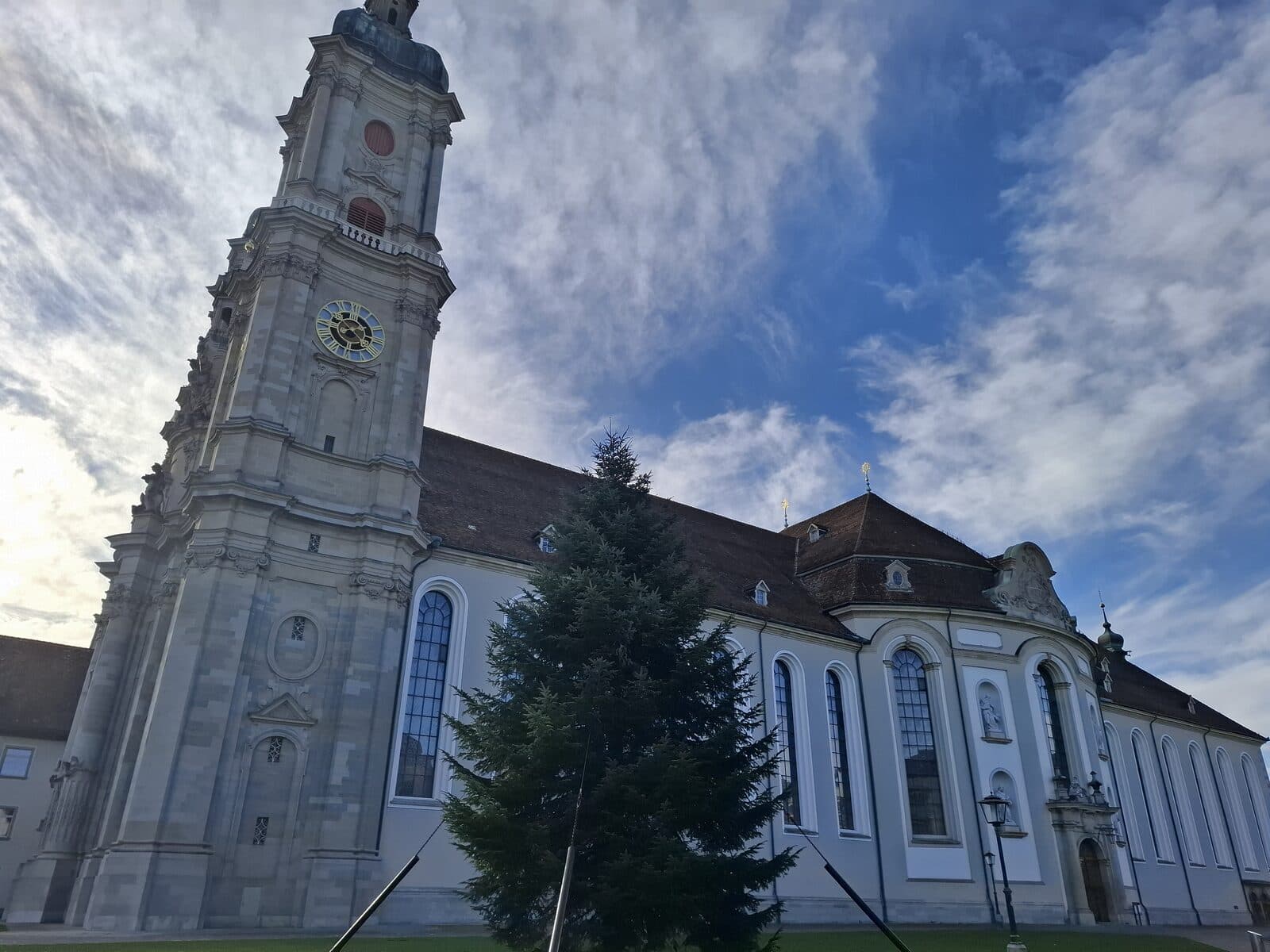
1. Overview — the Canton of St. Gallen in the migration-law context
The Canton of St. Gallen (SG) is a populous canton of eastern Switzerland. Its capital is the city of St. Gallen. The cantonal administration belongs to the German-speaking area; the primary procedural and official language in residence-law dealings is German (standard German). This linguistic allocation is significant in migration law because it determines the national language relevant in the procedure for language proofs (section 5) and for naturalisation (section 7).
St. Gallen is among the more populous Swiss cantons, and the share of the foreign resident population lies, in a nationwide comparison, in the medium to upper range — on the order of magnitude of roughly a quarter of the resident population. An exact rate is deliberately not stated here, because it varies depending on the reference date and the statistical delimitation (permanent resident population, inclusion of asylum and short-term relationships); the current, dated key figure is to be obtained from the official statistics of the Federal Statistical Office (FSO) and of the Canton of St. Gallen. This demographic classification is purely descriptive and has no legal significance for an individual authorisation, extension or naturalisation procedure.
Descriptively, the Canton of St. Gallen can be characterised as a significant eastern Swiss canton with the UNESCO-listed Abbey precinct; the economy is diversified (among other things industry, services, education and research), and the University of St. Gallen (HSG) has international reach. This presentation serves exclusively for general orientation and is not a migration-law reason to choose this canton as a place of residence or of application.
The cantonal authority competent for all residence-law procedures is the Migrationsamt des Kantons St.Gallen (cantonal migration office of the Canton of St. Gallen). The current postal address, telephone number, email address, the counter opening hours as well as the public-transport connections are to be obtained from the official authority website and to be confirmed there before making contact:
Migrationsamt des Kantons St.Gallen Official authority website: https://www.sg.ch/migrationsamt (Postal address, telephone, email, counter opening hours and public-transport connections are shown there up to date.)
The central official point of contact for directories of all cantonal migration authorities is, in addition, the State Secretariat for Migration (SEM).
2. Legal bases — federal law and cantonal implementing law
2.1 Applicable federal law
In migration law, the Canton of St. Gallen — like all cantons — applies federal law as a matter of priority. Each enactment is identified at its first mention with its full designation and systematic compilation of federal law number (SR):
- the Federal Act on Foreign Nationals and Integration (Foreign Nationals and Integration Act, FNIA, SR 142.20), namely admission to gainful employment (Art. 18 FNIA), admission to education and continuing education (Art. 27 FNIA), the hardship case (Art. 30 para. 1 let. b FNIA), the regulation of residence and its extension (Art. 33 FNIA), the granting of the settlement permit (Art. 34 para. 2 FNIA) and its early granting in the case of successful integration (Art. 34 para. 4 FNIA), the change of canton (Art. 37 FNIA), family reunification (Art. 42–47 FNIA), continued residence after dissolution of the marriage (Art. 50 FNIA), the integration agreement and recommendation (Art. 58a FNIA and Art. 58b FNIA), the revocation and lapse of permits (Art. 62 FNIA and Art. 63 FNIA) as well as the Confederation's approval requirement (Art. 99 FNIA);
- the Ordinance on Admission, Residence and Gainful Employment (OASA, SR 142.201), namely the hardship-case criteria (Art. 31 OASA), the language-competence provisions (Art. 60a OASA), the family-reunification deadlines (Art. 73 OASA), the language proof for early settlement (Art. 77d OASA) as well as the approval situations (Art. 85 OASA and Art. 86 OASA);
- the Agreement on the Free Movement of Persons (Agreement on the Free Movement of Persons Switzerland–EU, AFMP, SR 0.142.112.681) with the associated Ordinance on the Introduction of the Free Movement of Persons (OFMP, SR 142.203) for the admission of EU/EFTA nationals;
- the Asylum Act (AsylA, SR 142.31), namely the distribution key among the cantons (Art. 27 AsylA) and legal counselling and legal representation in the asylum procedure (Art. 102f AsylA);
- the Federal Act on Swiss Citizenship (Swiss Citizenship Act, SCA, SR 141.0) as well as — as a separate instrument — the Ordinance on Swiss Citizenship (Citizenship Ordinance, SCO, SR 141.01). At the level of the act, the SCA governs the ordinary period of residence (Art. 9 SCA) and the integration criteria (Art. 11 SCA and Art. 12 SCA); the concretising language requirements, by contrast, are located at the ordinance level in the Citizenship Ordinance (Art. 6 SR 141.01);
- for victim protection, the Federal Act on Assistance to Victims of Crime (Victim Support Act, VSA, SR 312.5).
For the in-depth legal exposition see the FNIA and OASA glossary, the AFMP/OFMP glossary and the Asylum Act glossary.
2.2 Cantonal implementing law
At the cantonal level, generic enactments give concrete form to the implementation of federal law. Since federal law sets the substantive framework largely conclusively, cantonal law is essentially limited to organisation, procedure and competence:
- the cantonal implementing law on the FNIA (St. Gallen introductory and implementing provisions on the Foreign Nationals and Integration Act), which governs the cantonal competences and implementation competences;
- the cantonal citizenship law (St. Gallen concretisation of the naturalisation procedure at cantonal and communal level; see section 7);
- the cantonal administrative-justice law (procedural law for proceedings and remedies before the cantonal administrative authorities).
The formal designations and the respective enactment numbers of these cantonal enactments are to be obtained from the official systematic compilation of laws of the Canton of St. Gallen; they are authoritative there in their version in force in each case and may change.
3. Competent authority — contact and accessibility
The competent cantonal foreign-nationals authority is the Migrationsamt des Kantons St.Gallen (cantonal migration office of the Canton of St. Gallen). It handles the ordinary foreign-nationals-law procedures of the permanent resident population — the granting, extension and revocation of permits, family reunification, status changes as well as the cantonal preparation of naturalisation and asylum-coordination steps.
The binding contact details — postal address, telephone number, general and section-specific email addresses, counter opening hours and public-transport connections — are maintained up to date on the official authority website and are to be confirmed there before any contact:
- Official authority website and online portal: https://www.sg.ch/migrationsamt
- Directory of all cantonal migration authorities (Confederation): State Secretariat for Migration (SEM), https://www.sem.admin.ch
Via the online portal of the migration office, various procedural steps can be initiated digitally (for example extensions, address changes or form handling). The exact, current scope of the procedures available online as well as any appointment reservation follow from the portal itself.
4. Procedural duration — cantonal benchmark figures
The table below states non-binding benchmark figures which, depending on the state of the file, the completeness of the documents, the workload of the competent section and the complexity of the individual case, may vary considerably. It is oriented towards a processing order of magnitude of around 6 weeks for common procedures (initial B application tends to be longer, B extension tends to be shorter). This order of magnitude is an orientation value and not a guaranteed deadline; the processing times communicated up to date by the migration office in each case are decisive.
| Procedure | Benchmark duration (order of magnitude, hedged) |
|---|---|
| Initial B application | tends to be longer than around 6 weeks |
| B extension | tends to be shorter than around 6 weeks |
| Ordinary C application (after 10 years, Art. 34 para. 2 FNIA) | around 6 weeks, case-dependent |
| Early C application (after 5 years, Art. 34 para. 4 FNIA) | case-dependent |
| Family reunification (third state, Art. 42–47 FNIA) | case-dependent, tends to be longer |
| Hardship case (Art. 30 para. 1 let. b FNIA in conjunction with Art. 31 OASA) | considerably longer, multi-stage |
Important reservation: all benchmark figures are non-binding and must be checked before use against the official information of the migration office; the official authority website is decisive. The approval by the SEM of cantonal preliminary decisions (Art. 99 FNIA in conjunction with Art. 85 OASA and Art. 86 OASA) is not included in the above benchmark figures and may, in approval-subject constellations, require additional weeks to months.
Anti-scope: SwissImmigrationPro provides no strategy for procedural acceleration, no templates for acceleration letters and no submissions concerning delay of justice or denial of justice. Such submissions belong to the practice of the lawyer.
5. Language proof
The decisive language for the proof in the Canton of St. Gallen is German (standard-German variant; Swiss German is not examination-relevant). The minimum language standards follow from federal law (Art. 60a OASA and Art. 77d OASA) and the relevant SEM directives; the levels below reflect the minimum order provided for under federal law, as applied at the cantonal level.
- Family reunification from a third state: for the granting of a B permit in family reunification from a third state, a proof of German at level A1 oral in accordance with the Common European Framework of Reference for Languages (CEFR) must as a rule be furnished; alternatively, proof of a registration confirmation for a language-promotion course suffices in the constellations provided for that purpose.
- Early settlement permit C (Art. 34 para. 4 FNIA in conjunction with Art. 60a OASA and Art. 77d OASA): here, increased language competences at level B1 oral and A2 written are required.
The precise configuration of the language requirements — in particular the question of how these levels are applied to EU/EFTA nationals on the one hand and third-state nationals on the other — follows the SEM directive in force in each case and may evolve; decisive is the directive situation in force at the time of the application. The levels mentioned in the present content reflect the position as at the date of validity.
Officially recognised proof accepted is in particular the fide certificate in the German language; alongside this, the diplomas and attestations mentioned in Art. 77d OASA are valid (for example telc, Goethe and ÖSD certificates at the corresponding level). The proofs concretely recognised in the individual case and any cantonal interpretations of the federal-law minimum standards are to be confirmed via the migration office.
6. Standard permit practice B / L / C
The Canton of St. Gallen implements the federal-law standard permit practice under the FNIA and OASA as well as under the relevant SEM directives:
- L permit (short-term residence): for temporally limited gainful activities and temporary residence purposes; admission to gainful employment under Art. 18 FNIA (third state) or under the AFMP/OFMP (EU/EFTA).
- B permit (residence): the most frequent permit category; gainful employment under Art. 18 FNIA, education and continuing education under Art. 27 FNIA, family reunification under Art. 42–47 FNIA, in each case with the federal-law conditions.
- C permit (settlement): ordinary granting after ten years (Art. 34 para. 2 FNIA); early granting after five years in the case of successful integration (Art. 34 para. 4 FNIA). The early granting lies within the discretion of the cantonal authority. The aspects drawn upon within the framework of the integration assessment typically include — by way of illustration and not exhaustively — the increased language competences mentioned in section 5, participation in economic life without permanent reliance on social assistance, orderly financial circumstances as well as compliance with public security and order (integration criteria under Art. 58a FNIA). Whether these conditions are met in the concrete case is assessed by the competent authority alone.
Descriptively, it can be noted that the migration office handles a considerable case volume and that the canton has an integration-promotion programme; the university presence (HSG) brings international students and researchers. These notes are purely descriptive and contain neither an evaluation of the cantonal practice nor a permit strategy.
Cantonal fees are levied for the procedures. The fee tariff in force in each case is to be obtained, in binding form, from the official authority website of the migration office.
Anti-scope: SwissImmigrationPro provides no permit-strategy advice relating to an individual case (for example on the argumentation of an early C granting or on family-reunification strategy). The case-dependent presentation of evidence belongs to the practice of the lawyer or to the assessment by the competent authority.
7. Naturalisation
7.1 Three-tier procedure
Ordinary naturalisation follows a three-tier procedure, whose tiers must be authorised cumulatively: federal (granting of the Confederation's naturalisation authorisation under the SCA and SCO), cantonal (citizenship of the Canton of St. Gallen under the cantonal citizenship law) and communal (citizenship of the commune of residence). If one of the three tiers is lacking, no naturalisation comes about.
7.2 Federal-law conditions
At the federal level, the conditions of the SCA (in the version in force since 1.1.2018) and of the SCO apply. At the act level (SCA) these include in particular the ordinary period of residence of ten years in Switzerland (Art. 9 SCA), successful integration and familiarity with Swiss living conditions (Art. 11 SCA and Art. 12 SCA) as well as the requirement that the internal or external security of Switzerland is not endangered. The concretising language requirements, by contrast, are governed at the ordinance level (SCO): required is a proof in a national language at level B1 oral and A2 written (Citizenship Ordinance, Art. 6 SR 141.01; in the Canton of St. Gallen: German). The SCA and SCO are to be read in this respect as two separate enactments — the act for the substantive conditions, the ordinance for their concretisation.
7.3 Cantonal and communal conditions
In addition to the residence period under federal law, the canton and the commune require a minimum period of residence in their respective territory. These cantonal and communal residence periods as well as the further requirements — in particular the communal practice, any hearing and a cantonal or communal proof of knowledge or integration — follow from the cantonal citizenship law and the respective communal regulation and vary between the communes. The periods and requirements applicable in the concrete case are to be clarified, in binding form, via the official compilation of laws of the Canton of St. Gallen and the respective commune of residence.
For the in-depth legal exposition of the 2018 Citizenship Ordinance see the glossary on the 2018 Citizenship Act (SCA).
Anti-scope: SwissImmigrationPro makes no recommendation as to in which commune an application would be "easier". Such advice would be a classic example of commune or canton shopping (canton-shopping) and is expressly not provided.
8. Asylum in the canton
The asylum area is primarily governed by federal law. Asylum applications are first processed in a Federal Asylum Centre (FAC) of the competent asylum region (accelerated procedure); if an application is transferred into the extended procedure, allocation to a canton takes place according to the SEM's distribution key (Art. 27 AsylA). During the extended procedure, the asylum-seeking person lives in the canton of allocation and is subject to the cantonal asylum-coordination structure.
The concrete asylum region and the Federal Asylum Centre (FAC) competent for the Canton of St. Gallen as well as the legal-counselling and legal-representation service mandated in the extended procedure under Art. 102f AsylA follow from the current details of the State Secretariat for Migration (SEM) in each case. The current allocation of the asylum regions and the list of the mandated services are to be retrieved, in binding form, via the official pages of the SEM (https://www.sem.admin.ch).
For the in-depth exposition of asylum law see the Asylum Act glossary.
9. Taxes and withholding tax — migration-law context
Persons engaged in gainful employment with a B or L permit without a settlement permit — both third-state and EU/EFTA nationals — are as a rule subject, for their dependent earned income, to withholding tax (tax deduction directly by the employer at source). The withholding tax on earned income is a tax levied at the cantonal level, configured within the framework of the federal-law tax harmonisation; the cantonal withholding-tax tariff of the Canton of St. Gallen can be retrieved, in binding form, from the cantonal tax office. If the annual gross earned income exceeds the nationally decisive threshold of CHF 120,000, the person taxed at source is assessed mandatorily by way of subsequent ordinary assessment (SOA); below this threshold, the withholding tax in principle has discharging effect, whereby an SOA is possible upon request. With the transition to the C settlement permit or with marriage to a Swiss citizen, the withholding-tax liability ends and ordinary tax assessment takes effect.
A qualitative classification of the cantonal tax burden is deliberately not undertaken here; such an evaluation would be neither relevant in migration law nor an objective reason for the choice of a canton.
In migration law, the tax situation is only indirectly relevant: tax debts or open supplementary assessments do not, on their own, trigger a revocation of a permit. The revocation and lapse grounds decisive under foreign-nationals law (Art. 62 FNIA and Art. 63 FNIA) tie in with security and order matters. A considerable, self-inflicted indebtedness may, however, indirectly enter into the authority's integration assessment (Art. 58a FNIA) and there — alongside further aspects — affect the extension or the early settlement. The assessment is incumbent on the competent authority alone and is always carried out as a whole.
Anti-scope: SwissImmigrationPro is not tax advice. For concrete questions on withholding tax, on the SOA, on tax-status optimisation or on double-taxation matters, the cantonal tax office or qualified tax advice is to be consulted.
10. Economy and largest communes
The information below is purely descriptive and serves general orientation; it is neither advice nor a reason for a choice of location.
- Economic structure: diversified economy with industry, services, education and research; UNESCO-listed Abbey precinct; the University of St. Gallen (HSG) has international reach and brings international students and researchers. The canton has an integration-promotion programme.
- Larger communes (in an order without claim to a day-current ranking): St. Gallen, Rapperswil-Jona, Wil, Gossau, Rorschach. The current ranking of communes by number of inhabitants is to be obtained from the official statistics.
- Housing costs: rental prices vary considerably by commune, location and property. No flat-rate benchmark rent is stated here; current rental-price indicators are to be obtained from the relevant official and customary market sources.
11. Anti-scope declaration for the Canton of St. Gallen
In the present content, SwissImmigrationPro provides general cantonal practice information that facilitates orientation in St. Gallen migration law. In keeping with the professional-law delimitation of the Lawyers Act (LLCA, SR 935.61), expressly not covered are:
- strategy advice in the individual case (hardship-case argumentation, permit strategy, family-reunification strategy, appeal strategy);
- comparative leniency judgments — no statements that this canton is "easier" or "stricter" than another;
- canton-shopping pointers — no recommendation to apply in another canton or another commune because the practice appears more favourable there;
- tax advice — no optimisation of the withholding-tax position or of the SOA;
- appeal or deadline aids — no appeal-submission templates, no appeal strategy, no deadline calculators.
In Switzerland, the place of residence is primarily determined by work, family, education and personal life decisions; a migration-law "optimisation" of the choice of residence is neither serious nor sustainable in the majority of constellations. Anyone who needs a legal assessment relating to an individual case turns to a lawyer entered in the cantonal bar register, to a legal-counselling service for asylum seekers (asylum constellation) or to the competent cantonal or communal authority.
12. Cross-references
- FNIA and OASA glossary — federal-law framework provisions (FNIA, OASA)
- Agreement on the Free Movement of Persons (AFMP) and free movement — Agreement on the Free Movement of Persons EU/EFTA (AFMP, OFMP)
- Asylum Act glossary — asylum law (AsylA)
- Glossary on the 2018 Citizenship Act (SCA) — Citizenship Act and Ordinance
- German-speaking standard-practice cantons — sister overview of the German-speaking standard cluster
- The B residence permit — B permit in general
- The C settlement permit — C permit in general
- The L short-term residence permit — L permit
- The G cross-border commuter permit — G permit
- The Ci permit — Ci permit
- The N residence permit — N permit
- Provisional admission (F permit) — F permit
- Protection status S — S permit
- Separation and divorce (Art. 50 AIG) — separation and divorce (Art. 50 FNIA)
- Naturalisation in Switzerland — naturalisation over the life course