
SwissImmigrationPro explains the law and represents no one: this deep-dive is general legal information, not individual legal advice and not representation in proceedings. This division of roles follows the professional law for lawyers (Lawyers Act, LLCA, SR 935.61), in particular the lawyer's duties of care and the mandate relationship. For the assessment of a specific individual case, a lawyer entered in the bar register (BfR) in the canton of residence must be consulted.
1. Overview — the Canton of Fribourg in the immigration-law context
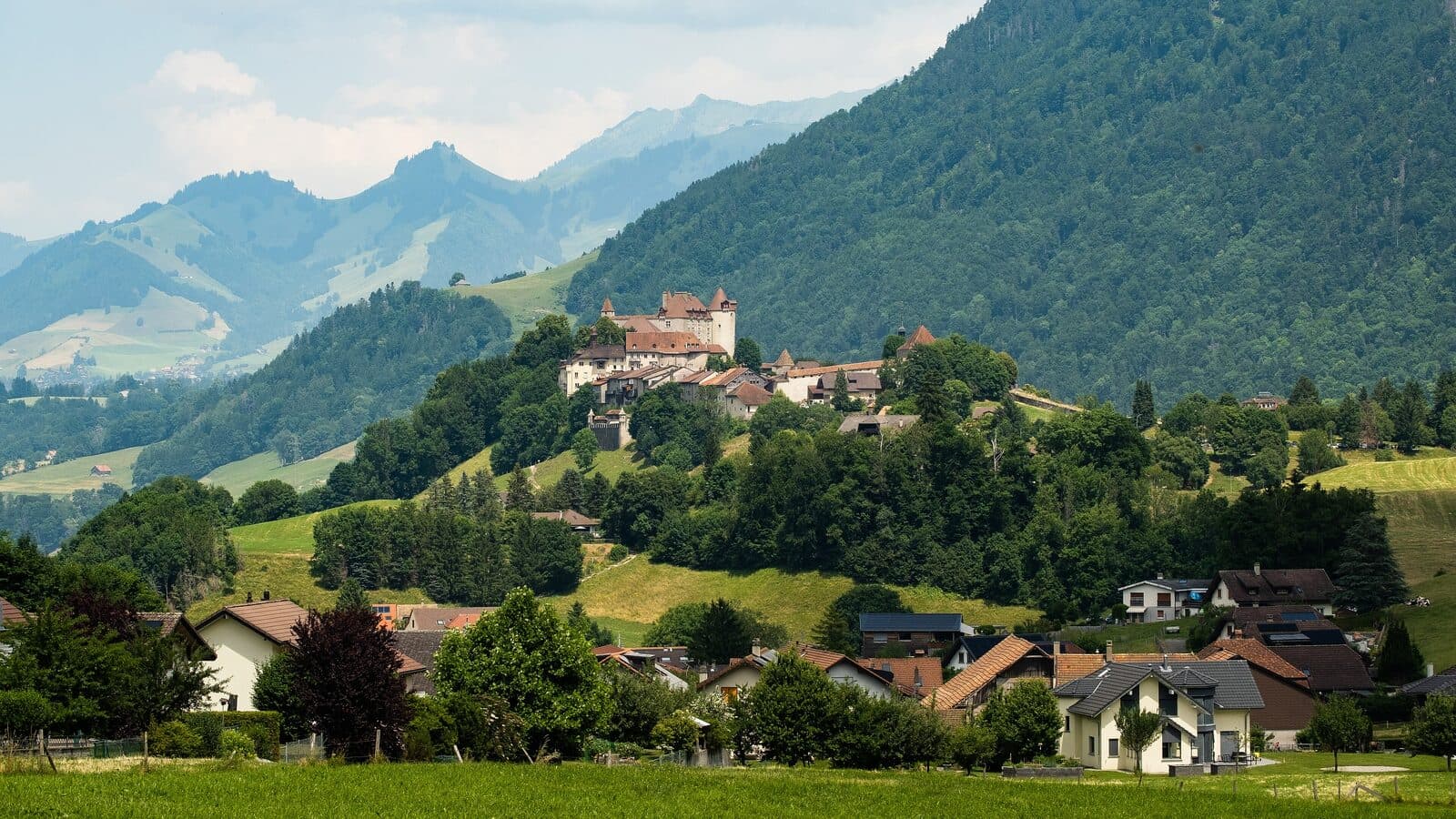
The Canton of Fribourg lies on the German-French language border and is one of Switzerland's bilingual cantons, with German and French as official languages. The capital is Fribourg / Freiburg. It is a growing canton with a resident population of the order of around one third of a million people; the share of the resident population without Swiss citizenship is around one quarter, thus slightly below the Swiss average. These benchmark figures serve solely for descriptive positioning; the current, officially published figures (resident population, share of foreign nationals, area) are to be obtained via the FSO regional statistics (https://www.bfs.admin.ch/bfs/de/home/statistiken/regionalstatistik.html) or from the cantonal statistics office (https://www.fr.ch/sstat).
The competent cantonal migration authority is the Service de la population et des migrants (SPoMi) / Amt für Bevölkerung und Migration. The SPoMi conducts all residence-law proceedings under the Federal Act on Foreign Nationals and Integration (FNIA, SR 142.20) and the Agreement on the Free Movement of Persons (AFMP, SR 0.142.112.681), handles status changes and extensions, and participates in asylum and naturalisation proceedings. As a bilingual authority, the SPoMi accepts applications and submissions in German or French at the choice of the applicant.
Competent authority — SPoMi / Amt für Bevölkerung und Migration Web (official point of contact): https://www.fr.ch/spomi Address, e-mail, telephone, online portal and opening hours: always to be taken from the official cantonal portal (https://www.fr.ch/spomi); a directory of all cantonal migration authorities is maintained by the SEM (https://www.sem.admin.ch/sem/de/home/sem/kontakt/kantonale_behoerden.html).
Anti-scope: the population and share figures reproduced here serve solely for descriptive positioning of the canton. They are no recommendation to take up residence in or outside the Canton of Fribourg, and no comparative judgment on the strictness or leniency of Fribourg practice relative to other cantons. Territorial jurisdiction follows strictly the civil-law domicile under Art. 23 CC (Civil Code, SR 210).
2. Legal bases — federal law and cantonal implementing law
In Switzerland, foreign-nationals and integration law is unified at federal level. The following are particularly relevant:
- Federal Act on Foreign Nationals and Integration (FNIA, SR 142.20) — namely Art. 18 FNIA (gainful employment, third-country nationals), Art. 27 FNIA (education and continuing education), Art. 30 para. 1 let. b FNIA (derogations / hardship case), Art. 32 FNIA (L short-term permit), Art. 33 FNIA (B residence permit), Art. 34 para. 2 FNIA and Art. 34 para. 4 FNIA (C settlement permit, ordinary and early), Art. 37 FNIA (change of canton), Art. 42 FNIA et seq. (family reunification), Art. 50 FNIA (dissolution of the family community), Art. 58a FNIA and Art. 58b FNIA (integration criteria and integration agreement/recommendation), Art. 63 FNIA (revocation of the settlement permit), Art. 99 FNIA (SEM approval procedure).
- Ordinance on Admission, Residence and Gainful Employment (OASA, SR 142.201) — namely Art. 31 OASA (concretisation of the hardship case), Art. 60a OASA and Art. 77d OASA (proof of language skills and integration criteria), Art. 73 OASA (deadline for family reunification), Art. 86 OASA (approval and notification procedure).
- Agreement on the Free Movement of Persons (AFMP, SR 0.142.112.681) and the associated Ordinance on the Introduction of the Free Movement of Persons (OFMP) — for nationals of EU/EFTA states.
- Asylum Act (AsylA, SR 142.31) — namely Art. 27 AsylA (allocation to the cantons) and Art. 102f AsylA (free legal representation in the extended asylum procedure).
- Swiss Citizenship Act (SCA, SR 141.0) — namely Art. 9 SCA (formal requirements, including a ten-year residence period and a C settlement permit), Art. 11 SCA (substantive requirements), Art. 12 SCA (integration criteria) and Art. 13 SCA (naturalisation procedure with the SEM's federal naturalisation authorisation). The proof of language skills for naturalisation, by contrast, rests on the Swiss Citizenship Ordinance (SCO, SR 141.01), namely Art. 6 (SR 141.01) SCO — a separate enactment that is not to be confused with the act (SCA, SR 141.0).
- Civil Code (CC, SR 210) — namely Art. 23 CC (civil-law domicile, decisive for territorial jurisdiction).
- Victim Support Act (VSA, SR 312.5) — insofar as it is relevant to immigration law (e.g. victim situations in connection with domestic violence).
The withholding tax on foreign employees, by contrast, is cantonally regulated tax law and not part of foreign-nationals law; it is presented in Section 9 solely for immigration-law classification (status connection) and without tax advice.
At cantonal level, the cantonal implementing law to the FNIA (cantonal introductory/application law) concretises competences and the course of proceedings; for naturalisation the cantonal citizenship act applies, and for the procedure the cantonal administrative-procedure law. These cantonal enactments are named here generically; the specific enactment number is to be determined from the systematic collection of legislation of the Canton of Fribourg (no enactment number is expressly given here, so as not to circulate an inaccurate citation).
Cross-link: in-depth glossaries on federal law: the FNIA and OASA terminology glossary, the AFMP and OFMP glossary and the AsylA glossary. The specific cantonal implementing enactments are to be determined from the systematic collection of legislation of the Canton of Fribourg.
3. Competent authority — contact and accessibility
The Service de la population et des migrants (SPoMi) / Amt für Bevölkerung und Migration is the sole cantonal point of contact for residence-law proceedings in the Canton of Fribourg. As a bilingual authority, the SPoMi conducts all procedural acts — from receipt of the application to the ruling — in German or French; the language of the ruling in principle follows the application language chosen by the applicant (the exact current language practice is to be taken from the cantonal portal).
SPoMi / Amt für Bevölkerung und Migration Official point of contact: https://www.fr.ch/spomi Address, e-mail, telephone, counter opening hours, public-transport accessibility and any online application portal: always to be taken from the official portal — these details are volatile and are deliberately not printed here, so as not to circulate an out-of-date address or number.
The SPoMi's internal section and departmental allocation may shift due to cantonal reorganisations; the current structure, the counter opening hours and any online application portal are to be checked via https://www.fr.ch/spomi. The street address and direct lines are deliberately not printed but linked via the official page, so as always to reflect the official state.
4. Processing time — cantonal reference values
The values below are hedged reference values from the cantonal data basis and must be reconciled against the official state before any use. Reliable, officially published processing statistics are not consistently public; the effective duration depends on the completeness of the file, complexity and workload. A general orientation figure for cantonal processing is around six weeks; it is not a guaranteed value and may, in an individual case, deviate considerably.
| Type of procedure | Reference value (basis) | Note |
|---|---|---|
| General processing basis | approx. 6 weeks (orientation value) | starting value; individual case differs |
| B first application | tends to be longer than the basis | first examination, where applicable SEM approval |
| B extension | tends to be shorter than the basis | with a complete file |
| C grant (ordinary/early) | depends on the individual case | incl. integration examination |
| L permit (short stay) | depends on the individual case | depending on the admission ground |
Important: these reference values cover only cantonal processing. Where federal law requires an SEM approval under Art. 99 FNIA (in conjunction with Art. 86 OASA) — in particular in certain third-country constellations and derogations — the additional duration of the federal approval procedure is added. The overall duration may as a result lie considerably above the cantonal reference value. All values are to be reconciled against the official state before any use.
5. Proof of language skills
The Canton of Fribourg is bilingual (German/French); the proof of language skills can be provided in German or French depending on the language region or municipality of residence (the cantonal recognition practice is to be reconciled via the cantonal portal). Recognised are the proofs relevant under Art. 77d OASA, in particular fide (German or French) as well as established language diplomas (for French e.g. DELF/DALF, for German e.g. Goethe/telc/ÖSD). The benchmark is the Common European Framework of Reference for Languages (CEFR).
- Family reunification from third countries: under federal law, in the case of subsequent family reunification from third countries, proof of language skills at level A1 oral is regularly required (or registration for a corresponding language-promotion offer) (Art. 60a OASA, in conjunction with the FNIA's family-reunification provisions); the cantonal implementation is to be reconciled via the cantonal portal.
- Early settlement C (Art. 34 para. 4 FNIA): enhanced integration criteria are required, namely language competence at level B1 oral (B1o) and A2 written (A2w) (Art. 60a OASA in conjunction with Art. 77d OASA). According to the cantonal data basis, Fribourg requires for the C language proof B1 oral and A2 written for both EU/EFTA and third-country nationals, whereby the proof can be provided in French or German; this parity is a practice reference value and not a guaranteed entitlement.
- fide is the Swiss standard procedure for determining the language level and issuing the proof of language skills; it is offered by accredited local providers (no central single issuer), and the provider and diploma list is updated from time to time.
Anti-scope: SwissImmigrationPro gives no language-examination strategy advice — neither on the choice between German and French, nor on the choice of examination format, nor on preparation or repetition planning. These are individual decisions.
Cross-link: deep-dive on language examinations and recognised diplomas: proof of language skills — A1 / A2 / B1 fide for permit and naturalisation.
6. Standard permit practice B / L / C
The granting of permits follows the federal-law standard under FNIA/OASA and the SEM directives (foreign-nationals area). The SPoMi executes this framework; cantonal latitude essentially exists in the appraisal of the integration criteria (Art. 58a FNIA) and in the exercise of due discretion within the federal-law requirements.
- B residence permit (Art. 33 FNIA): for residence with or without gainful employment (e.g. education under Art. 27 FNIA); for third-country nationals in gainful employment, the admission requirements under Art. 18 FNIA et seq. apply (overall labour market, quotas, salary and working conditions). For EU/EFTA nationals, the grant is governed by the AFMP/OFMP.
- L short-term permit (Art. 32 FNIA): for time-limited purposes; subgroups according to the admission ground.
- C settlement permit (Art. 34 FNIA): ordinary after ten years (or five years for nationals of certain states on the basis of treaty-based or reciprocal grounds), early under Art. 34 para. 4 FNIA in the case of successful integration and language competence B1o/A2w (cf. Section 5).
- Hardship case (Art. 30 para. 1 let. b FNIA in conjunction with Art. 31 OASA): derogation from the admission requirements in serious personal hardship cases; regularly with SEM approval under Art. 99 FNIA.
Descriptive note (no strategy): according to the cantonal data basis, Fribourg is bilingual; for the language proof the SPoMi accepts both diplomas in French (e.g. DELF) and diplomas in German (e.g. Goethe/telc), and cantonal integration offers comprise language courses in both languages. This is reproduced purely descriptively; the exact provider designation and the current course offer are to be reconciled via the cantonal portal.
Anti-scope: SwissImmigrationPro gives no individual permit or family-reunification strategy, no hardship-case argumentation and no assessment of which permit type would be "more favourable" in an individual case. Such appraisals belong to the lawyer's practice. No comparative strictness/leniency judgments are made relative to other cantons.
Cross-link: permit deep-dives: the B residence permit, the L short-term permit, the C settlement permit, the G cross-border commuter permit as well as the Ci permit for accompanying persons (if available).
7. Naturalisation
Ordinary naturalisation is three-tier: federal (the SEM's federal naturalisation authorisation in the procedure under Art. 13 SCA), cantonal (cantonal appraisal under the cantonal citizenship act) and municipal (admission to municipal citizenship). Federal minimum requirements arise from Art. 9 SCA (ten-year residence period and C settlement permit), Art. 11 SCA (substantive requirements) and Art. 12 SCA (integration criteria). The proof of language skills for naturalisation requires, under Art. 6 (SR 141.01) SCO (Swiss Citizenship Ordinance — an enactment separate from the act SCA, SR 141.0), level B1 oral and A2 written (B1o/A2w); in the bilingual Canton of Fribourg it can be provided in German or French depending on the language region.
The permissible minimum cantonal residence period is limited by federal law to a range of two to five years (Art. 18 SCA); within this range the cantonal citizenship act sets the exact deadline. According to the cantonal data basis, a cantonal residence period of the order of three years is named as a descriptive reference value; the exact cantonal and municipal deadline as well as the procedure are to be taken from the cantonal citizenship act and may have been adjusted. The municipal practice (competence of the municipal council or the municipal assembly, hearing, admission decision) varies from municipality to municipality and is to be clarified with the relevant municipality of residence.
Anti-scope: SwissImmigrationPro gives no municipality-shopping recommendation and no strategy advice on the choice of municipality of residence with a view to the municipal naturalisation practice. The choice of municipality is a choice of place of residence, not an immigration-law strategy.
Cross-link: naturalisation in Switzerland — paths to Swiss citizenship; the glossary on the Swiss Citizenship Act 2018 (SCA/SCO).
8. Asylum in the canton
Asylum seekers are allocated to the cantons under Art. 27 AsylA; enforcement takes place via the federal asylum centres (FAC) of the respective asylum region and, within the canton, via the cantonal structures. The Canton of Fribourg is one of the cantons allocated to the French-speaking Switzerland asylum region; the specific FAC/asylum-region allocation as well as the cantonal legal advice office (LAO) or mandated organisation for the free legal representation under Art. 102f AsylA are named here generically and are to be reconciled via sem.admin.ch (structures and mandates are periodically put out to tender and may change).
Outside the actual asylum procedure (in ordinary foreign-nationals law under FNIA/AFMP), the LAOs are not necessarily competent; there, regular lawyers as well as specialised advisory offices come into play.
Cross-link: the AsylA glossary; permit deep-dives the N permit during the asylum procedure, provisional admission (F permit), protection status S and the recognised refugee with a B permit (if available).
9. Taxes and withholding tax — immigration-law context
Foreign employees without a C settlement permit are in principle subject to withholding tax on their employment income; the employer deducts the tax directly from the salary. This withholding taxation of employment income is cantonally regulated tax law (cantonal tax act in conjunction with the Federal Act on the Harmonisation of Direct Taxes) and not part of foreign-nationals law. Where the relevant gross income exceeds the Switzerland-wide uniform threshold of CHF 120,000 per year, a mandatory subsequent ordinary assessment (SOA) takes place; below the threshold, an SOA is possible on request. The exact cantonal modalities, rates and deadlines are to be clarified with the cantonal tax administration.
Immigration-law connection (descriptive): tax debts or debt-enforcement proceedings do not on their own lead to the revocation of a permit. The grounds for revocation and lapse under the FNIA (namely Art. 63 FNIA for the settlement permit) connect to security and public-order grounds; a financial situation affects status, if at all, only indirectly, via the appraisal of the integration criteria (Art. 58a FNIA). A blanket equation "debts = loss of status" is legally incorrect.
Descriptive note (no evaluation as a domicile ground): the qualitative tax burden of the Canton of Fribourg is described in the data basis as medium to rather high. This value is descriptive; it is no ground to choose or avoid the canton and founds no comparative judgment.
Anti-scope: SwissImmigrationPro provides no tax advice. Questions on withholding tax, on the SOA, on social deductions and on double taxation are to be answered by qualified tax advisers or the cantonal tax administration. No tax-optimisation advice is provided.
10. Economy and largest municipalities
The following details are descriptive; specific figures are to be reconciled via the official statistical sources:
- Language border and profile: Fribourg lies on the German-French language border. The bilingual canton combines a cultural mix, a medieval old town and a university city. The administration works bilingually; services are available in French and German, and the migration authority takes both language communities into account. The university brings international diversity.
- Housing costs (descriptive): the rent level varies regionally; current, reliable rent-price benchmarks are to be obtained via the FSO rent-price statistics or from the cantonal statistics office (https://www.fr.ch/sstat). No specific rent amount is deliberately named here, so as not to circulate an out-of-date market figure.
- Largest municipalities: Fribourg / Freiburg, Bulle, Villars-sur-Glâne, Marly (order and current population figures available from the cantonal statistics office).
- Migration context (descriptive): the university presence and the bilingual economic structure shape the typical permit constellations (higher-education and AFMP stays). This observation is descriptive and founds no recommendation.
These economic and linguistic particularities have an indirect effect on practice (e.g. choice of language for the proof, housing-market situation when examining suitable accommodation in family reunification under the FNIA), without a comparative judgment relative to other cantons being derived therefrom.
11. Anti-scope statement for the Canton of Fribourg
For reasons of professional ethics (Lawyers Act, LLCA, SR 935.61), the clear division of roles between knowledge platform and lawyer service, and credibility towards the cantonal supervisory commissions, SwissImmigrationPro expressly holds the following topics outside its scope of services:
- No canton-shopping strategy: no recommendation to take up residence in or outside the Canton of Fribourg in order to obtain immigration-law advantages. Jurisdiction follows the domicile under Art. 23 CC.
- No comparative strictness/leniency assessment: no statement as to whether Fribourg is "easier" or "stricter" than another canton.
- No individual case strategy: no hardship-case argumentation (Art. 30 FNIA), no family-reunification strategy, no appeal/legal-remedy strategy, no deadline calculators.
- No tax advice and no tax optimisation.
- No appeal templates and no deadline calculation in the individual case.
For individual questions, a lawyer entered in the bar register (BfR) in the canton of residence must be consulted. This deep-dive explains the law; it does not replace a lawyer's assessment.
12. Cross-references
- The FNIA and OASA terminology glossary.
- The AFMP and OFMP glossary (EU/EFTA).
- The AsylA glossary.
- The glossary on the Swiss Citizenship Act 2018 (SCA/SCO).
- The sister overview of the Romandie standard cluster (VD/FR/NE/JU) for regional positioning.
- The B residence permit, the C settlement permit, the L short-term permit, the G cross-border commuter permit and the paths to naturalisation (if available).
- Proof of language skills for permit and naturalisation, change of canton under Art. 37 FNIA, family reunification by a Swiss national, the hardship-case rule under Art. 30 FNIA and the integration agreement under Art. 58a FNIA (if available).