
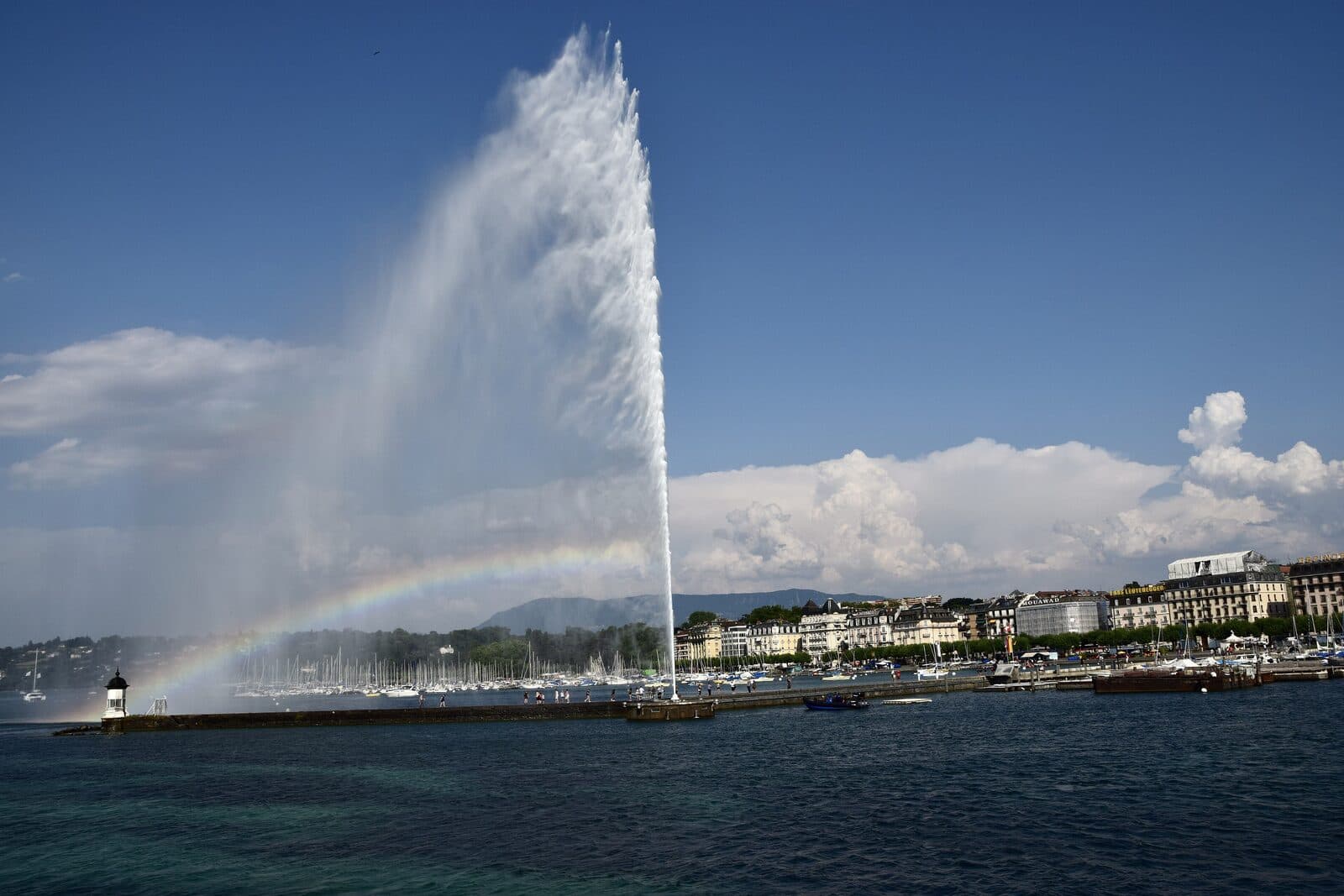
1. Overview — the Canton of Geneva in the context of migration law
The Canton of Geneva occupies a special position in Swiss migration law. With a resident population in the order of half a million people, Geneva shows, by national comparison, an exceptionally high proportion of persons without Swiss citizenship — according to the surveys published by the Federal Statistical Office (FSO) and the cantonal statistical office (OCSTAT), it persistently stands at around two fifths of the resident population and is thus clearly above the national average. This proportion encompasses both the permanent resident foreign population (B, C and L permits) and the non-permanent residents (Ci permits, holders of an L short-term permit, persons in the asylum procedure as well as diplomatic or IO staff with a carte de légitimation). The current figures, periodically updated, are to be obtained from the OCSTAT; reproducing a figure that is exact to the individual person is deliberately omitted here, since such values fluctuate from year to year.
The constellation of the migrant population in Geneva is unique in Switzerland. The canton is home to a very large community of holders of a carte de légitimation (residence title for privileged IO and diplomatic staff) together with their accompanying persons holding a Ci permit, and is regarded as one of the most significant hosts of international organisations (IO) worldwide. The international organisations based in Geneva include, among others, the UN Office at Geneva (UNOG), the World Trade Organization (WTO), the International Committee of the Red Cross (ICRC), the International Telecommunication Union (ITU), the World Intellectual Property Organization (WIPO), the GAVI Alliance, the Global Fund to Fight AIDS, Tuberculosis and Malaria, the International Labour Organization (ILO), the Office of the High Commissioner for Human Rights (OHCHR), the UN High Commissioner for Refugees (UNHCR), the UN Conference on Trade and Development (UNCTAD) as well as numerous further intergovernmental and non-governmental international organisations.
The competent cantonal authority for all residence-law matters — with the exception of persons enjoying diplomatic and consular privileges, who are directly subordinate to the Federal Department of Foreign Affairs (FDFA) — is the Office cantonal de la population et des migrations (OCPM). It implements at cantonal level the Federal Act on Foreign Nationals and Integration (FNIA, SR 142.20) and the associated Ordinance on Admission, Residence and Gainful Employment (OASA, SR 142.201).
Office cantonal de la population et des migrations (OCPM) — competent cantonal migration authority of the Canton of Geneva. The address, telephone number, e-mail addresses of the sections, counter and telephone hours as well as the online portal e-démarches are to be obtained from the official OCPM page, since these details change periodically: https://www.ge.ch/organisation/office-cantonal-population-migrations-ocpm. According to the canton, the typical processing time for a standard application is in the order of around ten weeks; the values fluctuate depending on the type of procedure and workload (see section 7).
1.1 The IO landscape as a special case of migration law
The concentration of international organisations in Geneva gives rise to a migration-law constellation unique in Switzerland. Three legal spheres overlap:
- Federal-law and public-international-law sphere: carte de légitimation of the FDFA, based on the Host State Act (HSA, SR 192.12) and the Host State Ordinance (HSO, SR 192.121) as well as on bilateral headquarters agreements with the respective organisations. These persons are not subject to the FNIA and belong, in systematic legal terms, to the diplomatic and IO world.
- Cantonal-law sphere: Ci permits for accompanying persons, ordinary B/C permits for persons remaining after the end of the IO mandate, B/C permits for persons gainfully employed independently of the IO sector. These persons are subject to the FNIA and are administered by the OCPM.
- Cross-border-commuter sphere: holders of a G cross-border permit (cross-border commuters, frontaliers) who reside in France (Pays de Gex, Haute-Savoie) or in the Canton of Vaud and work in Geneva. These persons are subject, for EU/EFTA nationals, to the Agreement on the Free Movement of Persons (AFMP, SR 0.142.112.681) and, for third-country nationals, to the FNIA. Owing to Geneva's particular geographical position, bordering France on three sides, the proportion of cross-border commuters here is disproportionately high: it is a six-figure number of gainfully employed cross-border commuters, which places Geneva among the cantons with the most frontaliers in Switzerland. The continuously updated quarterly figures are published by the FSO (cross-border commuter statistics, STAF).
In practice, this overlap means that Geneva families frequently display mixed status constellations: a main person with a carte de légitimation, a spouse with a Ci permit, children likewise holding a carte de légitimation (as family members), an adult daughter who, after completing her studies, enters the labour market with a B permit. Managing these parallel statuses simultaneously is a recurring practical task of the OCPM (Section Organisations internationales).
2. Structure and sections of the OCPM
The OCPM is subdivided into several technically specialised sections (Sections), each of which handles different categories of persons and procedures. Knowledge of this structure is essential for correctly addressing applications and enquiries:
- Section Étrangers — handles the general procedures under foreign-national law for the permanent resident population (B, C, L) as well as renewals, status changes and family reunification. It is the largest area of the OCPM in numerical terms.
- Section Organisations internationales — responsible for Ci permits (accompanying persons of IO staff), the transition from a carte de légitimation to ordinary residence status after the end of the IO mandate as well as specific questions surrounding IO-related stays. This section is a Geneva particularity and does not exist in this form in other cantons.
- Section Asile — procedures relating to asylum and removal law under the Asylum Act (AsylA, SR 142.31), preparation and enforcement of removal decisions as well as coordination with the federal asylum centres.
- Section Naturalisation — handles the cantonal and communal naturalisation procedures (citizenship applications under the Swiss Citizenship Act [SCA, SR 141.0], the cantonal citizenship act and communal citizenship regulations).
- Section Régularisation — responsible for hardship-case applications under Art. 30 para. 1 let. b FNIA for persons without a regulated residence status (so-called sans-papiers). This section administers the legacy of Operation Papyrus (2017–2018).
The exact internal organisation of the OCPM (section designations, allocation of competences) may change as a result of reorganisations; the respective current status is to be obtained from the official OCPM page.
3. Geneva practice points — what distinguishes the Canton of Geneva in migration law
3.1 Proof of language skills
For the granting of a B residence permit in the context of family reunification from a third country, as well as for renewal in certain constellations, Geneva practice requires proof of French at level A1 oral in accordance with the Common European Framework of Reference for Languages (CEFR). For the early granting of the C settlement permit after five instead of ten years (Art. 34 para. 4 FNIA in conjunction with the language requirements of the OASA, SR 142.201), the federal-law minimum standards as a rule require proof of a level of B1 oral and A1 written in French. These levels are necessary but not sufficient conditions; the granting lies within the authority's discretion and additionally presupposes the fulfilment of the other integration criteria.
The fide certificate in the French language is accepted as recognised proof. In addition, the diplomas and attestations exhaustively designated in the OASA (SR 142.201) are considered equivalent. Since cantonal interpretations of the federal-law minimum language standards may, on individual points, turn out stricter or more lenient than the federal standard, and since SEM directives have been updated since January 2024, the proofs required in the individual case are to be checked with the OCPM or the official page before submitting the application.
3.2 Integration agreement (Convention d'intégration)
Under Art. 58a FNIA, the canton may conclude an integration agreement with third-country nationals who display integration deficits. In practice, the OCPM applies this instrument more moderately than, for example, the Canton of Vaud, which is known for its more systematic application. In Geneva, a convention d'intégration is typically used when, upon renewal, deficits are identified in the areas of language, gainful employment or respect for public security and order.
3.3 Hardship case under Art. 30 para. 1 let. b FNIA
Geneva hardship-case practice is frequently described, in inter-cantonal comparison, as comparatively accessible; this does not, however, found any entitlement and is no guarantee of a positive decision. The assessment is carried out under Art. 31 OASA (SR 142.201) on a case-by-case and discretionary basis, on the criteria of integration, family circumstances, financial situation, duration of stay, state of health as well as possibilities of reintegration in the State of origin. The granting additionally requires the approval of the SEM (Art. 99 FNIA).
Anti-Scope: SwissImmigrationPro does not provide any strategic advice on the argumentation of a hardship-case application. The case-by-case taking of evidence and the interpretation of the indeterminate legal concepts belong to the practice of the lawyer and are to be handled through the cantonal bar (Barreau de Genève) (see section 14).
3.4 Early C settlement permit
The early granting of the C settlement permit after five instead of ten years (Art. 34 para. 4 FNIA) presupposes successful integration and lies within the dutiful discretion of the cantonal authority; there is no legal entitlement. Geneva practice is generally described as restrained — no robust, publicly published grant rate is available, which is why no percentage is deliberately stated here. Considered decisive assessment factors are increased language competences (as a rule B1 oral and A1 written), economic self-sufficiency without receipt of social assistance as well as observance of public security and order. Existing indebtedness does not enter as an independent ground for refusal, but as one element of the overall integration assessment; its significance depends on the extent, the cause and the repayment behaviour.
3.5 Family reunification — Geneva interpretation
In the case of family reunification from third countries (Art. 43–47 FNIA), the OCPM examines the cumulative conditions: sufficient and stable earned income, housing appropriate to the circumstances, the absence of dependence on social assistance as well as language skills. Geneva applies the federal-law standards and, in assessing the housing requirements, takes account of the local reality of the housing market — Geneva is among the most expensive housing markets in Switzerland — as well as the relevant directives in the individual case. A schematically "more generous" interpretation cannot be derived from this; the case-by-case examination remains decisive.
For the reunification of children, the age limit of 12 years applies (Art. 47 para. 1 FNIA in conjunction with Art. 73 OASA, SR 142.201) as well as the reunification deadline of five years from the arising of the entitlement; after the completion of the 12th year of age, the deadline shortens to twelve months. In the case of late reunification applications, the OCPM examines whether "important family reasons" within the meaning of Art. 47 para. 4 FNIA are present. The practice is casuistic and strongly dependent on the individual case; decisive is the case law of the Federal Supreme Court on late family reunification and family hardship (e.g. BGE 137 I 284 as well as the subsequent practice), whose concrete application is a matter for the lawyer's assessment.
3.6 Practice in the event of separation and divorce
In the event of separation or divorce from Swiss citizens or holders of a C settlement permit, Art. 50 FNIA applies. Geneva practice examines the conditions carefully: a three-year marital union and successful integration (Art. 50 para. 1 let. a FNIA) or important personal reasons (Art. 50 para. 1 let. b FNIA, in particular domestic violence). A specialised Section LAVI of the Canton of Geneva coordinates the support of victims of domestic violence with the assessment under foreign-national law. For the in-depth presentation, see Divorce and residence permit (Art. 50 FNIA).
4. Ci permit and the IO sector in Geneva (load-bearing)
The Ci permit is a Geneva core competence. It is granted to accompanying persons — namely spouses and minor children — of persons with a carte de légitimation of the FDFA, provided that they wish to take up gainful employment or complete a training course. The legal basis is found in the Host State Act (HSA, SR 192.12) as well as in the Host State Ordinance (HSO, SR 192.121).
It is central not to confuse two distinct legal relationships:
- The carte de légitimation of the FDFA is granted to the IO main person (official, civil servant, delegate, contractual staff) as well as to their accompanying family members and rests directly on the privileges and immunities of public international law under the Vienna Convention as well as on the HSA. It is not a residence permit within the meaning of the FNIA.
- The Ci permit, by contrast, is a cantonal residence permit under the FNIA/OASA, which allows accompanying persons to pursue gainful employment in Switzerland or to complete a training course. It is granted by the OCPM (Section Organisations internationales).
This distinction is highly relevant in practice, because the two legal relationships give rise to entirely different consequences (in tax terms, in social-insurance terms, with regard to family reunification and the settlement perspective). For the in-depth presentation of the Ci mechanics, see the Ci permit for accompanying persons of IO staff.
4.1 Practical specifics Ci → B after the end of the IO mandate
A frequent constellation in Geneva: a person has lived in Switzerland for years on a Ci permit because their spouse worked for an IO. The IO mandate now ends (retirement, end of contract, change of employer outside the IO world). The carte de légitimation of the main person lapses, and with it also the accessory character of the Ci permit. After the lapse of the carte de légitimation, an application for conversion into an ordinary residence permit (typically B) must be filed within a short deadline — in practice, an order of magnitude of around 90 days is frequently cited. Since the exact deadline and the applicable procedure depend on the concrete constellation, the deadline applicable in the individual case is to be clarified in advance with the Section Organisations internationales of the OCPM or with the FDFA.
In this constellation, the hardship case under Art. 30 para. 1 let. b FNIA frequently comes into play, since the accompanying persons are often integrated in Geneva for ten, fifteen or more years, children attend school here or have already been naturalised, and a return to the State of origin would constitute an unreasonable hardship. Geneva practice typically takes the long-standing integration of accompanying persons into account favourably, although always on a case-by-case basis.
Anti-Scope: SIP gives no recommendation on whether a particular application after the end of the Ci is promising. The argumentation and the taking of evidence are a matter for the lawyer's practice.
4.2 Which IOs are represented in Geneva?
A non-exhaustive enumeration of the most important international organisations based in Geneva illustrates the scale of the sector:
- United Nations (UNOG, the UN Office at Geneva, with numerous sub-organisations)
- World Trade Organization (WTO)
- International Committee of the Red Cross (ICRC) and International Federation of Red Cross and Red Crescent Societies (IFRC)
- International Telecommunication Union (ITU)
- World Intellectual Property Organization (WIPO)
- GAVI Alliance (vaccine alliance)
- Global Fund to Fight AIDS, Tuberculosis and Malaria
- International Labour Organization (ILO)
- Office of the High Commissioner for Human Rights (OHCHR)
- UN High Commissioner for Refugees (UNHCR)
- UN Conference on Trade and Development (UNCTAD)
- World Health Organization (WHO) — global headquarters in Geneva
- World Meteorological Organization (WMO)
- International Organization for Migration (IOM) — of particular importance in the migration context
- International Trade Centre (ITC)
In addition, around 250 non-governmental international organisations (NGOs) of an international character are based in Geneva; although they do not enjoy IO status under the HSA, their staff frequently depend on special visas and particular residence arrangements.
5. Sans-papiers and the Papyrus legacy
Between February 2017 and December 2018, the Canton of Geneva carried out, in cooperation with the State Secretariat for Migration (SEM), Operation Papyrus. The aim was the controlled regularisation of long-standing sans-papiers who were resident in Geneva and integrated. The operational criteria included, among others: a stay in Switzerland of at least five years (families) or ten years (single persons), economic self-sufficiency, the absence of a criminal record, sufficient French language skills as well as the school integration of the children. Around 2,390 persons were regularised on this basis.
Operation Papyrus was limited in time and was not repeated. Currently, the handling of sans-papiers hardship-case applications takes place individually via the ordinary procedure under Art. 30 para. 1 let. b FNIA in conjunction with Art. 31 OASA. The criteria developed under Papyrus continue to have an indirect effect but are not legally binding.
The most important Geneva point of contact for sans-papiers is the Centre de contact Suisses-Immigrés (CCSI) as well as the network Collectif de soutien aux sans-papiers de Genève. These organisations offer social and legal advisory support.
Anti-Scope: SwissImmigrationPro provides no strategy for hardship-case argumentation, no indications of "favourable" timings or particular constellations. Advice for sans-papiers belongs in the hands of specialised civil-society organisations and lawyers.
6. Asylum in Geneva
6.1 Federal asylum centre Geneva
The federal asylum centre (FAC) of the Western Switzerland region comprises sites in Boudry (NE), Vallorbe (VD) and Geneva. In Geneva, the FAC at the Aéroport (Geneva Airport) is notably operated, which is responsible for asylum applications upon entry. Asylum applications are processed, from filing, in the accelerated procedure under Art. 26c AsylA (SR 142.31), which takes place within the federal centre; the preceding preparatory phase is governed by Art. 26b AsylA.
6.2 Extended procedure — allocation to a canton
Where an asylum application is not decided in the accelerated procedure and is transferred into the extended procedure (Art. 26d AsylA), allocation to a canton takes place according to the SEM's distribution key (Art. 27 AsylA, SR 142.31). In line with the size of its population, Geneva takes on a share of the extended procedures. During the extended procedure, the asylum seeker lives in the canton and is registered there with the authorities; the legal-representation service typically passes from the federal legal-representation service to a cantonal legal-advice office.
6.3 Legal-advice offices for asylum in Geneva
Free advice and legal representation in the asylum procedure are governed by Art. 102f AsylA (SR 142.31) and the following provisions. In Western Switzerland, the following are notably active in this area:
- CSP Genève (Centre social protestant) — established asylum and migration advice service, integrated into the national structure of the Swiss Refugee Council (OSAR)
- ELISA-Asile — specialised Geneva advice office for asylum seekers
- Caritas Genève — church-supported advice network
The respective current and complete list of the offices competent for legal advice and representation is to be obtained from the Swiss Refugee Council (OSAR) or the SEM; the offices named here are not exhaustive.
For the in-depth presentation of asylum law, see the Glossary on the Asylum Act.
7. Procedural duration and OCPM SLAs
The procedural durations below are non-binding experience-based guide values and may deviate considerably depending on the state of the file, the completeness of the documents submitted, the workload of the section and the complexity of the case. There are no binding or officially guaranteed processing deadlines; the current information of the canton is to be obtained from the official OCPM page. According to the canton, the processing time for standard applications is in the order of magnitude of around ten weeks.
| Procedure | Guide value duration |
|---|---|
| B initial application (family reunification, employment application) | 4–12 weeks |
| B renewal | 2–6 weeks (tending to improve post-pandemic) |
| C application ordinary (after 10 years) | 4–12 weeks |
| Family reunification (third country) | 8–16 weeks |
| Hardship case Art. 30 para. 1 let. b FNIA | 6–12 months |
| Citizenship application (communal + cantonal + federal) | 18–36 months (overall procedure) |
| Appeal procedure TAPI | 6–18 months |
Note: the SEM approval of cantonal preliminary decisions (Art. 99 FNIA, SR 142.20) is not included in the guide values above and may require additional weeks to months.
7.1 Factors that influence the procedural duration
Several factors act on the effective procedural duration at the OCPM and should be communicated in managing expectations:
- Completeness of the file: incomplete applications are as a rule answered with a request for supplementary documents, which costs several weeks between the individual steps.
- SEM approval requirement: in constellations in which federal law requires an approval of the SEM (Art. 85 para. 2 and Art. 86 OASA, SR 142.201; Art. 99 FNIA), the overall duration is extended accordingly.
- Production of the language proof: where language certificates are only obtained after the application is filed, the procedure is de facto suspended until they are subsequently submitted.
- Security and criminal-record clearances: for persons with stays in several countries or where criminal-record extracts from third countries are required, the duration can be extended by months.
- Section Organisations internationales: for IO-related procedures, additional coordination with the FDFA Permanent Mission frequently takes place; this is standard but takes time.
7.2 Possibilities for acceleration
A formal acceleration at the OCPM is not provided for. Practically effective in justified cases are:
- A written enquiry on the state of the procedure after the respective guide values have elapsed
- An indication of particular urgency (e.g. taking up a position with a contractual deadline, school enrolment of the children)
- An appeal for denial of justice or unjustified delay to the TAPI under the Geneva Administrative Procedure Act (LPA-GE; cantonal enactment, governing denial of justice/delay), provided that a disproportionate delay is present — as a last resort and recommended with the accompaniment of a lawyer
Anti-Scope: SIP provides no template for acceleration letters or unjustified-delay appeals. These belong to the practice of the lawyer.
8. Communal voting rights for C permit holders in Geneva
A Geneva particularity that is frequently overlooked in migration advice: foreign persons with residence in the canton have, in accordance with the Geneva Cantonal Constitution (Cst-GE), a communal right to vote and stand for election at communal level, provided that they have been resident in Switzerland and in the canton for a certain minimum period. The exact conditions (in particular the required duration of stay and residence) follow from the Cst-GE and the cantonal implementing provisions and are to be checked there before invoking this right.
This regulation has been in force since 2005 (cantonal constitutional revision) and concerns the active right to vote and to elect in communal affairs (election of the communal councillors, Conseil municipal, votes at communal level). The passive right to stand for election (eligibility) as well as the cantonal and federal voting rights remain reserved to Swiss citizenship.
Comparable regulations exist in the Cantons of Jura, Neuchâtel, Vaud, Fribourg (upon application by the commune) and in the City of Basel (in a restricted manner).
9. Tax status and withholding tax in Geneva
The tax burden in Geneva is generally described, in inter-cantonal comparison, as above average; a quantitative classification is not the subject here and is to be undertaken in the individual case by a tax advisor or the cantonal tax administration.
9.1 Withholding tax for third-country B permit holders
Foreign employees without a C settlement permit — namely third-country nationals with a B permit — are as a rule subject, for their earned income, to withholding tax (impôt à la source). Withholding taxation of earned income is a cantonal tax; its levying by the Confederation, the cantons and the communes is harmonised in the Federal Act on the Harmonisation of Direct Taxes of the Cantons and Communes (StHG, SR 642.14), while the cantonal implementation is governed by Geneva tax law. Where the relevant annual gross earned income exceeds the threshold of CHF 120,000 provided for in the StHG, a subsequent ordinary assessment (NOV) is carried out ex officio; for lower incomes, withholding tax in principle has a final effect, whereby an NOV is possible upon application.
9.2 Tax exemption for IO main persons
Holders of a carte de légitimation who are active in an IO typically enjoy an exemption from direct federal tax and from cantonal and communal taxes on the earned income received from the IO, based on the headquarters agreement of the respective organisation and the HSA. Other income components (rental income, capital income, earned income outside the IO) may, by contrast, be taxable.
9.3 Ci accompanying persons — tax liability
A misunderstanding that frequently arises in practice: while the IO main person (with a carte de légitimation) is tax-exempt on their IO income, the Ci accompanying person is subject, on their own earned income, to the ordinary tax liability in the Canton of Geneva (withholding tax or ordinary assessment depending on the level of income and the type of permit). The tax exemption of the main person does not automatically extend to the earned income of the accompanying person.
Anti-Scope: SwissImmigrationPro is not a tax advisory service. For concrete questions, the Administration fiscale cantonale (AFC) Genève or a qualified tax advisor is to be consulted. The current address, contact details and forms of the AFC are to be obtained via the Geneva cantonal portal (www.ge.ch).
10. Naturalisation in Geneva
10.1 Three-tier procedure
Naturalisation in Switzerland follows a three-tier procedure: federal (federal naturalisation authorisation under the Swiss Citizenship Act [SCA, SR 141.0] and the Citizenship Ordinance [BüV, SR 141.01]), cantonal (citizenship of the Canton of Geneva under the cantonal citizenship act) and communal (citizenship of the commune of residence). All three levels must be granted cumulatively.
10.2 Proof of language skills in the naturalisation procedure
Language competence is regulated in two separate enactments. At the level of the Swiss Citizenship Act (SCA, SR 141.0), Art. 12 para. 1 let. c SCA requires, as an integration criterion, "sufficient language competence". This requirement is concretised not in the act itself, but in the Citizenship Ordinance (BüV, SR 141.01): Art. 6 BüV requires oral knowledge at level B1 and written knowledge at level A2 in a national language (in Geneva: French). Recognised proofs include, among others, the fide certificate as well as the equivalent diplomas designated in the BüV (SR 141.01).
10.3 Communal hearing — modern practice
Until the modernisation of the citizenship procedure (entry into force of the revised SCA on 1 January 2018), a communal hearing (audition communale) by a citizenship commission was standard in many Geneva communes. Since then, this communal hearing is no longer a systematic part of the procedure in Geneva; it may still be conducted in the individual case at the initiative of individual communes. Since individual Geneva communes maintain their own citizenship regulations, the concrete communal practice is to be clarified with the commune of residence.
10.4 Cantonal knowledge test
At cantonal level, a test de connaissances civiques (test of civic knowledge) may apply. This examines basic knowledge of the Swiss, cantonal and communal organisation of the State as well as of history and geography. Its design is regulated in the cantonal citizenship act (Loi sur la nationalité genevoise, LNat) as well as its implementing provisions and may change; the current status is to be obtained via the Geneva systematic collection of laws and the Section Naturalisation of the OCPM.
For the in-depth legal presentation, see the Glossary on the Citizenship Act 2018 (BüG).
10a. G cross-border permit in Geneva
Owing to Geneva's near-border location, the G cross-border permit (cross-border commuters, frontaliers) has a vastly disproportionate share in the canton. Over 110,000 cross-border commuters are active in the Geneva economy, above all from the neighbouring Département de l'Ain (Pays de Gex) and the Haute-Savoie, a smaller share from the Canton of Vaud.
10a.1 Legal basis
The G cross-border permit rests, for EU/EFTA nationals, on the Agreement on the Free Movement of Persons (AFMP, SR 0.142.112.681) and, for third-country nationals, on the ordinary provisions of the FNIA (Art. 35 FNIA, SR 142.20). For third-country cross-border commuters, the additional condition of a permanent right of residence in the neighbouring State as well as of a residence of at least six months in the neighbouring border zone applies (Art. 35 para. 1 FNIA).
10a.2 Geneva practice
The OCPM handles G applications in the Section Étrangers. EU/EFTA applicants as a rule receive a permit within two to four weeks, provided that all documents are complete. The G cross-border permit is as a rule issued for the duration of the employment contract (for permanent contracts for five years, then renewal).
10a.3 Weekly residence versus daily return
The G cross-border permit in principle allows either the daily return to the foreign place of residence or weekly residence in Switzerland (with at least weekly return). In the case of weekly residence, the local registration obligations as well as the tax constellations are to be observed carefully; the concrete modalities are to be clarified with the OCPM and the cantonal tax administration.
10a.4 Tax treatment
Cross-border commuters from France are subject to the Agreement of 11 April 1983 between the Swiss Confederation and France on the taxation of the earned income of cross-border commuters (special regulation; a part of the withholding tax is paid over by Geneva to France). For cross-border commuters from other EU States, the respective double-taxation agreements apply. Anti-Scope: no tax advice; consult the AFC Genève.
11. OCPM — contact information and accessibility
The address, telephone number, e-mail addresses (general and per section), opening and telephone hours as well as access to the online portal change periodically and are deliberately not reproduced here, in order not to disseminate outdated information. The official page is always decisive:
- Office cantonal de la population et des migrations (OCPM) — official page of the Canton of Geneva: https://www.ge.ch/organisation/office-cantonal-population-migrations-ocpm
- There one finds the current main address, the public-transport connections, the telephone switchboard, the general e-mail address as well as the addresses differentiated by section, and the applicable counter and telephone hours.
11.1 Online portal: e-démarches
The Canton of Geneva operates the e-démarches portal, through which numerous procedural steps can be initiated digitally — namely renewals, address changes and certain initial applications. The respective available scope of the procedures that can be handled online is being continuously expanded and is to be checked via the Geneva cantonal portal.
12. Geneva legal terminology — cantonal laws
In migration law, clients and advisors in Geneva regularly encounter a few cantonal enactments, knowledge of which facilitates the understanding of Geneva practice:
- LaLEtr — Loi cantonale d'application de la loi fédérale sur les étrangers et l'intégration (RSG F 2 10): cantonal implementation of the federal-law FNIA provisions, governs competences, the course of the procedure and individual matters such as the convention d'intégration at cantonal level.
- LIASI — Loi sur l'insertion et l'aide sociale individuelle (RSG J 4 04): cantonal social-assistance act; relevant for the migration-law assessment of social-assistance receipt, which under the FNIA influences the conditions for renewals, revocations or naturalisations.
- LNat — Loi sur la nationalité genevoise: cantonal citizenship act.
- LPAv — Loi sur la profession d'avocat (RSG E 6 10): cantonal regulation of the legal profession (admission to the bar register, supervisory commission).
The respective wording in force and the current status of these cantonal enactments are to be obtained via the Geneva systematic collection of laws (silgeneve.ch); cantonal enactments are regularly revised.
13. Appeal procedure against OCPM rulings
An OCPM ruling (refusal of a permit, revocation, removal, etc.) is not final. Cantonal procedural law provides for a multi-stage legal recourse:
13.1 Step 1 — Réclamation to the OCPM (in individual constellations)
For certain types of procedure, a réclamation (objection) directly to the OCPM is provided for. The deadline is typically 30 days from the notification of the ruling. The constellations in which a réclamation is prescribed or admissible follow from the cantonal LaLEtr and the Geneva Administrative Procedure Act (LPA-GE) and are to be checked in the individual case against the indication of legal remedies in the ruling.
13.2 Step 2 — Recours to the Tribunal administratif de première instance (TAPI)
Against the OCPM ruling (or the decision on the réclamation), an appeal to the Tribunal administratif de première instance (TAPI) is admissible. The appeal deadline is, under the Geneva Administrative Procedure Act (LPA-GE), 30 days; the deadline applicable in the individual case follows from the indication of legal remedies.
13.3 Step 3 — Recours to the Cour de Justice, Chambre administrative
Against the judgment of the TAPI, an appeal to the Chambre administrative de la Cour de Justice of the Canton of Geneva is possible. The deadline is again 30 days.
13.4 Step 4 — Appeal to the Federal Supreme Court
As a last instance — in the cases provided for in the Federal Supreme Court Act (BGG, SR 173.110) — the appeal in matters of public law to the Federal Supreme Court (Tribunal fédéral) in Lausanne is open (Art. 82 BGG). In foreign-national and asylum law, this is excluded in numerous constellations (cf. the exceptions of the BGG), so that only the subsidiary constitutional appeal comes into consideration; the admissibility of the legal remedy is always to be checked in the individual case.
Anti-Scope: SwissImmigrationPro provides no appeal strategy. The choice of the correct legal basis, the argumentation, the selection of evidence and the timely submission belong to the practice of the lawyer. For the search for suitable representation, see section 14.
14. The legal profession in Geneva — bar, supervision, marketplace
14.1 Barreau de Genève
Lawyers admitted in Geneva are entered in the Tableau des avocats (public bar register), which is maintained by the Commission du barreau. The legal basis is formed by the cantonal Loi sur la profession d'avocat (LPAv, RSG E 6 10) as well as the Federal Act on the Free Movement of Lawyers (LLCA, SR 935.61), which governs the exercise of the profession and the professional rules (in particular Art. 12 LLCA) on an all-Switzerland basis.
The Commission du barreau is the cantonal supervisory authority over the legal profession; it maintains the cantonal bar register and exercises disciplinary supervision. Its current address and contact details are to be obtained via the Geneva justice portal (justice.ge.ch).
14.2 ODAGE — Ordre des avocats de Genève
In addition, the Ordre des avocats de Genève (ODAGE) exists as a private professional organisation of the Geneva legal profession. Membership in the ODAGE is not mandatory, but it is widespread in practice.
14.3 SIP-v3 Marketplace — Geneva as the launch canton
15. Crisis pathway in Geneva
In crisis constellations — domestic violence, psychological emergencies, threat of expulsion to persons in a hardship-case situation — the Switzerland-wide crisis pathway applies in principle. For Geneva, individual canton-specific contact points exist:
- 142 — National hotline domestic violence (24h, DE/FR/IT). In Geneva coordinated with the Section LAVI (Loi sur l'aide aux victimes d'infractions).
- 143 — La Main tendue (24h, DE/FR/IT). French-language line directly reachable for Geneva.
- 147 — Pro Juventute (advice for children and young people, 24h).
- OCPM Section Régularisation — point of contact for questions surrounding sans-papiers status (during office hours).
- CCSI / Collectif sans-papiers Genève — civil-society advice.
- CSP Genève — social advice, asylum and migration advice.
For the complete crisis-card structure, the Switzerland-wide crisis pathway with its individual emergency cards applies.
16. Cross-References
This cantonal deep dive on Geneva ties in to several framework and topic files. Recommended cross-references:
- The FNIA and OASA glossary of terms — federal-law foundations FNIA/OASA that the OCPM applies
- The Glossary on the Asylum Act — asylum law, FAC practice, legal-representation mandate
- The Glossary on the Citizenship Act 2018 (BüG) — citizenship procedure, language and integration requirements
- The Ci permit for accompanying persons of IO staff — Ci mechanics for IO accompanying persons (particularly relevant for Geneva)
- The B residence permit
- The C settlement permit
- All life events (marriage, birth, separation, relocation, etc.) apply in Geneva in accordance with the cantonal civil register and residence registration
17. Anti-Scope — what SIP does not provide for Geneva
For reasons of professional ethics (Federal Act on the Free Movement of Lawyers, LLCA), of clarity and of medium- to long-term credibility vis-à-vis clients and supervisory authorities, SwissImmigrationPro keeps the following topics expressly outside its scope of services:
- No canton-shopping strategy: SIP gives no recommendation on whether a particular procedure could be conducted "more advantageously" in Geneva than in another canton. Competence follows residence under Art. 23 ZGB; a strategic relocation of residence with a foreign-national-law background may, in certain circumstances, be abusive.
- No OCPM insider tips: SIP gives no indications of individual case officers, "favourable" application timings or informal practices intended to procure clients a competitive advantage.
- No appeal strategy: the choice of legal remedies, the argumentative line and the taking of evidence belong to the practice of the lawyer.
- No tax advice: questions on withholding tax, NOV, international double taxation and IO tax exemption are to be answered by qualified tax advisors or the AFC.
- No hardship-case argumentation strategy: the assessment of the case-by-case prospects of success of a hardship-case application under Art. 30 FNIA / Art. 31 OASA is a legal service reserved to the legal profession.
- No sans-papiers strategy: advice for sans-papiers belongs in the hands of specialised civil-society organisations (CCSI, CSP Genève, Collectif sans-papiers) and lawyers.
17a. Practical notes on submitting an application to the OCPM
The following practical notes facilitate the submission of an application to the OCPM and reduce request-for-information loops, without constituting strategic advice:
- Completeness before speed: a complete application with all required attachments (colour copy of the passport, residence confirmation, language certificate, criminal-record extract from the State of residence and all previous States of residence of the last ten years, proof of income, employment contract if relevant) typically shortens the processing time by several weeks.
- Legalisations and translations: foreign-language documents are as a rule to be submitted with a certified translation (French or German) and, where applicable, an apostille in accordance with the Hague Apostille Convention. The requirements vary depending on the State of origin.
- Online portal e-démarches: for persons with valid Geneva registration data, submission via e-démarches is often faster than the postal variant; the respective available scope of procedures is to be checked via the Geneva cantonal portal.
- Address changes: intra-cantonal relocations in Geneva are to be reported within 14 days to the commune of residence (Service de la population of the commune of residence, which forwards the information to the OCPM). In the case of relocation from another canton, a registration of arrival in the Geneva commune of residence within 14 days is mandatory.
- Passport renewal during a current permit: a renewal or new issuance of the passport during a current B/C/Ci/L permit is to be reported to the OCPM for annotation in the foreign-national identity card (no new issuance of the permit is required, but an adjustment of the identity-card entry).
Anti-Scope: these notes do not constitute a procedural manual and do not replace the specific advice of lawyers or specialised advice offices. The completeness check of each individual application lies with the applying person.
18. Note on currency and reviewer reservation
At various points, reference is made to the official OCPM page, the Geneva systematic collection of laws or the FSO/OCSTAT, instead of printing a precise figure, address or deadline. This is done deliberately: these details change periodically (reorganisations in the OCPM, annually updated statistics, revised cantonal enactments, adjusted processing deadlines), and a YMYL content should not present a potentially outdated individual detail as fact. The linked official source is decisive in each case.