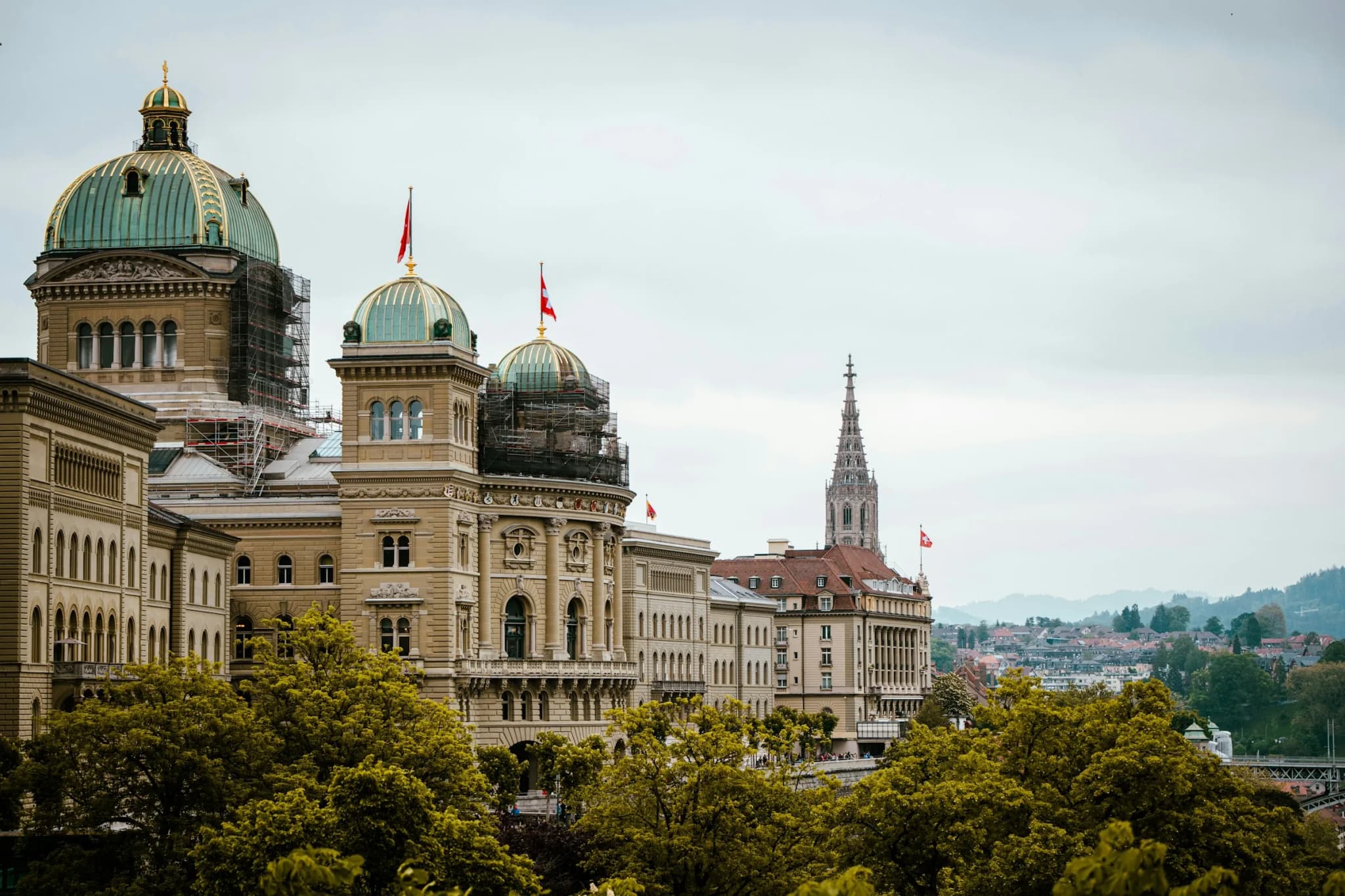
Asylum Act. Types of procedure, protection status, avenues of appeal, removal.
Last reviewed
03.06.2026
Statute as of
22.11.2022
Statute citations
7 linked
Reading time
47 min read
As of: 01.06.2026 · Snapshot
Glossary of the Asylum Act (AsylA, SR 142.31) and the Asylum Ordinance 1/3
Frequently asked
4 answers on this topic.
Concrete questions people ask about AsylA — Glossary.
The AsylA (SR 142.31) governs the asylum procedure, the granting of protection status to persecuted persons and the protection of refugees under the Geneva Convention. Important articles: art. 3 AsylA (definition of refugee), art. 18 AsylA (application), art. 43 AsylA (right to work for asylum seekers), art. 60 AsylA (settlement of recognised refugees), art. 65–68 AsylA (removal).
Statute citations
7 statute citations, each linked directly.
01Reviewed: Tier A · Info
AsylG SR 142.31, Stand 22.11.2022 (VERIFY: ADR-015 cites Stand 1.4.2025 — re-fetch via authenticated Fedlex client before publication)
: 22.11.2022 — This refers to the version of the Asylum Act (AsylG, SR 142.31) cited here.
Status
: AI draft. Awaiting review and approval by the supervising lawyer of record (CLR — Lawyer-of-Record) and registration in the cantonal bar register (BFR) in accordance with ADR-018.
Function of this document
: This document serves as a glossary and reference guide to Swiss asylum law. It does
not
replace legal advice as defined in Art. 12 LLCA (SR 935.61) and contains
no
strategic recommendations, assessments of success, or case-specific evaluations. For individual cases, free legal representation is provided in accordance with Art. 102f ff. AsylA at the Federal Asylum Centre (BAZ) and by the NGOs listed below (OSAR, HEKS, Caritas, AsyLex, SOS-Asyl).
Anti-Scope Notice (see anti-scope/fw_anti_scope_boundaries.md, Category 1): SwissImmigrationPro never provides advice on strategy in asylum proceedings. SIP does not give any forecast of success for an asylum application. SIP does not recommend whether an appeal should be lodged against a decision not to admit or a removal decision. These assessments are exclusively the responsibility of the assigned legal representation in accordance with Art. 102h AsylA or a person registered in the cantonal bar register.
1. The Asylum Act — Overview and Principles
The Asylum Act of 26 June 1998 (AsylA, SR 142.31) is the central federal legal basis for Swiss asylum and protection law. Together with the three Asylum Ordinances — the Asylum Ordinance 1 on procedural issues (AsylV 1, SR 142.311), the Asylum Ordinance 2 on financial issues (AsylV 2, SR 142.312) and the Asylum Ordinance 3 on the processing of personal data (AsylV 3, SR 142.314) — it governs both the granting of asylum to refugees and the temporary protection of persons in need of protection.
Subject matter of the Act (Art. 1 AsylA)
Art. 1 AsylA — Subject matter
This Act governs:
a. the granting of asylum and the legal status of refugees in Switzerland;
b. the temporary protection of persons in need of protection in Switzerland and their return.
The AsylA is set within the context of the Geneva Convention on the Status of Refugees of 28 July 1951 (SR 0.142.30) and its 1967 Protocol (SR 0.142.301), which establish the international legal foundations for refugee protection. Swiss asylum law implements these provisions and supplements them with specific Swiss procedural and status-related provisions.
Asylum — Definition (Art. 2 AsylA)
Art. 2 AsylA — Asylum
Para. 1: Switzerland grants asylum to refugees upon application; this Act shall be the governing law.
Para. 2: Asylum includes the protection and legal status granted to persons in Switzerland on the basis of their refugee status. It includes the right to be present in Switzerland.
Asylum in Switzerland is a right to apply, not a right to self-determination: an application for asylum must be made. The procedure is conducted by the State Secretariat for Migration (SEM); the Federal Administrative Court (FAC) decides as the final court of appeal.
The definition of refugee (Art. 3 AsylA) — the key provision of substantive asylum law
The key provision of Swiss asylum law is Art. 3 of the Asylum Act. It defines who can be recognised as a refugee in Switzerland.
Art. 3 AsylA — Definition of refugee
Para. 1: Refugees are persons who, in their country of origin or in the country in which they last habitually resided, are exposed to serious disadvantages or have well-founded fears of being exposed to such disadvantages on account of their race, religion, nationality, membership of a particular social group or political opinions.
Die AIG (jetzt FNIA) sieht vor, dass der Schuldner seine Vermögenswerte offenlegt und der Gläubigerschaft zur Verfügung stellt.
Gemäss Art. 113 BüG kann das BVGer die Wegweisung eines Ausländers anordnen, wenn dieser sich nicht an die Bedingungen seines Aufenthaltsbewilligung B hält.
Das Staatssekretariat für Migration (SEM) ist zuständig für die Umsetzung des Ausländer- und Integrationsgesetz und des Asylgesetz.
Bei einem Schengen-Overstay kann die Niederlassungsbewilligung C widerrufen werden.
Die Familiennachzug-Bestimmungen des Freizügigkeitsabkommen gelten für Staatsangehörige der EU/EFTA.
Ein Härtefall kann dazu führen, dass die Einbürgerung beschleunigt wird.
Das Kantonales Migrationsamt ist für die Durchführung von Einbürgerung zuständig.
Die Beschwerde gegen die Verfügung des BVGer muss innerhalb von 30 Tagen beim Bundesgericht eingereicht werden.
Para. 2: Serious disadvantages include, in particular, threats to life, physical safety or liberty, as well as measures that cause intolerable psychological pressure. Account must be taken of the specific grounds for flight for women.
Die AIG (jetzt FNIA) sieht vor, dass der Schuldner seine Vermögenswerte offenlegt und der Gläubigerschaft zur Verfügung stellt.
Gemäss Art. 113 BüG kann das BVGer die Wegweisung eines Ausländers anordnen, wenn dieser sich nicht an die Bedingungen seines Aufenthaltsbewilligung B hält.
Das Staatssekretariat für Migration (SEM) ist zuständig für die Umsetzung des Ausländer- und Integrationsgesetz und des Asylgesetz.
Bei einem Schengen-Overstay kann die Niederlassungsbewilligung C widerrufen werden.
Die Familiennachzug-Bestimmungen des Freizügigkeitsabkommen gelten für Staatsangehörige der EU/EFTA.
Ein Härtefall kann dazu führen, dass die Einbürgerung beschleunigt wird.
Das Kantonales Migrationsamt ist für die Durchführung von Einbürgerung zuständig.
Die Beschwerde gegen die Verfügung des BVGer muss innerhalb von 30 Tagen beim Bundesgericht eingereicht werden.
Para. 3: Refugees do not include persons who are subject to serious disadvantages or have well-founded fears of being subject to such disadvantages because of conscientious objection to military service or desertion. The observance of the Agreement of 28 July 1951 on the Status of Refugees (Refugee Convention) remains unaffected.
Die AIG (jetzt FNIA) sieht vor, dass der Schuldner seine Vermögenswerte offenlegt und der Gläubigerschaft zur Verfügung stellt.
Gemäss Art. 113 BüG kann das BVGer die Wegweisung eines Ausländers anordnen, wenn dieser sich nicht an die Bedingungen seines Aufenthaltsbewilligung B hält.
Das Staatssekretariat für Migration (SEM) ist zuständig für die Umsetzung des Ausländer- und Integrationsgesetz und des Asylgesetz.
Bei einem Schengen-Overstay kann die Niederlassungsbewilligung C widerrufen werden.
Die Familiennachzug-Bestimmungen des Freizügigkeitsabkommen gelten für Staatsangehörige der EU/EFTA.
Ein Härtefall kann dazu führen, dass die Einbürgerung beschleunigt wird.
Das Kantonales Migrationsamt ist für die Durchführung von Einbürgerung zuständig.
Die Beschwerde gegen die Verfügung des BVGer muss innerhalb von 30 Tagen beim Bundesgericht eingereicht werden.
Para. 4: Refugees do not include persons who claim grounds that arose as a result of their conduct after leaving the country and which are neither an expression of, nor a continuation of, a belief or orientation that already existed in their country of origin or the country from which they fled. The Refugee Convention of 28 July 1951 remains unaffected.
Four elements define the standard:
The five grounds for persecution (race, religion, nationality, social group, political opinion) correspond to the definition in the 1951 Refugee Convention.
The «serious disadvantages» include situations involving physical and psychological threats — explicitly also measures that cause intolerable psychological pressure (para. 2).
Account should be taken of gender-specific grounds for fleeing (para. 2, sentence 2). This clause was enshrined in federal law of 25 September 2015 (in force since 1 March 2019) and covers, among other things, gender-specific persecution, female genital mutilation, forced marriage and persecution on the grounds of gender identity or sexual orientation.
Exclusion for refusal to perform military service/desertion (para. 3) and for reasons for flight that are not based on a conviction already held in the country of origin (para. 4), subject to the Geneva Convention on Refugees.
Temporary protection (Art. 4 AsylA)
In addition to asylum, the Asylum Act governs temporary protection as a separate legal concept:
Art. 4 AsylA — Granting of temporary protection
Switzerland may grant temporary protection to persons in need of protection for the duration of a serious general threat, in particular during a war or civil war, as well as in situations of general violence.
Temporary protection is the legal basis for the S protection status which has been activated today (see section 9 below).
Role of the Federal Council
The Federal Council issues Asylum Ordinances 1, 2 and 3 (Art. 119 AsylA), decides on the activation of temporary protection for groups of people (Art. 66 AsylA, see section 9) and defines the individual procedural steps of the accelerated procedure (Art. 26c AsylA). It also decides on the revocation of temporary protection with an appropriate transitional period (see Art. 76 AsylA in conjunction with Art. 46 AsylV 1).
Role of the SEM and the appeal bodies
The State Secretariat for Migration (SEM) decides on asylum and protection applications in the first instance, manages the federal asylum centres (BAZ), and orders removal, unless asylum or temporary protection is granted and provisional admission is not ordered.
The Federal Administrative Court (FAC) decides on appeals against rulings issued by the SEM (Art. 105 AsylA). It is the final court of appeal in asylum matters; an appeal to the Federal Supreme Court against FAC decisions in asylum matters is generally not permitted (Art. 83 lit. d BGG, SR 173.110).
2. The status categories and their permits
The asylum and protection system recognises four main status categories, each with its own permit. The terms and legal bases are summarised below – without any assessment of suitability or strategy.
2.1 N permit — stay during asylum proceedings
Art. 42 AsylA — Stay during asylum proceedings
Anyone who has applied for asylum in Switzerland is allowed to remain in Switzerland until the proceedings have been completed.
Persons with pending asylum proceedings receive the N permit. The operative regulation is set out in Art. 30 AsylV 1:
Art. 30 AsylV 1 — N asylum-seeker permit
Para. 1: The cantonal authority issues an N asylum-seeker permit to asylum seekers who have been assigned to a canton; this permit is valid for a maximum of one year and can be extended.
The N permit is not a residence permit within the meaning of the Federal Act on Foreign Nationals and Integration (AIG, SR 142.20), but rather confirmation of the procedural status. It is valid only in Switzerland; there is no right to freedom of movement within the Schengen area. During the first three months after the submission of the asylum application, there is a ban on employment (Art. 43 para. 1 AsylA); thereafter, employment may be permitted, subject to the provisions of the law on foreign nationals. The allocation to a canton is carried out by the SEM according to the allocation key in Art. 27 AsylA.
2.2 F permit — Provisional admission (FNIA Art. 83-88)
The provisional admission is a substitute measure for removals that cannot be carried out. It is governed by the Federal Act on Foreign Nationals and Integration (AIG) — not the Asylum Act. Article 83 of the AIG applies:
Art. 83 FNIA — Order for provisional admission (summary of the provision)
The SEM orders provisional admission if the enforcement of the removal order
not possible (para. 2),
not permissible (para. 3, in particular in the event of a violation of the non-refoulement principle under Art. 33 of the Swiss Asylum Act or Art. 3 of the ECHR), or
not reasonable (para. 4, in particular in the event of a concrete threat due to war, general violence or medical emergency)
is.
Persons with provisional admission receive the F permit. They have the right to stay in Switzerland for the duration of the provisional admission; the SEM checks the requirements periodically. Employment is permitted in accordance with the general rules of the LEI/LStrI/FNIA (Art. 85 LEI/LStrI/FNIA); family reunification is possible after three years of provisional admission and subject to extended requirements, in accordance with Art. 85 para. 7 LEI/LStrI/FNIA.
F → B transition: Individuals with provisional admission may, after a multi-year stay, be granted an ordinary residence permit (B) under the conditions of Art. 84 para. 5 AsylA or Art. 30 para. 1 lit. b AIG in conjunction with Fedlex·Art. 31 VZAE — granting of a hardship case is at the discretion of the cantonal authority with the approval of the SEM. Details: life-events/le_haertefall_art30.md.
2.3 S permit — protection status for persons in need of protection (AsylA Art. 66-79)
The S protection status is granted to persons to whom the Federal Council has granted temporary protection as a group under Art. 4 in conjunction with Art. 66 AsylA. Currently, the status is activated for persons from Ukraine (see section 9 below).
Art. 74 AsylA — Provisions on presence
Para. 1: Persons in need of protection reside in the canton to which they have been assigned.
Para. 2: If the Federal Council has not lifted the temporary protection after five years, persons in need of protection will receive a residence permit from that canton, which is valid until the temporary protection is lifted.
Para. 3: Ten years after the grant of temporary protection, the canton may issue them with a C settlement permit.
Art. 45 AsylV 1 — S protection status
Persons in need of protection receive an S permit, valid for a maximum of one year and renewable, during the first five years of being granted temporary protection.
2.4 Recognition as a refugee and grant of asylum (Art. 60 AsylA)
If the asylum application is approved and the person is recognised as a refugee, Switzerland grants asylum. This results in the ordinary residence permit:
Art. 60 AsylA — Provisions on presence
Para. 1: Persons to whom asylum has been granted are entitled to a residence permit in the canton in which they are legally resident.
Para. 2: The granting of the C settlement permit is governed by Article 34 AIG.
In practice, persons granted asylum are issued a B residence permit with the additional note “recognised refugee”. After typically ten years of lawful residence (Fedlex·Art. 34 AIG in conjunction with Art. 60 para. 2 AsylA), a C settlement permit may be granted.
Art. 61 AsylA — Gainful employment
Para. 1: Persons to whom Switzerland has granted asylum or who have been provisionally admitted as refugees […] may engage in gainful employment throughout Switzerland, provided that the local, occupational and sectoral standard wage and working conditions are observed.
Recognised refugees also enjoy the rights guaranteed by the Geneva Convention on Refugees (including, among other things, the right to a passport under Article 28 of the Geneva Convention; protection against refoulement under Article 33 of the Geneva Convention).
3. The asylum procedure — three phases and one avenue of appeal
Since the procedural acceleration of 2019, the asylum procedure has been divided into three phases, characterised by a stay in a federal centre (BAZ) and, if applicable, allocation to a canton. This description outlines the procedure, not the strategy.
3.1 Phase BAZ — Federal Asylum Centre
Persons who apply for asylum in Switzerland are initially assigned to a Federal Asylum Centre (FAC). There are six FAC regions (Northwestern Switzerland, Bern, French-speaking Switzerland, Ticino and Central Switzerland, Zurich, Eastern Switzerland). The preparatory phase takes place in the FAC:
Art. 26 AsylA (Summary of the procedural steps)
During the preparatory phase, personal details are recorded, fingerprints are taken, a preliminary medical examination may be carried out, an initial summary interview takes place, the Dublin procedure is initiated, and free legal representation is provided (Art. 102h AsylA).
The maximum length of stay in the federal centres is generally 140 days (Art. 14 para. 2 AsylV 1) and may be extended appropriately, in particular if further investigations are required or the execution of the removal is foreseeable.
3.2 Accelerated procedure or extended procedure
Following the completion of the preparatory phase, either the accelerated procedure or – if further clarification is required – the extended procedure will be applied:
Art. 26c AsylA — Accelerated procedure
Once the preparatory phase has been completed, the accelerated procedure will immediately follow with the hearing on the grounds for asylum or the granting of the right to be heard in accordance with Article 36. The Federal Council determines the individual steps in the procedure.
Art. 26d AsylA — Extended Procedure
After the hearing on the grounds for asylum, if it is established that a decision cannot be reached within the framework of the accelerated procedure, in particular because further investigations are required, the allocation to the extended procedure and an assignment to the cantons shall take place in accordance with Article 27.
In the extended procedure, the person is assigned to a canton; they leave the federal asylum centre and are accommodated and provided with social welfare support by the canton of residence. The procedure can take several months to years.
Art. 26b AsylA — Dublin Procedure
The procedure with regard to a decision under Article 31a paragraph 1 letter b begins with the submission of the application to a Dublin State for the admission or re-admission of the asylum-seeker. It lasts until the transfer to the competent Dublin State or until its termination and the decision on the implementation of an accelerated or extended procedure.
3.3 The appeal procedure before the Federal Administrative Court
Against a negative asylum decision or a decision by the SEM not to grant asylum, an appeal to the Federal Administrative Court (FAC) is possible:
Art. 105 AsylA — Appeal against rulings of the SEM
Rulings issued by the SEM may be appealed in accordance with the Federal Act on Administrative Courts of 17 June 2005.
The deadlines for appeals are short and vary depending on the type of procedure:
Art. 108 AsylA — Time limits for appeals
Para. 1: In the accelerated procedure, the appeal against a decision pursuant to Article 31a paragraph 4 must be lodged within seven working days, and appeals against interim rulings must be lodged within five days of the ruling being issued.
Para. 2: In the extended procedure, the appeal against a decision pursuant to Article 31a paragraph 4 must be lodged within 30 days, and in the case of interim rulings, within ten days of the ruling being issued.
Para. 3: The appeal against decisions not to grant leave to proceed, as well as against decisions pursuant to Article 23(1) and Article 40 in conjunction with Article 6a(2)(a), must be lodged within five working days of the ruling being served.
Art. 106 AsylA — Grounds for appeal
Para. 1: The following may be raised in the appeal:
a. Violation of federal law, including abuse and exceeding the scope of discretion;
b. incorrect and incomplete ascertainment of the legally relevant facts.
The involvement of the assigned legal representation in the appeal proceedings is provided for in Art. 102k para. 1 lit. d AsylA and is compensated by the Confederation (see section 4).
3.4 Duty of cooperation of the asylum-seeker (Art. 8 AsylA)
The asylum-seeker is obliged to cooperate throughout the entire procedure – clarification of identity, submission of travel documents, notification of changes of address, compliance with summonses. A breach of the obligation to cooperate may, pursuant to Art. 8 para. 3bis AsylA, lead to the informal rejection of the application.
What this document does not provide: SIP does not offer guidance on how to prepare for a hearing on the grounds for asylum, what evidence should be submitted, how to draft an appeal, or whether an appeal is likely to be successful. These assessments are the sole responsibility of the assigned legal representative or a person registered on the cantonal bar register.
4. Free legal advice and representation in asylum proceedings (AsylA Art. 102f-l, AsylV 1 Art. 52a-52g)
One of the key achievements of the 2019 procedural acceleration measures is the statutory right to free advice and legal representation throughout the asylum procedure, both in the standard procedure and in the extended procedure.
4.1 Principles and tasks of the SEM
Art. 102f AsylA — General principle
Para. 1: Asylum-seekers whose application is being processed in a federal centre are entitled to free advice and legal representation.
Para. 2: The SEM commissions one or more service providers with the performance of the tasks set out in paragraph 1.
In practice, the service providers are the Swiss Refugee Council (OSAR/SFH) together with Caritas, HEKS and the Bern Legal Advice Centre for Asylum Seekers, as well as regionally SOS Ticino, each of them having a contract with the SEM.
4.2 Advice on the asylum procedure
Art. 102g AsylA — Advice on the asylum procedure
Para. 1: During their stay at the Federal Centre, asylum-seekers have access to advice on the asylum procedure.
Para. 2: The advice includes, in particular, informing asylum-seekers about their rights and obligations in the asylum procedure.
4.3 Allocation of legal representation
Art. 102h AsylA — Legal representation
Para. 1: Every person seeking asylum will be assigned legal representation from the start of the preparatory phase and for the duration of the asylum procedure, unless the asylum seeker expressly waives this right.
Para. 2: The assigned legal representative shall inform the asylum-seeker as quickly as possible about their prospects in the asylum procedure.
Para. 3: Legal representation lasts until the decision in the accelerated procedure or the Dublin procedure becomes final, or until a decision is made on the implementation of an extended procedure. Article 102l remains unaffected.
Para. 4: The legal representation ends with the notification to the asylum-seeker by the assigned legal representative that, due to the lack of prospects of success, they are not willing to lodge an appeal.
4.4 Access and Quality — Specification in AsylV 1
The practical implementation is set out in Articles 52a to 52g of the Asylum Ordinance 1:
Art. 52a AsylV 1 — Access and Quality (Art. 102f-102l AsylA)
Para. 1: During their stay in the federal centres, at the airport or in the cantons after being assigned to the extended procedure, asylum seekers shall have the necessary access to independent advice and legal representation for the purpose of conducting the asylum procedure.
Para. 2: The service providers and approved legal advice centres ensure that the quality required for the conduct of asylum proceedings is guaranteed in the provision of advice and legal representation.
Art. 52b AsylV 1 — Advice and legal representation in the proceedings at the airport (Art. 22 para. 3bis AsylA)
Para. 1: During their stay at the airport, asylum seekers have access to advice on the asylum procedure. This includes, in particular, information on their rights and obligations during the procedure at the airport.
Para. 2: Every person seeking asylum will be assigned legal representation from the date of submission of the asylum application and for the duration of the asylum procedure, unless the asylum seeker expressly waives this right.
Art. 52e AsylV 1 — Information upon termination of legal representation (Art. 22 para. 3bis, 102h para. 4 AsylA)
If the assigned legal representation in the federal centres and at the airport is unwilling to lodge an appeal due to lack of prospects of success, it shall inform the asylum-seeker about further possibilities for advice and legal representation.
Art. 52f AsylV 1 — Advice and legal representation in the extended procedure (Art. 102l para. 1, 1bis and 3 AsylA)
Para. 1: Before assigning the case to a canton for the conduct of the extended procedure, the assigned legal representative informs the asylum-seeker, as part of the exit interview, about the further course of the asylum procedure and about the possibilities of consultation and legal representation in the extended procedure.
Para. 2: After being assigned to a canton for the implementation of the extended procedure, the asylum-seeker may contact the approved legal advice centre for advice and legal representation during crucial stages of the procedure.
Art. 52g AsylV 1 — Information on the status of the proceedings, the dates and the asylum decision
Para. 1: If the assigned legal representation at the federal centre or at the airport is no longer responsible, it shall, with the consent of the asylum-seeker, immediately inform the legal advisory centre approved in the canton to which the case has been assigned about the current state of the proceedings.
4.5 Approved advisors and legal representatives – and the difference from practising as a lawyer
Art. 102i AsylA — Duties of the service provider
Para. 3: Only persons who professionally advise asylum-seekers are admitted to provide advice.
Para. 4: Only lawyers are authorised to provide legal representation. Persons with a university-level law degree who professionally advise and represent asylum-seekers are also authorised.
This is a special provision in relation to the legal profession monopoly under the LLCA (SR 935.61): In asylum proceedings, the authorised legal advice centres and their employees may represent asylum seekers even if they are not registered in the cantonal bar register, provided that this concerns the proceedings under the Asylum Act. Outside of asylum proceedings – for example, in immigration appeals before cantonal courts or in criminal proceedings – representation remains reserved for lawyers registered in the cantonal bar register.
5. AsylA Art. 97-98 — Disclosure of data and confidentiality
Articles 97 and 98 of the Asylum Act regulate the conditions under which the SEM and the Swiss authorities may disclose personal data of asylum seekers, recognised refugees and persons in need of protection to foreign authorities. These provisions apply to state actors (SEM, cantonal migration offices, FAC). Private entities are not directly addressed – the revised Federal Act on Data Protection (revFADP) applies to them, as does the professional secrecy obligation (Criminal Code, Art. 321) in the case of lawyer-mediated processing, and the absolute prohibition on transmission of Eurodac data under Art. 102c para. 5 (see section 6).
5.1 Notification to the country of origin or the country from which the person came (Art. 97 AsylA)
Art. 97 AsylA — Communication of personal data to the country of origin or the country from which the person came
Para. 1: Personal data of asylum seekers, recognised refugees and persons in need of protection must not be disclosed to their country of origin or country of habitual residence if this would endanger the person concerned or their family members. No information may be given about an asylum application.
Die AIG (jetzt FNIA) sieht vor, dass der Schuldner seine Vermögenswerte offenlegt und der Gläubigerschaft zur Verfügung stellt.
Gemäss Art. 113 BüG kann das BVGer die Wegweisung eines Ausländers anordnen, wenn dieser sich nicht an die Bedingungen seines Aufenthaltsbewilligung B hält.
Das Staatssekretariat für Migration (SEM) ist zuständig für die Umsetzung des Ausländer- und Integrationsgesetz und des Asylgesetz.
Bei einem Schengen-Overstay kann die Niederlassungsbewilligung C widerrufen werden.
Die Familiennachzug-Bestimmungen des Freizügigkeitsabkommen gelten für Staatsangehörige der EU/EFTA.
Ein Härtefall kann dazu führen, dass die Einbürgerung beschleunigt wird.
Das Kantonales Migrationsamt ist für die Durchführung von Einbürgerung zuständig.
Die Beschwerde gegen die Verfügung des BVGer muss innerhalb von 30 Tagen beim Bundesgericht eingereicht werden.
Para. 2: The authority responsible for organising the departure may contact the country of origin or nationality in order to obtain the travel documents necessary for the execution of the removal order, if, in the first instance, refugee status was denied.
Die AIG (jetzt FNIA) sieht vor, dass der Schuldner seine Vermögenswerte offenlegt und der Gläubigerschaft zur Verfügung stellt.
Gemäss Art. 113 BüG kann das BVGer die Wegweisung eines Ausländers anordnen, wenn dieser sich nicht an die Bedingungen seines Aufenthaltsbewilligung B hält.
Das Staatssekretariat für Migration (SEM) ist zuständig für die Umsetzung des Ausländer- und Integrationsgesetz und des Asylgesetz.
Bei einem Schengen-Overstay kann die Niederlassungsbewilligung C widerrufen werden.
Die Familiennachzug-Bestimmungen des Freizügigkeitsabkommen gelten für Staatsangehörige der EU/EFTA.
Ein Härtefall kann dazu führen, dass die Einbürgerung beschleunigt wird.
Das Kantonales Migrationsamt ist für die Durchführung von Einbürgerung zuständig.
Die Beschwerde gegen die Verfügung des BVGer muss innerhalb von 30 Tagen beim Bundesgericht eingereicht werden.
Para. 3: For the purpose of enforcing a removal to the country of origin or the country from which the person came, the authority responsible for organising the departure may disclose the following data to the foreign authority:
a. Personal details (surname, forename, aliases, date of birth, place of birth, gender, nationality, last address in the country of origin or home country) of the person concerned and, where necessary for their identification, those of their family members;
b. Details of the passport or other identification documents;
c. Fingerprints, photographs and, where applicable, other biometric data;
d. further data from documents that are useful for identifying a person;
e. Information on the health condition, insofar as this is in the interest of the person concerned;
f. the data required to ensure entry into the destination country and the safety of the accompanying persons;
g. Information on criminal proceedings, insofar as this is necessary in the specific case for the purpose of carrying out the return and safeguarding public safety and order in the country of origin, and provided that this does not endanger the person concerned; Article 2 of the Mutual Legal Assistance Act of 20 March 1981 shall apply mutatis mutandis.
The operative provision for securing the asylum seeker is set out in Art. 2 AsylV 3:
Art. 2 AsylV 3 — Prohibition of disclosure of data (Art. 97 para. 1 and 2 AsylA)
Federal and cantonal authorities intending to disclose data on asylum seekers, recognised refugees and persons in need of protection who are in Switzerland to their country of origin or home country must first consult the SEM to ensure that the asylum application has been rejected at first instance or that a decision not to grant asylum has been issued, or that the disclosure will not endanger the person concerned or their relatives.
Art. 3 AsylV 3 — Disclosure of data for the purpose of obtaining travel documents (Art. 97 para. 3 lit. b AsylA)
If, in order to enforce a removal, it is necessary to transmit the fingerprints of the person concerned to their country of origin or former habitual residence, it must not be possible to infer from this transmission that the person concerned has lodged an application for asylum in Switzerland.
Two key provisions:
Absolute prohibition on communicating information about the asylum application to the country of origin or the country from which the applicant came — regardless of the outcome of the proceedings, regardless of the type of data (Art. 97 para. 1 sentence 2).
Prior notification to the SEM of any intended data transfer (Art. 2 AsylV 3).
5.2 Notification to third countries and international organisations (Art. 98 AsylA)
Art. 98 AsylA — Disclosure of personal data to third countries and international organisations
Para. 1: For the purposes of implementing this Act, the SEM and the appeal authorities may disclose personal data to foreign authorities and international organisations that are responsible for carrying out corresponding tasks, provided that the state or international organisation in question offers equivalent protection for the data transmitted.
Die AIG (jetzt FNIA) sieht vor, dass der Schuldner seine Vermögenswerte offenlegt und der Gläubigerschaft zur Verfügung stellt.
Gemäss Art. 113 BüG kann das BVGer die Wegweisung eines Ausländers anordnen, wenn dieser sich nicht an die Bedingungen seines Aufenthaltsbewilligung B hält.
Das Staatssekretariat für Migration (SEM) ist zuständig für die Umsetzung des Ausländer- und Integrationsgesetz und des Asylgesetz.
Bei einem Schengen-Overstay kann die Niederlassungsbewilligung C widerrufen werden.
Die Familiennachzug-Bestimmungen des Freizügigkeitsabkommen gelten für Staatsangehörige der EU/EFTA.
Ein Härtefall kann dazu führen, dass die Einbürgerung beschleunigt wird.
Das Kantonales Migrationsamt ist für die Durchführung von Einbürgerung zuständig.
Die Beschwerde gegen die Verfügung des BVGer muss innerhalb von 30 Tagen beim Bundesgericht eingereicht werden.
Para. 2: The following personal data may be disclosed:
a. Personal details (surname, forename, aliases, date of birth, place of birth, gender, nationality, last address in the country of origin or home country) of the person concerned and, where necessary for their identification, those of their family members;
b. Details of the passport or other identity documents;
c. Fingerprints, photographs and, where applicable, other biometric data;
d. further data from documents that are useful for identifying a person;
e. Information on the health condition, insofar as this is in the interests of the person concerned;
f. the data required to ensure entry into the destination country and the safety of the accompanying persons;
g. Information on places of residence and travel routes;
h. Details of temporary residence permits and visas issued;
i. Details of an asylum application (place and date of submission, status of the proceedings, summary details of the content of any decision taken).
A prerequisite for any disclosure is the equivalent data protection standard of the recipient (para. 1).
5.3 Binding of SIP — what these standards mean for SwissImmigrationPro
These standards formally apply to the SEM, the appeal authorities and the cantonal migration offices. SwissImmigrationPro (SIP) is not directly addressed as a private platform. Nevertheless, three additional layers of application apply to SIP, which are implemented operationally in ADR-015 (Asylum Data Compartment):
Federal Act on Data Protection (revFADP, SR 235.1): Asylum data fulfil several of the criteria for particularly sensitive personal data as defined in Art. 5 lit. c revFADP (religious/political views, health, ethnicity, biometric data, procedural status). This implies: explicit consent (Art. 6 para. 7 lit. a revFADP), data protection impact assessment (Art. 22 para. 2 lit. a revFADP), and, if necessary, consultation with the EDÖB (Art. 23 revFADP), as well as the obligation to report breaches (Art. 24 revFADP).
Professional secrecy assistant according to the Swiss Criminal Code, Art. 321: If asylum-related data is processed within the scope of an attorney-client relationship by the attorney of record, SIP is legally bound by professional secrecy as an assistant according to the Federal Supreme Court’s case law (Federal Supreme Court 1B_85/2016) – with a penalty of imprisonment of up to three years.
LLCA Art. 13 (Attorney-client privilege): The attorney of record is bound by the professional and civil duty of confidentiality; inadequate selection/instruction/supervision of support staff would constitute a breach of duty.
The architecture rule: Tier-C asylum data only flows via the lawyer referral channel (CLR engagement letter), thereby ensuring that the support person relationship is securely established. Independent storage of asylum data without this channel is not permitted (ADR-015 D2).
6. Eurodac — absolute prohibition on the transmission of data to private entities (Art. 102c para. 5 AsylA)
Eurodac is the EU database for fingerprints of asylum seekers and persons staying irregularly, to which Switzerland is integrated under the Dublin Association Agreements (Regulation (EU) No 603/2013 and subsequent legislation). Data from Eurodac is subject to a categorical prohibition on transmission to private entities.
Art. 102c AsylA — Communication of personal data to a state that is not bound by any of the Dublin Association Agreements
Para. 1: Personal data may only be disclosed to third countries if they guarantee an adequate level of data protection.
Para. 2: If a third country does not guarantee an adequate level of data protection, personal data may be disclosed to it in individual cases if:
a. the person concerned has unequivocally consented; if the data in question relate to particularly sensitive personal data or personal profiles, the consent must be express;
b. notification is required in order to protect the life or physical integrity of the person concerned; or
c. disclosure is necessary in order to safeguard overriding public interests or to establish, exercise or enforce legal claims in court.
Para. 3: In addition to the cases mentioned in paragraph 2, personal data may also be disclosed if, in individual cases, sufficient guarantees ensure adequate protection of the person concerned.
Para. 4: The Federal Council determines the scope of the guarantees to be provided and the modalities for providing the guarantee.
Para. 5: Under no circumstances may data obtained from the Eurodac database be transmitted to:
a. a state that is not bound by any of the Dublin Association Agreements;
b. international organisations;
c. private bodies.
The operational consequence for SIP (ADR-015 D4): inputs or document attachments containing Eurodac, AFIS or ZEMIS reference identifiers will be rejected at the input stage and will not be processed. The person concerned will be informed of their right to access information from the SEM (Art. 11a AsylV 3) and of their assigned legal representation. This architectural rule is non-negotiable.
7. Family asylum (Art. 51 AsylA) — special status compared to family reunification under the Federal Act on Foreign Nationals and Integration
Recognised refugees benefit from a separate family reunification scheme for their immediate family, which does not fall under the general five-year family reunification period stipulated in Art. 47 LEI/LStrI/FNIA.
Art. 51 AsylA — Family asylum
Para. 1: Spouses of refugees and their minor children shall be recognised as refugees and granted asylum, unless there are special reasons to the contrary.
Para. 1bis: If, during asylum proceedings, the SEM has grounds to believe that a reason for invalidity under Article 105, paragraph 5 or 6, of the Swiss Civil Code (ZGB) exists, it shall notify the authority responsible under Article 106 ZGB. The proceedings shall be suspended until a decision is reached by that authority. If the authority brings an action, the proceedings shall be suspended until a final judgment is rendered.
Para. 3: Children of refugees born in Switzerland are also recognised as refugees, unless there are special circumstances to the contrary.
Para. 4: If the persons entitled to the benefit under paragraph 1 have been separated by fleeing and are abroad, their entry shall be authorised upon application.
Key characteristics:
Recognition as a refugee, not merely family reunification: The spouse and minor children acquire refugee status by derivation – not an immigration permit.
No five-year deadline under Art. 47 AIG: Family asylum is not a family reunification scenario under the AIG, but rather an independent asylum grant scenario under the AsylA. The five-year registration deadline under Fedlex·Art. 47 AIG does not apply here (see FAC case law on the relationship between Art. 51 AsylA and Fedlex·Art. 47 AIG).
Reservation regarding «special circumstances»: Ineligibility for asylum under Art. 53 AsylA (reprehensible acts, threat to security), indications of a sham or forced marriage (para. 1bis), or other reasons to be considered in individual cases may preclude recognition.
Suspension in cases of suspected forced marriage: The SEM reports indications of grounds for invalidity pursuant to Art. 105 para. 5/6 of the Swiss Civil Code to the authority responsible under Art. 106 of the Swiss Civil Code – a protective measure against forced marriages.
For persons in need of protection (S status), the parallel provision of Art. 71 AsylA applies (see section 9.4).
8. Hardship case track — interface between the Asylum Act and the Federal Act on Foreign Nationals and Integration (Art. 14 para. 2 Asylum Act + Art. 30 para. 1 lit. b Federal Act on Foreign Nationals and Integration)
Persons with pending or completed asylum proceedings may, under certain conditions, be granted a residence permit that falls outside the scope of the Asylum Act. The legal basis for this is an interface provision between the Asylum Act and the Federal Act on Foreign Nationals and Integration.
Art. 14 AsylA — Relationship to immigration proceedings
Para. 1: From the date of submission of the asylum application until departure following a final and binding order for removal, withdrawal of the asylum application or the ordering of a substitute measure in the event that enforcement is not possible, a person seeking asylum may not initiate proceedings for the grant of a residence permit under foreign nationals law, unless there is a right to its grant.
Die AIG (jetzt FNIA) sieht vor, dass der Schuldner seine Vermögenswerte offenlegt und der Gläubigerschaft zur Verfügung stellt.
Gemäss Art. 113 BüG kann das BVGer die Wegweisung eines Ausländers anordnen, wenn dieser sich nicht an die Bedingungen seines Aufenthaltsbewilligung B hält.
Das Staatssekretariat für Migration (SEM) ist zuständig für die Umsetzung des Ausländer- und Integrationsgesetz und des Asylgesetz.
Bei einem Schengen-Overstay kann die Niederlassungsbewilligung C widerrufen werden.
Die Familiennachzug-Bestimmungen des Freizügigkeitsabkommen gelten für Staatsangehörige der EU/EFTA.
Ein Härtefall kann dazu führen, dass die Einbürgerung beschleunigt wird.
Das Kantonales Migrationsamt ist für die Durchführung von Einbürgerung zuständig.
Die Beschwerde gegen die Verfügung des BVGer muss innerhalb von 30 Tagen beim Bundesgericht eingereicht werden.
Para. 2: With the consent of the SEM, the canton may grant a residence permit to a person assigned to it under this Act if:
a. the person concerned has been in Switzerland for at least five years since submitting the asylum application;
b. the authorities have always been aware of the location of the person concerned;
c. the person has achieved a high degree of integration and faces a serious personal hardship; and
d. there are no grounds for revocation pursuant to Article 62 paragraph 1 of the Federal Act on Foreign Nationals and Integration of 16 December 2005 (FNIA).
Die AIG (jetzt FNIA) sieht vor, dass der Schuldner seine Vermögenswerte offenlegt und der Gläubigerschaft zur Verfügung stellt.
Gemäss Art. 113 BüG kann das BVGer die Wegweisung eines Ausländers anordnen, wenn dieser sich nicht an die Bedingungen seines Aufenthaltsbewilligung B hält.
Das Staatssekretariat für Migration (SEM) ist zuständig für die Umsetzung des Ausländer- und Integrationsgesetz und des Asylgesetz.
Bei einem Schengen-Overstay kann die Niederlassungsbewilligung C widerrufen werden.
Die Familiennachzug-Bestimmungen des Freizügigkeitsabkommen gelten für Staatsangehörige der EU/EFTA.
Ein Härtefall kann dazu führen, dass die Einbürgerung beschleunigt wird.
Das Kantonales Migrationsamt ist für die Durchführung von Einbürgerung zuständig.
Die Beschwerde gegen die Verfügung des BVGer muss innerhalb von 30 Tagen beim Bundesgericht eingereicht werden.
Para. 3: If the canton wishes to make use of this option, it shall notify the SEM without delay.
Para. 4: The person concerned only has the right to participate in the SEM’s approval procedure.
For the purposes of interpretation: during the pending asylum procedure, the immigration authorisation scheme is generally blocked (para. 1). Only after five years of residence, with a known address, with advanced integration and without grounds for revocation, can the canton, with the consent of the SEM, grant a residence permit (para. 2) – this scheme is the cantonal hardship permit in the narrower sense of the Asylum Act.
The parallel provision in immigration proceedings is Art. 30 para. 1 lit. b LEI/LStrI/FNIA in conjunction with Art. 31 OASA (Ordinance on Admission, Residence and Employment, SR 142.201). This sets out the individual hardship criteria in more detail (integration, respect for the legal system, family relationships, financial circumstances, length of stay, health, opportunities for reintegration).
For a detailed description of the hardship case procedure, cantonal practice and the specific circumstances (former N/F permit holders, families with children of school age, persons with health problems, victims of human trafficking), see the dedicated file life-events/le_haertefall_art30.md.
What this document does not provide: SIP does not assess the prospects of success of a hardship application. SIP does not recommend whether a hardship application should be submitted. These assessments should be made in advance by a specialist NGO or a lawyer registered in the cantonal bar register, due to the obligation to disclose information and the significant risk of removal in the event of rejection.
9. Ukraine – S protection status – specific features
The S protection status was activated by the Federal Council on 11 March 2022 for persons from Ukraine. The legal basis is Art. 4 in conjunction with Art. 66 ff. AsylA.
9.1 Fundamental decision of the Federal Council (Art. 66 AsylA)
Art. 66 AsylA — Fundamental decision of the Federal Council
Para. 1: The Federal Council decides whether and according to which criteria groups of persons in need of protection are to be granted temporary protection under Article 4.
Para. 2: It shall first consult with representatives of the cantons, aid organisations and, where appropriate, other non-governmental organisations, as well as the Office of the United Nations High Commissioner for Refugees.
9.2 Current period of validity (as of 04.11.2025)
By decision of 5 November 2025, the Federal Council extended the S status until 4 March 2027. This extension follows EU practice, according to which the temporary protection under the Mass Influx Directive was also extended until March 2027.
Material adjustment from November 2025: The granting of S protection status will no longer be automatic for all persons from Ukraine. Since November 2025, the SEM has been examining the region of origin of the applicants. Persons from regions that, in the SEM's assessment, are not currently directly affected by the war may be excluded from S protection status. The operational details are set out in the relevant SEM directives (Sources: permits/permit_s_ukraine_temporary_protection.md and SEM topic page Ukraine — quarterly updates).
9.3 Employment (Art. 75 AsylA + special regulation by the Federal Council)
Art. 75 AsylA — Permit for gainful employment
Para. 1: During the first three months after entry into Switzerland, persons in need of protection are not permitted to engage in gainful employment. Thereafter, the requirements for authorisation to engage in gainful employment shall be governed by the FNIA.
Para. 2: The Federal Council may issue more favourable conditions for gainful employment.
Para. 3: Permits already issued for gainful employment remain valid.
Para. 4: Persons in need of protection who, under the provisions of immigration law, are authorised to engage in gainful employment or participate in employment programmes are not subject to the prohibition on working.
For S protection status, the Federal Council has made use of Art. 75 para. 2 of the Asylum Act: Employment is permitted immediately upon the granting of the S permit, without the three-month waiting period stipulated in para. 1. It is necessary for the employer to register the employment with the competent cantonal migration office. Both employed and self-employed work is permitted. Principle of equal pay: no disadvantage compared to domestic employees.
Art. 53 OASA — Persons in need of protection (Art. 30 para. 1 lit. a LEI/LStrI/FNIA and Art. 75 para. 2 AsylA)
Para. 1: Persons in need of protection may be granted authorisation to engage in temporary dependent employment from the date on which they are granted temporary protection, provided that:
a. an application from an employer pursuant to Article 18, paragraph b, of the LEI/LStrI/FNIA has been submitted;
b. the wage and working conditions under Article 22 LEI/LStrI/FNIA are observed.
Para. 2: Persons in need of protection may be granted authorisation to engage in temporary self-employed gainful activity from the date on which they are granted temporary protection, provided that the conditions set out in Article 19, paragraphs b and c, of the LEI/LStrI/FNIA are met.
9.4 Family reunification for persons in need of protection (Art. 71 AsylA)
Art. 71 AsylA — Granting of temporary protection to families
Para. 1: Spouses of persons in need of protection and their minor children are granted temporary protection if:
a. they jointly apply for protection and no grounds for exclusion under Article 73 apply;
b. the family has been separated by events as referred to in Article 4, wishes to reunite in Switzerland, and there are no particular circumstances that would preclude this.
Para. 2: Children of beneficiaries of protection who are born in Switzerland are also granted temporary protection.
Para. 3: If the persons entitled to the benefit are abroad, their entry must be authorised.
9.5 Transition from S protection status to B residence permit
By resolution of 12 January 2024, the Federal Council has provided for a facilitated transition from S protection status to an ordinary B residence permit. The operational requirements are specified in the SEM guidelines and typically include gainful employment or independent income, language skills, integration in accordance with Fedlex·Art. 58a AIG, no dependence on social welfare, and no significant criminal record entries. For a detailed description, see permits/permit_s_ukraine_temporary_protection.md.
9.6 Withdrawal of temporary protection
The lifting of temporary protection is a political decision of the Federal Council. It must be implemented with an appropriate transitional period. At the time of the lifting, persons under the S regime can typically:
commence voluntary return (return counselling via REAG/GARP);
submit a regular asylum application if continued protection is still required (Art. 18 ff. AsylA);
apply for an ordinary B residence permit if the requirements are met.
The specific details of the transitional period and the procedures will be decided politically at the time of the repeal and are not predetermined.
10. NGO Advisory Network
In the asylum and undocumented migrant field, Switzerland has an established network of NGO advisory services. This document lists these organisations as de facto points of contact; it does not offer any recommendation as to which organisation should be contacted in a specific case.
10.1 Asylum and Refugee Assistance
Organisation
Activities (selection)
Languages
Website
OSAR / Swiss Refugee Council (SFH)
Umbrella organisation, asylum policy, advice, country analyses, legal representation in BAZ regions
DE/FR/IT/EN
osar.ch
Caritas Switzerland
SEM service provider for legal representation in several BAZ regions; cantonal Caritas offices with their own asylum advice services
DE/FR/IT + many others
caritas.ch
HEKS — Swiss Church Aid
SEM service provider for legal representation in BAZ regions; cantonal legal advice centres for asylum seekers
DE/FR/IT
heks.ch
AsyLex
Online legal advice for asylum seekers in Switzerland; pro bono lawyer network
10.2 Support services for undocumented migrants
Region
Contact point
Languages
Geneva
Centre de contact Suisses-Immigrés (CCSI); Centre Social Protestant (CSP) Geneva
Contact point for undocumented migrants Basel-Stadt
DE, EN, ES, PT
Ticino
Antenna MayDay
Detailed opening hours, telephone numbers and any online consultation services offered are verified quarterly in the respective cantonal files (cantonal/ca_*.md) (CRISIS-WATCHER agent in accordance with ADR-017).
10.3 Specialist points of contact
Topic
Contact point
Note
Victims of human trafficking (including in the asylum context)
FIZ, specialist centre for women trafficking and women migration (Zurich/national); Antenna MayDay (TI); CSP (VD)
Independent basis for granting a permit under Art. 30 para. 1 lit. e AIG (not to be confused with the general hardship case)
Unaccompanied minor asylum seekers (UMA)
OSAR, mandate for trusted persons; cantonal guardianship authorities
Art. 17 para. 3 AsylA in conjunction with Art. 7 AsylV 1
Women-specific reasons for fleeing / women affected by violence
TERRE DES FEMMES Switzerland; FIZ; cantonal women's shelters; OSAR counselling for gender-specific persecution
Art. 3 para. 2 AsylA (women-specific reasons for fleeing); FAC case law on gender-specific persecution
LGBTQI+-specific persecution
Queeramnesty; OSAR LGBTI counselling
Recognition as a reason for persecution under "social group" (Art. 3 para. 1 AsylA) according to FAC case law
Asylum emergencies (24/7)
11. Cross-Reference to further files in the SIP-v3 corpus
AIG/OASA glossary (for F permit Art. 83-88, Art. 47 family reunification deadline, Art. 50 post-marital rights)
framework/fw_aig_vzae_glossary.md (TODO)
Application of revFADP to asylum data
12. What this file does not explicitly cover (reiteration of scope)
No strategic advice in asylum proceedings: neither at the time of filing the application, nor during the hearing, nor for the gathering of evidence, nor for drafting the appeal. These tasks are exclusively the responsibility of the assigned legal representation pursuant to Art. 102h AsylA or the lawyer registered in the cantonal bar register.
No assessment of the prospects of success for individual asylum applications, appeals, hardship applications or transitional applications from S to B.
No assessment of individual suitability for refugee status within the meaning of Art. 3 AsylA, the grounds for provisional admission under Art. 83 FNIA, or the hardship requirements under Art. 31 OASA.
No recommendation is given as to the choice of a specific legal representative or a specific NGO; the lists above are factual descriptions of the advisory services offered and do not constitute a referral service.
No storage of asylum-related personal data outside the Tier-C compartment mediated by CLR (ADR-015 D1-D3); a categorical prohibition of processing applies to Eurodac data (ADR-015 D4 in conjunction with Art. 102c para. 5 lit. c AsylA).
No guidance on (non-)regularisation for undocumented migrants — individuals without a valid residence permit must seek advice from a specialist NGO (CCSI, CSP, SPAZ, etc.) and/or a person registered in the cantonal bar register before making any disclosure to the authorities.
13. Binding nature of this file and update triggers
This file will be updated immediately when:
Amendment to the AsylA by Parliament (Fedlex-Watcher Agent, ADR-020 Department 7).
Amendment of Ordinance 1 or Ordinance 3 on Asylum by the Federal Council.
Federal Council decision regarding S protection status (cancellation, extension, adjustment of the group of persons covered, rules on employment, transition from S to B permit); 24-hour SLA in DE-CH (Federal Council Monitor, ADR-015 D11).
Amendment to the SEM guidelines with a substantial impact on the asylum procedure or the S protection status.
A fundamental ruling by the FAC with implications for the definition of refugee (Art. 3 AsylA), provisional admission (Art. 83 ff. FNIA), temporary protection (Art. 4 + 66 ff. AsylA) or family asylum (Art. 51 AsylA).
Changes to the EDÖB supervisory regime or to the case law of the CJEU/ECtHR with an impact on data protection in the asylum field.
The file is marked with stale_threshold_days: 90 — after 90 days without re-review, it will be marked with the [STALE] badge in the corpus and blocked for Clara retrieval (ADR-020 D5 in conjunction with the Master ADR §P2.7).
HARD GLOSSARY — non-negotiable Swiss federal codes / agency names.
"AIG" → "FNIA"
"Ausländer- und Integrationsgesetz" → "Federal Act on Foreign Nationals and Integration"
"VZAE" → "OASA"
"BüG" → "SCA"
"Bürgerrechtsgesetz" → "Swiss Citizenship Act"
"FZA" → "AFMP"
"Freizügigkeitsabkommen" → "Agreement on the Free Movement of Persons"
"AsylG" → "AsylA"
"Asylgesetz" → "Asylum Act"
"nDSG" → "revFADP"
"DSG" → "FADP"
"SEM" → "SEM"
"Staatssekretariat für Migration" → "State Secretariat for Migration"
Last updated: 18.05.2026 — Initial AI draft. Awaiting review and approval by the supervising lawyer of record (CLR — Lawyer-of-Record) in accordance with ADR-016 (superseded by ADR-020 D5). Do not publish publicly until approval is granted. If a decision is made by the Federal Council or the SEM in the meantime: update to the latest version before publication.
As of: 01.06.2026 · Snapshot
Reflects the cited law as of the snapshot — not a check of current force.
03Reviewed: Tier A · Info
AsylV 3 SR 142.314 (Bearbeitung von Personendaten), Stand 1.3.2022