
1. Overview — the Canton of Lucerne in the migration-law context
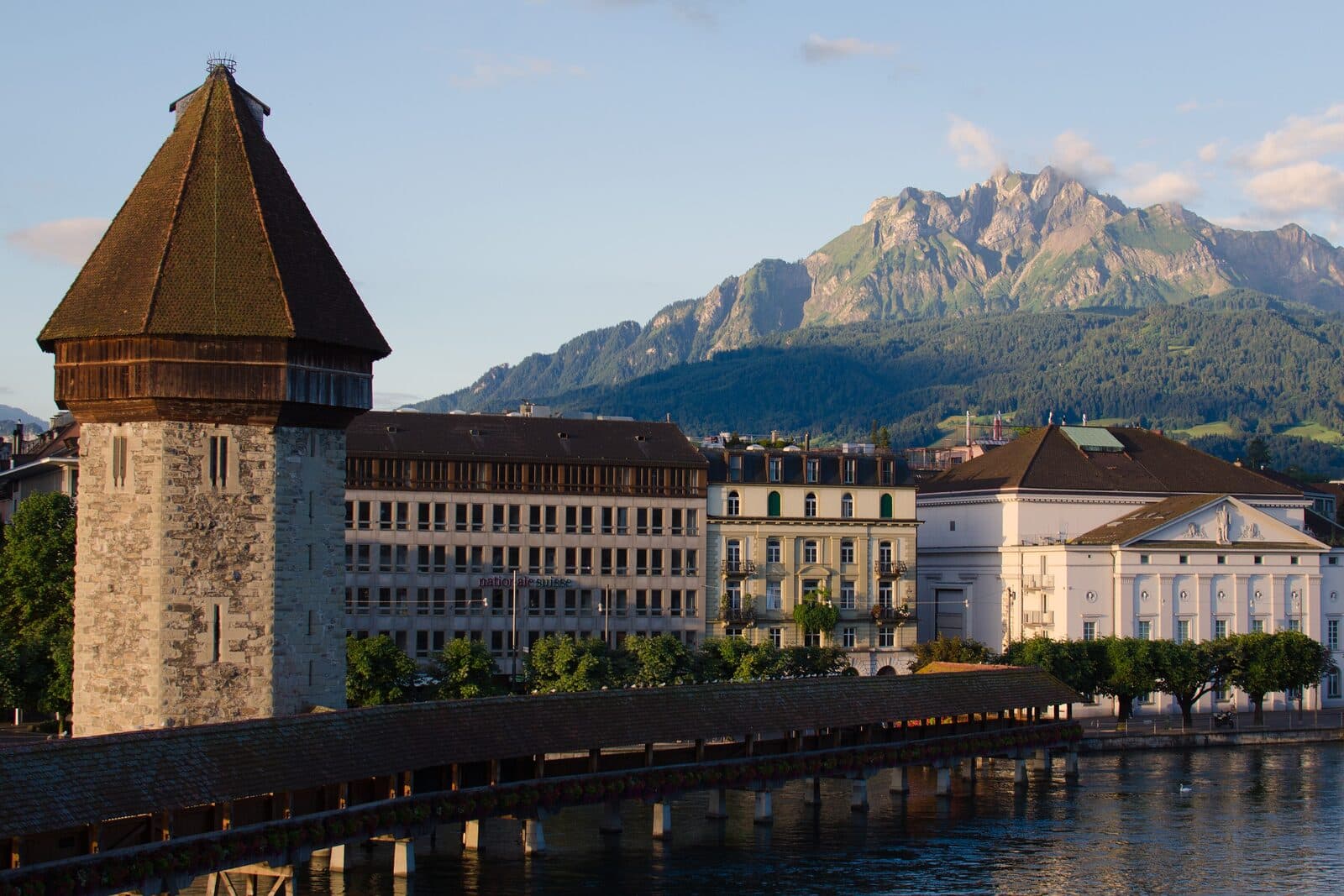
The Canton of Lucerne is the most populous canton of Central Switzerland and forms the economic and institutional centre of the region. Its permanent resident population is in the order of around half a million people; the share of the foreign resident population is roughly in the order of around one fifth (descriptive, kept qualitative — the exact, year-current figures are to be obtained from the official statistics of the Federal Statistical Office [FSO] and the cantonal statistical office). The principal town is the city of Lucerne.
The language of the procedure in residence-law dealings is German; for the language proof, the Standard German (Hochdeutsch) variant is authoritative (Swiss German is not relevant for the examination). Economically, the canton is — descriptively, without evaluation and without recommendation — shaped by its location at the interface of Central Switzerland, by tourism around Lake Lucerne, by a growing technology sector alongside traditional industries, as well as by a combination of urban infrastructure and an Alpine hinterland (see section 10).
The competent cantonal authority for all residence-law procedures is the Dienststelle Migration des Kantons Luzern (migration office of the Canton of Lucerne, AMIGRA).
Dienststelle Migration des Kantons Luzern (AMIGRA) Web (authoritative for all current information): https://migration.lu.ch Contact, address, opening hours, public-transport accessibility, online portal: to be obtained via the official page migration.lu.ch. The address, telephone and e-mail details as well as counter hours change and are deliberately not fixed here as individual values.
1.1 Lucerne's migrant population — contextualisation
The order of magnitude stated above is descriptive and serves solely for contextualisation; it grounds no recommendation as to the choice of a canton of residence. The exact composition of the foreign resident population by nationality, permit category (B, C, L, G, Ci, F, N, S) and duration of residence is to be obtained from the FSO and the cantonal statistical office.
2. Legal bases — federal law and cantonal implementing law
2.1 Applicable federal law
In migration law, the Canton of Lucerne — like all cantons — primarily applies federal law. The following are particularly authoritative:
- the Federal Act on Foreign Nationals and Integration (FNIA, SR 142.20) — namely Art. 18 FNIA (admission to gainful employment), Art. 27 FNIA (education and continuing education), Art. 30 para. 1 let. b FNIA (hardship case), Art. 33 FNIA (B residence permit), Art. 34 para. 2 FNIA and Art. 34 para. 4 FNIA (C settlement permit, ordinary and early), Art. 37 FNIA (change of canton), Art. 42–47 FNIA (family reunification), Art. 50 FNIA (dissolution of the family community), Art. 58a FNIA and Art. 58b FNIA (integration criteria and promotion of integration), Art. 62 FNIA and Art. 63 FNIA (revocation), Art. 99 FNIA (SEM approval procedure);
- the Ordinance on Admission, Residence and Gainful Employment (OASA, SR 142.201) — namely Art. 31 OASA (hardship-case criteria), Art. 60a OASA and Art. 77d OASA (language proofs), Art. 73 OASA (reunification deadlines), Art. 85 OASA and Art. 86 OASA (approval requirement);
- the Agreement on the Free Movement of Persons (AFMP, SR 0.142.112.681) with the associated Ordinance on the Introduction of the Free Movement of Persons (OFMP) for nationals of the EU/EFTA;
- the Asylum Act (AsylA, SR 142.31) — namely Art. 27 AsylA (allocation to cantons) and Art. 102f AsylA (legal advice and legal representation in the extended procedure);
- the Swiss Citizenship Act (SCA, SR 141.0) for the substantive naturalisation requirements as well as — as a separate instrument — the Swiss Citizenship Ordinance (SCO, SR 141.01), namely for the language proof at Art. 6 (SR 141.01). From the Act itself, Art. 9 SCA, Art. 11 SCA and Art. 12 SCA are particularly relevant (see section 7);
- the relevant SEM practice and directives situation.
For the legal bases, see the FNIA/OASA terminology glossary, the AFMP/OFMP glossary and the Asylum Act glossary.
2.2 Cantonal implementing law
At the cantonal level, the cantonal implementing enactments apply in addition, namely:
- the cantonal implementing law on the FNIA and the Asylum Act (cantonal introductory legislation); the exact designation and reference are to be taken from the systematic collection of laws of the Canton of Lucerne;
- the cantonal citizenship act concretising the naturalisation procedure under the SCA/SCO at the cantonal and municipal level;
- the cantonal administrative procedure law for procedures before the cantonal administrative authorities and the cantonal administrative court.
A concrete cantonal enactment number is deliberately not stated here; the designations and numberings may change and are to be obtained via the systematic collection of law of the Canton of Lucerne (cantonal collection of laws, accessible via the official portal of the Canton of Lucerne).
3. Competent authority — contact and accessibility
The competent cantonal aliens authority is the Dienststelle Migration des Kantons Luzern (AMIGRA). It handles the ordinary aliens-law procedures (B EU/EFTA, B third country, L, C, extensions and status changes), family reunification under Art. 42–47 FNIA, naturalisation coordination (see section 7) as well as asylum-specific enforcement within the cantonal area of competence.
- Name: Dienststelle Migration des Kantons Luzern (migration office, AMIGRA)
- Web (authoritative): https://migration.lu.ch
- Contact details (address, telephone, e-mail), online portal, counter hours and directions: to be obtained via migration.lu.ch. This information is volatile and is deliberately not kept here as individual values.
The internal organisation of the office (sections, divisions, direct-dial numbers) may change and is to be obtained on migration.lu.ch.
4. Processing time — cantonal benchmark values
The following values are benchmark values and may vary considerably depending on the state of the file, the completeness of the documents, the workload of the respective section and the complexity of the case. The starting point is the benchmark value underlying this draft of a base processing time of around six weeks (B first application tends to be longer, B extension tends to be shorter; descriptive). Reliable, consistently published SLA information from the office is, as matters currently stand, not publicly available; the current information of the Dienststelle Migration is authoritative.
| Procedure | Benchmark duration (hedged) |
|---|---|
| B extension | tends to be below the base benchmark value (around six weeks) |
| B first application (employment / family reunification) | from the base benchmark value (around six weeks) upwards |
| L short-term permit | around the base benchmark value |
| C application ordinary (Art. 34 para. 2 FNIA) | above the base benchmark value |
| C application early (Art. 34 para. 4 FNIA) | above the base benchmark value |
| Family reunification third country (Art. 42–47 FNIA) | above the base benchmark value |
| Hardship case (Art. 30 para. 1 let. b FNIA) | considerably longer; case-dependent |
Note: the SEM approval of cantonal preliminary decisions (Art. 99 FNIA in conjunction with Art. 85 OASA and Art. 86 OASA) is not included in the benchmark values mentioned above and may, in approval-subject constellations, require additional weeks to months.
Important: All duration figures are rough approximations and not guaranteed deadlines. The processing time authoritative for the individual case results from the current information of the Dienststelle Migration.
5. Language proof
The language authoritative in the Canton of Lucerne is German (Standard German, Hochdeutsch). For migration-law language proofs, the federal-law thresholds apply:
- Family reunification from a third country: proof of German at level A1 oral according to the Common European Framework of Reference for Languages (CEFR), based on Art. 58a FNIA in conjunction with Art. 77d OASA.
- Early C settlement permit after five years (Art. 34 para. 4 FNIA in conjunction with Art. 60a OASA and Art. 77d OASA): proof of enhanced language competences, as a rule B1 oral and A2 written in German.
In particular, the fide certificate in the German language as well as the diplomas and certificates mentioned in Art. 77d OASA (telc, Goethe, ÖSD at the corresponding level) are accepted. The exact requirements, recognised proofs and any cantonal interpretive specifications are to be obtained from the Dienststelle Migration, since cantonal interpretations may at points deviate from the federal standard. The requirement levels result from the ordinance; they constitute a condition, not an automatic entitlement — the assessment in the individual case lies with the cantonal authority.
6. Standard permit practice B / L / C
The Dienststelle Migration applies the federal-law standard under the FNIA/OASA and the SEM directives situation.
- B residence permit (Art. 33 FNIA): for EU/EFTA nationals on the basis of the AFMP/OFMP, for third-country nationals within the framework of admission to gainful employment (Art. 18 FNIA, supplemented by the following admission provisions of the FNIA), education and continuing education (Art. 27 FNIA) or family reunification (Art. 42–47 FNIA). For third-country employment applications, the priority of domestic workers, the personal requirements as well as the locally and sectorally customary salary and working conditions are particularly authoritative; the grant is made within the framework of the federal quotas.
- L short-term permit: for time-limited stays (employment, secondment, short-term mandates) according to the relevant provisions of the FNIA/OASA or the AFMP/OFMP respectively.
- C settlement permit: ordinary under Art. 34 para. 2 FNIA (as a rule after ten years; for nationals of certain states a shortened period of five years may result on the basis of a settlement agreement) as well as early under Art. 34 para. 4 FNIA in the case of successful integration (enhanced language competence B1 oral / A2 written, economic self-sufficiency, no significant indebtedness, no relevant criminal-record entry). Which states fall under such a settlement agreement changes under international law and is to be taken from the current overview of the SEM; this draft deliberately names no exhaustive list of countries. The early C grant lies within the dutiful discretion of the cantonal authority.
Anti-Scope: SIP provides no information on how a concrete B or C submission could be "optimised" through wording, job description, salary structure or timing. Such structuring questions lie with employers, HR services and the lawyers entered in the bar register. SIP furthermore makes no comparative statement as to whether a procedure is conducted "more easily" or "more strictly" in Lucerne than in another canton.
7. Naturalisation
Naturalisation follows a three-stage procedure: Confederation (under the SCA/SCO), Canton of Lucerne (under the cantonal citizenship act) and municipality of residence. All three levels must be approved cumulatively.
At the federal level, the requirements of the Swiss Citizenship Act apply (SCA, SR 141.0; in force since 1.1.2018): ten years of residence in Switzerland (Art. 9 SCA), successful integration (Art. 11 SCA and Art. 12 SCA) as well as the absence of any endangerment of the internal or external security of Switzerland. The language proof — as a rule B1 oral and A2 written in a national language (in the Canton of Lucerne: German) — is regulated not in the Act, but in the separately to be cited Swiss Citizenship Ordinance (SCO, SR 141.01), namely Art. 6 (SR 141.01). In-depth: the glossary on the 2018 Swiss Citizenship Act (BüG).
In addition to ordinary naturalisation, federal law recognises facilitated naturalisation with a shortened duration of residence, in particular for foreign spouses of Swiss citizens. It follows its own requirements of the SCA and is conducted in the procedure by the Confederation (SEM); the note serves to clarify that the ten-year period does not apply without exception. The case-by-case assessment of whether such a path is open is a legal service and reserved for lawyers; in-depth in naturalisation in Switzerland.
At the cantonal and municipal level, the Lucerne procedure requires several years of residence in the canton as well as in the municipality of residence in accordance with the cantonal citizenship act and the municipal regulations. Descriptive: as a rough approximation, a few years of residence in the canton and in the municipality of residence are required for the cantonal and municipal residence periods; the exact periods, any knowledge test as well as the requirement of a criminal-record extract vary between municipalities and are to be obtained via the cantonal collection of laws and the respective municipal regulation. Concrete numbers of years are deliberately not fixed here, as they are regulated autonomously at the municipal level and are subject to change.
Anti-Scope: SIP makes no instructions available for the optimisation of a naturalisation strategy and in particular issues no municipality-shopping recommendation — that is, no statement as to in which Lucerne municipality an application is "easier". The case-by-case assessment of the naturalisation requirements is a legal service reserved for lawyers.
8. Asylum in the canton
The Canton of Lucerne is integrated into the regional structure of the accelerated asylum procedure. The first phase of the procedure runs in the federal asylum centres (FAC) of the competent asylum region; the SEM announces the exact FAC location and the regional allocation on sem.admin.ch. If an application is not decided in the accelerated procedure and is transferred to the extended procedure, the allocation to cantons takes place according to the SEM distribution key (Art. 27 AsylA); the Canton of Lucerne takes in a share corresponding to its population size.
The legal advice office for asylum seekers competent for the asylum region is run by the respective sponsoring organisation mandated by the Confederation; the SEM announces its name and accessibility for the region concerned, which are available on sem.admin.ch as well as via the Dienststelle Migration. This draft deliberately names no concrete sponsoring-organisation name, since the mandate is reassigned periodically. The legal advice office provides the free legal advice and legal representation in the extended procedure provided for in the Asylum Act (Art. 102f AsylA). In-depth: the Asylum Act glossary.
9. Taxes and withholding tax — migration-law context
Third-country nationals with a B permit as well as EU/EFTA nationals with a B permit without a settlement permit are as a rule subject to withholding tax — the tax deduction at source on employment income. This withholding taxation of employment income is levied via cantonal tax law in conjunction with the harmonised federal framework; it is to be distinguished from the federal-law anticipatory tax on income from movable capital assets. If the annual gross employment income exceeds an authoritative threshold value (according to current practice in the order of CHF 120,000), a subsequent ordinary assessment (SOA) takes place ex officio. For lower incomes, the withholding tax as a rule has a final effect; a subsequent ordinary assessment may, however, take place on application. The exact threshold value and the application procedure are to be obtained from the cantonal tax administration of Lucerne. With the grant of the C settlement permit or with marriage to a Swiss citizen, the withholding-tax liability ends and the ordinary assessment applies.
Note on EU/EFTA: The above rule is a simplification. On account of provisions of international treaties, individual constellations may deviate; the individual assessment is incumbent on the cantonal tax administration.
Descriptive (qualitative): The cantonal and municipal tax burden is a fact of tax law and not a migration-law category; this draft makes no evaluative classification in this regard and gives no statement on the individual tax burden. Tax comparisons are no reason for the choice of a canton of residence.
In migration-law terms, the financial situation is relevant insofar as it can indirectly feed into the integration assessment: significant, self-incurred indebtedness or permanent receipt of social assistance can have adverse effects on the grant or extension of a permit (integration criteria under Art. 58a FNIA). Merely existing tax arrears or a single debt-enforcement proceeding, by contrast, do not automatically lead to a revocation under Art. 62 FNIA or Art. 63 FNIA; these provisions concern primarily security and public-order grounds, and indebtedness affects the status only indirectly via the overall appraisal of integration.
Anti-Scope: SIP is not tax advice and gives no recommendation on the choice of residence for tax reasons. Questions on withholding tax, SOA and assessment are answered by the cantonal tax administration or qualified tax advisers. A purely tax-motivated sham residence without an actual relocation of the centre of life can, moreover, be delicate in migration-law terms.
10. Economy and largest municipalities
The following information is descriptive and serves contextualisation; it grounds no recommendation.
The Canton of Lucerne lies at the interface of Central Switzerland and is known for its location on Lake Lucerne and for tourism. The canton combines urban infrastructure with an Alpine hinterland. Alongside traditional industries, a technology sector is growing. Among the largest municipalities of the canton are — as a stable, non-volatile classification — the city of Lucerne as well as, among others, Emmen, Kriens, Horw and Sursee. Information on the housing market (in particular rent levels) is volatile and strongly location-dependent; this draft deliberately names no benchmark value for a concrete rent, but refers, for current market data, to the FSO as well as cantonal and regional housing-market indices.
11. Anti-scope statement for the Canton of Lucerne
For reasons of professional ethics (Lawyers Act BGFA/LLCA, SR 935.61) — namely Art. 12 (SR 935.61) —, of clarity and of credibility towards users and supervisory authorities, SwissImmigrationPro expressly keeps the following topics outside its scope of services:
- No canton-shopping strategy: no recommendation as to whether a procedure could be conducted "more advantageously" in Lucerne than in another canton. Competence follows residence (Art. 23 CC); a strategic relocation of residence with an aliens-law background can be abusive.
- No comparative leniency assessment: no statement that the Canton of Lucerne is "easier" or "stricter" than another canton.
- No individual-case strategy: no hardship-case argumentation (Art. 30 para. 1 let. b FNIA in conjunction with Art. 31 OASA), no family-reunification strategy and no appeal strategy.
- No appeal templates or deadline calculators: the choice of legal remedies, the argumentative line, the presentation of evidence as well as the calculation of appeal deadlines belong to the practice of lawyers.
- No tax advice and no choice of residence for tax reasons.
- No positioning or insider information: no information on individual caseworkers, "favourable" application timings or informal practices.
SIP explains the law in a general, informative form; any individual advice and representation is reserved for the lawyers entered in the bar register.
12. Cross-References
This cantonal deep-dive on Lucerne ties in with several framework and topic files:
- FNIA/OASA terminology glossary — federal-law framework provisions (FNIA, OASA); the Dienststelle Migration applies these provisions
- AFMP/OFMP glossary — Agreement on the Free Movement of Persons EU/EFTA (AFMP/OFMP)
- Asylum Act glossary — asylum law (AsylA), FAC practice, legal-advice-office mandate
- Glossary on the 2018 Swiss Citizenship Act (SCA/SCO) — Swiss Citizenship Act and Ordinance (SCA/SCO)
- German-speaking Switzerland standard cluster — cluster overview German-speaking Switzerland standard; Lucerne is part of this cluster
- The B residence permit — B residence permit
- The C settlement permit — C settlement permit
- The L short-term permit — L short-term permit
- The G cross-border permit — G cross-border permit
- Ci permit for accompanying persons of international organisations — Ci permit for accompanying persons of IOs
- Naturalisation paths — naturalisation paths (ordinary and facilitated)
- Divorce and residence permit (Art. 50 FNIA) — separation/divorce and Art. 50 FNIA
- Crisis pathway domestic violence — crisis pathway domestic violence (victim support under VSA/LAVI, SR 312.5)