
1. Overview — the Canton of Schwyz in the immigration-law context
The Canton of Schwyz (SZ) is a German-speaking canton of Central Switzerland with the cantonal capital of Schwyz, the town to which the Confederation owes its name. According to the surveys of the Federal Statistical Office (FSO), it has a resident population in the order of around 170,000 persons; the share of the permanent resident population without Swiss citizenship lies between roughly a fifth and a quarter. The exact, annually updated figures are to be taken from the official statistics of the FSO or of the cantonal statistical service; they are deliberately not reproduced here as a fixed figure. The primary procedural language of the cantonal authorities is German.
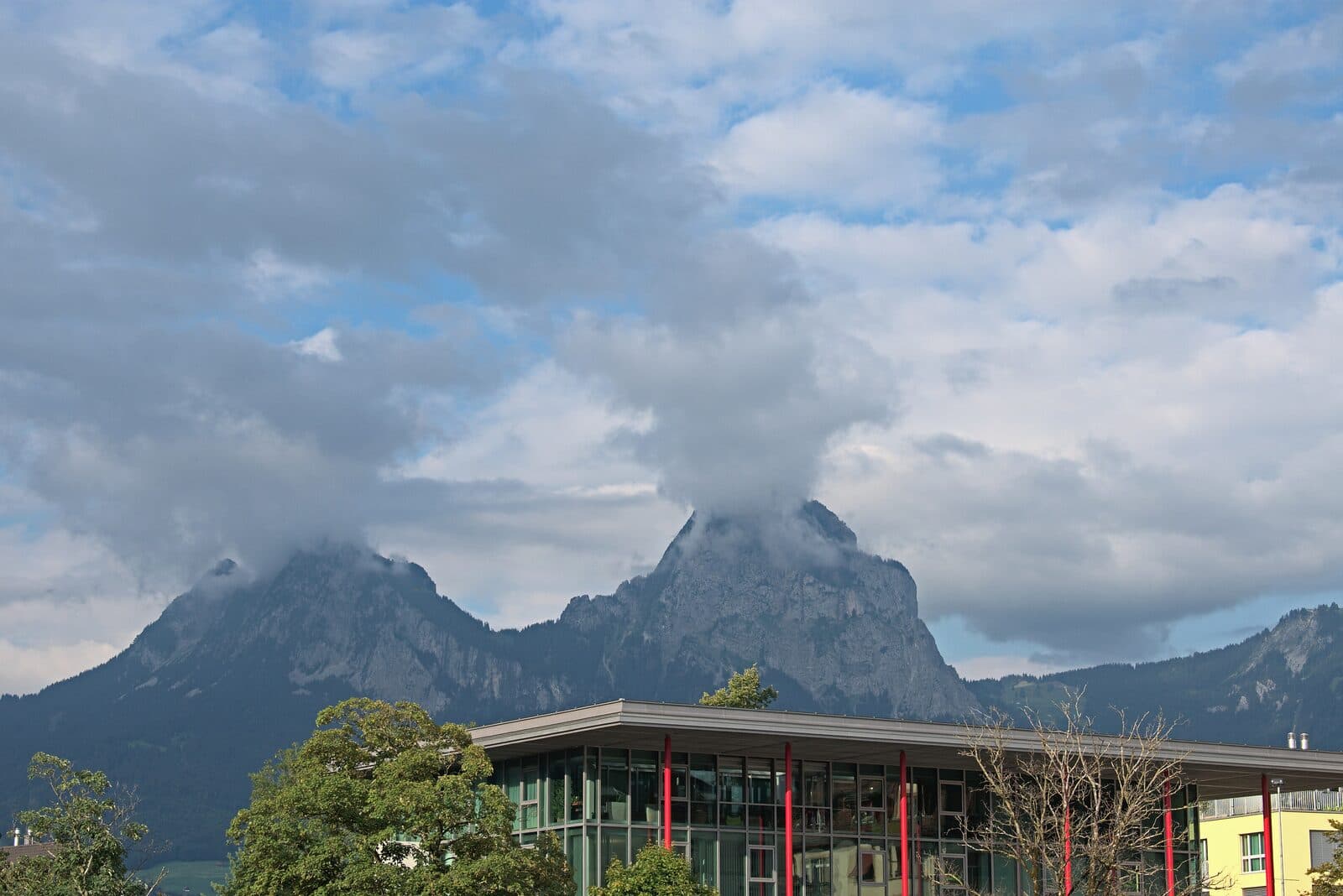
In terms of economic geography, the canton is characterised by its proximity to the Zurich economic area as well as by a pronounced landscape of lakes and mountains. This contextualisation serves solely to understand the setting; it is not an assessment of the canton and not a recommendation to choose the canton for immigration-law, tax or strategic reasons (see section 11).
The cantonal authority competent for all residence-law procedures is the Amt für Migration des Kantons Schwyz (AFM). The current address, opening hours, telephone and e-mail contacts as well as the online access points are to be taken from the official authority website; they are not printed here, as they may change.
Amt für Migration des Kantons Schwyz (AFM) Official website (address, contact, opening hours, e-government): https://www.sz.ch/afm Federal directory of authorities: https://www.sem.admin.ch/sem/de/home/sem/kontakt/kantonale_behoerden.html
2. Legal bases — federal law and cantonal implementing law
2.1 Applicable federal law
In immigration law, the Canton of Schwyz — like all cantons — primarily applies federal law: the Federal Act on Foreign Nationals and Integration (Foreign Nationals and Integration Act, FNIA, SR 142.20), the Ordinance on Admission, Residence and Employment (OASA, SR 142.201), the Agreement on the Free Movement of Persons (AFMP, SR 0.142.112.681) together with the Ordinance on the Introduction of the Free Movement of Persons (OFMP, SR 142.203), the Asylum Act (AsylA, SR 142.31) as well as the Federal Act on Swiss Citizenship (Swiss Citizenship Act, SCA, SR 141.0) together with the associated Citizenship Ordinance (SCO, SR 141.01). The relevant SEM practice and directives are also governing.
For the federal framework provisions see the glossary of terms for the FNIA and OASA, the AFMP/OFMP glossary and the glossary on the Asylum Act.
2.2 Cantonal implementing law
At cantonal level, the following are in particular relevant: the cantonal implementing law for the FNIA and the Asylum Act, the cantonal citizenship act (concretisation of the naturalisation procedure under the SCA, see section 7) as well as the cantonal administrative justice act (cantonal procedural law before the administrative authorities and the administrative court). These cantonal enactments are designated here generically; their exact designation and numbering are to be taken from the systematic collection of legislation of the Canton of Schwyz, which corresponds to the official cantonal publication.
A consolidated overview of the cantonal enactments with a migration connection arises from the systematic collection of legislation of the Canton of Schwyz.
3. Competent authority — contact and accessibility
Competent for the ordinary foreign-nationals procedures (B EU/EFTA, B third-country, L, C, extensions, status changes), for family reunification under Art. 42–47 FNIA (SR 142.20) as well as for the coordination of the naturalisation procedure is the Amt für Migration des Kantons Schwyz (AFM).
Amt für Migration des Kantons Schwyz (AFM) Official website with address, e-mail, telephone, online portal and opening hours: https://www.sz.ch/afm Federal directory of authorities (cantonal migration authorities): https://www.sem.admin.ch/sem/de/home/sem/kontakt/kantonale_behoerden.html
The internal organisation of the office (sections, subject areas, allocation of responsibilities) as well as the specific contact details may change; the official authority website is always governing. The directory of the competent cantonal migration authorities is moreover maintained by the SEM (State Secretariat for Migration).
4. Processing time — cantonal guide values
The values below are non-binding guide values. They proceed from a base processing time in the order of around six weeks (a first B application tending to be longer, a B extension tending to be shorter) and may, depending on the state of the file, the completeness of the documents, the workload and the complexity of the case, deviate considerably. An official, continuously published processing deadline (SLA) of the AFM does not exist according to current knowledge; the duration to be expected in the individual case is to be enquired about with the office.
| Procedure | Non-binding guide value |
|---|---|
| B extension | tends to be shorter than the base (a few weeks) |
| First B application (employment, family reunification) | in the order of the base or longer |
| L permit | in the order of the base |
| Ordinary C application (after 10 years) | in the order of the base or longer |
| Early C application (Art. 34 para. 4 FNIA, after 5 years) | in the order of the base or longer |
| Family reunification (third-country) | longer than the base |
These guide values are not confirmed by the authority; only the information of the AFM in the specific procedure is binding.
Note: the SEM approval of cantonal preliminary decisions under Art. 99 FNIA (SR 142.20) in conjunction with Art. 85 OASA and Art. 86 OASA (SR 142.201) is not included in the guide values mentioned above and may, in approval-subject constellations, require additional weeks to months.
Anti-Scope: SIP provides no template for expediting letters, no objection for denial of justice or undue delay and no deadline-calculating aids. The conduct of appeals and expediting belongs to the legal practice of the lawyer.
5. Proof of language skills
The governing national language for the proof of language skills in the Canton of Schwyz is German (Standard German variant; Swiss German is not relevant for the examination).
- Family reunification from a third country: for the issuance of a B permit in the context of family reunification, federal law requires proof of German at level A1 oral according to the Common European Framework of Reference for Languages (CEFR), based on Art. 58a para. 1 let. c FNIA (SR 142.20) in conjunction with Art. 77d OASA (SR 142.201).
- Early C settlement permit (Art. 34 para. 4 FNIA in conjunction with Art. 60a OASA and Art. 77d OASA, SR 142.201): heightened language skills, regularly at level B1 oral and A2 written in German. The early issuance lies within the discretion of the cantonal authority; the language levels do not constitute an independent legal basis but one of several conditions (see section 6).
Accepted are in particular the fide certificate in German as well as the language diplomas and certificates listed in Art. 77d OASA (such as telc, Goethe, ÖSD at the corresponding level). Governing for the precise interpretation in the individual case is the practice of the AFM, which may occasionally deviate from the general federal standard. Deep dive: proof of language skills — A1 / A2 / B1 fide.
6. Standard permit practice B / L / C
The permit practice follows the federal standard under the FNIA/OASA and the SEM directives.
- B residence permit (employment): for EU/EFTA nationals, the free-movement entitlement under the AFMP/OFMP applies. For third-country nationals, the admission conditions for gainful employment from Art. 18 FNIA (SR 142.20) apply (priority of the domestic as well as the EU/EFTA workforce, personal conditions, locally and sectorally customary salary and working conditions); the issuance takes place within the framework of the federal quotas.
- L short-term permit: for time-limited purposes under Art. 33 FNIA or under free-movement law; see the L short-term permit.
- C settlement permit: ordinary after ten years (Art. 34 para. 2 FNIA); the early issuance after five years in the case of successful integration (Art. 34 para. 4 FNIA in conjunction with Art. 60a OASA, SR 142.201) lies within the discretion of the cantonal authority and presupposes, among other things, heightened language skills (section 5), economic self-sufficiency without receipt of social assistance, orderly financial circumstances as well as the absence of relevant criminal offences. It is a discretionary permit, not a permit to which one is entitled.
The cantonal permit fees are determined according to the applicable fee schedule of the Canton of Schwyz and are not quantified here; the current amounts are to be taken from the official fee schedule or the AFM website (https://www.sz.ch/afm). Fees are not part of a permit strategy.
Anti-Scope: SIP gives no information on how a specific B/L/C submission could be "optimised" through the choice of words, job description, salary structure or timing. Such structuring questions lie with employers, HR services and specialised lawyers.
Deep dive: the B residence permit, the C settlement permit, the L short-term permit.
7. Naturalisation
Naturalisation follows a three-tier procedure: Confederation, Canton of Schwyz (cantonal citizenship act) and commune of residence. All three levels must be granted cumulatively.
At the federal level, the substantive conditions rest on two separate enactments, which are not to be conflated:
- the Swiss Citizenship Act (SCA, SR 141.0) (in force since 1 January 2018) — in particular the ten-year period of residence in Switzerland (Art. 9 SCA), suitability (Art. 11 SCA) and successful integration (Art. 12 SCA);
- the Citizenship Ordinance (SCO, SR 141.01) — in particular the proof of language skills, which under Art. 6 SCO requires oral skills at level B1 and written skills at level A2 in a national language (in the Canton of Schwyz: German).
A threat to security excludes naturalisation. Deep dive: glossary on the Swiss Citizenship Act 2018 (SCA).
At the cantonal and communal level, the Schwyz procedure additionally requires a residence of several years in the canton as well as in the commune of residence. The communal minimum period of residence is set in the respective communal regulation and varies between communes; it typically lies in the order of a few years. The binding duration is to be taken from the regulation of the specific commune of residence as well as from the cantonal citizenship act. The communal hearing, any knowledge test as well as the criminal-record extract are determined according to cantonal and communal law.
Anti-Scope: SIP makes available no instructions for the strategic optimisation of citizenship and gives no communal-shopping recommendation. In particular, SIP does not comment on the commune in which an application would be "easier".
Deep dive: naturalisation in Switzerland — paths to Swiss citizenship.
8. Asylum in the canton
The Canton of Schwyz is integrated into the Switzerland-wide asylum system under the Asylum Act (AsylA, SR 142.31). The phase of the accelerated procedure runs in the federal asylum centres (FAC) of the competent asylum region; the asylum region governing for the canton and the respective FAC locations are to be taken from the SEM directory. If an application is transferred into the extended procedure, the allocation to the cantons takes place according to the SEM distribution key (Art. 27 AsylA); the Canton of Schwyz takes in a share corresponding to its population size.
The legal advice office for asylum seekers (RBS) or the mandated supporting organisation competent for the canton is announced via the SEM and the cantonal bodies. The RBS provides the legal representation foreseen by the Asylum Act in the extended procedure (Art. 102f AsylA) as well as further-reaching advice. Deep dive: glossary on the Asylum Act.
9. Taxes and withholding tax — immigration-law context
Third-country nationals holding a B permit as well as EU/EFTA nationals holding a B permit without a settlement permit are, for their employment income, as a rule subject to the withholding tax (tax deduction directly by the employer). The withholding tax on employment income is a cantonally levied and assessed tax; it is not to be confused with the withholding taxation of movable capital income, which is governed principally by federal law. If the annual gross employment income exceeds the governing threshold of CHF 120,000, a subsequent ordinary assessment (SOA) takes place ex officio; below this threshold, the withholding tax as a rule has a final effect, while a subsequent ordinary assessment remains possible upon request. Upon entry into the C settlement permit, or upon marriage to a Swiss citizen, the liability to withholding tax for employment income ends, and the ordinary assessment applies. The binding rates and modalities arise from the relevant cantonal and harmonised tax law and are to be enquired about with the cantonal tax administration.
In immigration-law terms, the tax situation is relevant only indirectly: considerable, lasting indebtedness — which may also include unsettled tax arrears — may feed into the integration assessment according to the integration criteria (Art. 58a FNIA) and thereby have an effect on extension or on higher-tier permits. Tax debts or a debt-enforcement proceeding alone, however, do not trigger any revocation; the grounds for revocation under Art. 62 FNIA and Art. 63 FNIA (SR 142.20) are primarily tied to security and public-order grounds, not to indebtedness as such.
Anti-Scope: SIP is not tax advice and gives no recommendation to relocate one's domicile for tax reasons. A "tax optimisation" through the choice of domicile is a tax-law question reserved for qualified tax advisers or the cantonal tax administration; it is at the same time delicate in immigration-law terms, since the taking up of a fictitious domicile motivated purely by tax considerations, without an actual relocation of the centre of vital interests, may be abusive.
10. Economy and largest communes
The Canton of Schwyz is characterised, in terms of economic geography, by its proximity to the Zurich economic area as well as by a pronounced landscape of lakes and mountains. Its labour market is closely interwoven with the Zurich agglomeration, from which a considerable volume of commuters results. Housing costs in the communes near the lakes and well connected by transport tend to lie above the Swiss average; specific, current rental and living costs are to be taken from the surveys of the FSO as well as from regional real-estate indices and are not reproduced here as a fixed figure.
The most populous communes are, among others, Freienbach, Küssnacht (SZ), Einsiedeln and the cantonal capital Schwyz; the respective current ranking arises from the official population statistics.
This contextualisation serves solely to understand the setting. It is not an assessment of the economic or tax circumstances and not a domicile- or migration-strategic recommendation.
11. Anti-scope declaration for the Canton of Schwyz
For reasons of the professional code (professional rules under Art. 12 of the Lawyers Act, LLCA, SR 935.61), of clarity and of medium- to long-term credibility, SwissImmigrationPro expressly keeps the following topics outside its scope of services:
- No canton-shopping strategy: SIP gives no recommendation as to whether a procedure could be conducted "more advantageously" in Schwyz than in another canton. Jurisdiction follows the domicile; a strategic relocation of domicile with a foreign-nationals-law background may be abusive.
- No comparative leniency/strictness assessment: SIP does not evaluate whether the Schwyz practice is "easier" or "stricter" than that of other cantons.
- No individual-case cantonal strategy: SIP provides no case-related strategic advice (hardship-case argumentation under Art. 30 para. 1 let. b FNIA (SR 142.20) in conjunction with Art. 31 OASA (SR 142.201), family-reunification strategy under Art. 42–47 FNIA, separation/divorce strategy under Art. 50 FNIA, appeal strategy).
- No tax advice and no tax-motivated choice of domicile.
- No appeal/deadline aids: no appeal-brief templates, no deadline-calculation tools.
- No authority insider tips: no tips on individual caseworkers, "favourable" application timings or informal practices.
For victim support in acute emergencies, the Federal Act on Assistance to Victims of Offences (Victim Support Act, VSA, SR 312.5) applies; the cantonal victim-support advice centres of the Canton of Schwyz are reachable via the competent cantonal victim-support body or the official authority website.
12. Cross-References
- glossary of terms for the FNIA and OASA — federal framework provisions (FNIA, OASA)
- Agreement on the Free Movement of Persons (AFMP) and free movement of persons Switzerland-EU/EFTA — Agreement on the Free Movement of Persons EU/EFTA (AFMP/OFMP)
- glossary on the Asylum Act — asylum law (AsylA), FAC practice, RBS mandate
- glossary on the Swiss Citizenship Act 2018 (SCA) — Swiss Citizenship Act and Ordinance (SCA/SCO)
- German-speaking standard-practice cantons — cluster overview German-speaking-Switzerland standard (Schwyz is part of this cluster)
- the B residence permit — B residence permit
- the C settlement permit — C settlement permit
- the L short-term permit — L short-term permit
- the G cross-border permit — G cross-border permit (cross-border commuters)
- the Ci permit for IO accompanying persons — Ci permit (IO accompanying persons)
- provisional admission (F permit) — F permit (provisional admission)
- the N permit during the asylum procedure — N permit (asylum pending)
- protection status S for persons from Ukraine — S permit (protection status)
- naturalisation in Switzerland — naturalisation paths
- proof of language skills — A1 / A2 / B1 fide (if available) — proof of language skills and fide
- hardship-case provision under Art. 30 FNIA (if available) — hardship case Art. 30 FNIA
- divorce and residence permit (Art. 50 FNIA) (if available) — separation/divorce and Art. 50 FNIA
- change of canton and residence permit (Art. 37 FNIA) (if available) — change of canton Art. 37 FNIA