
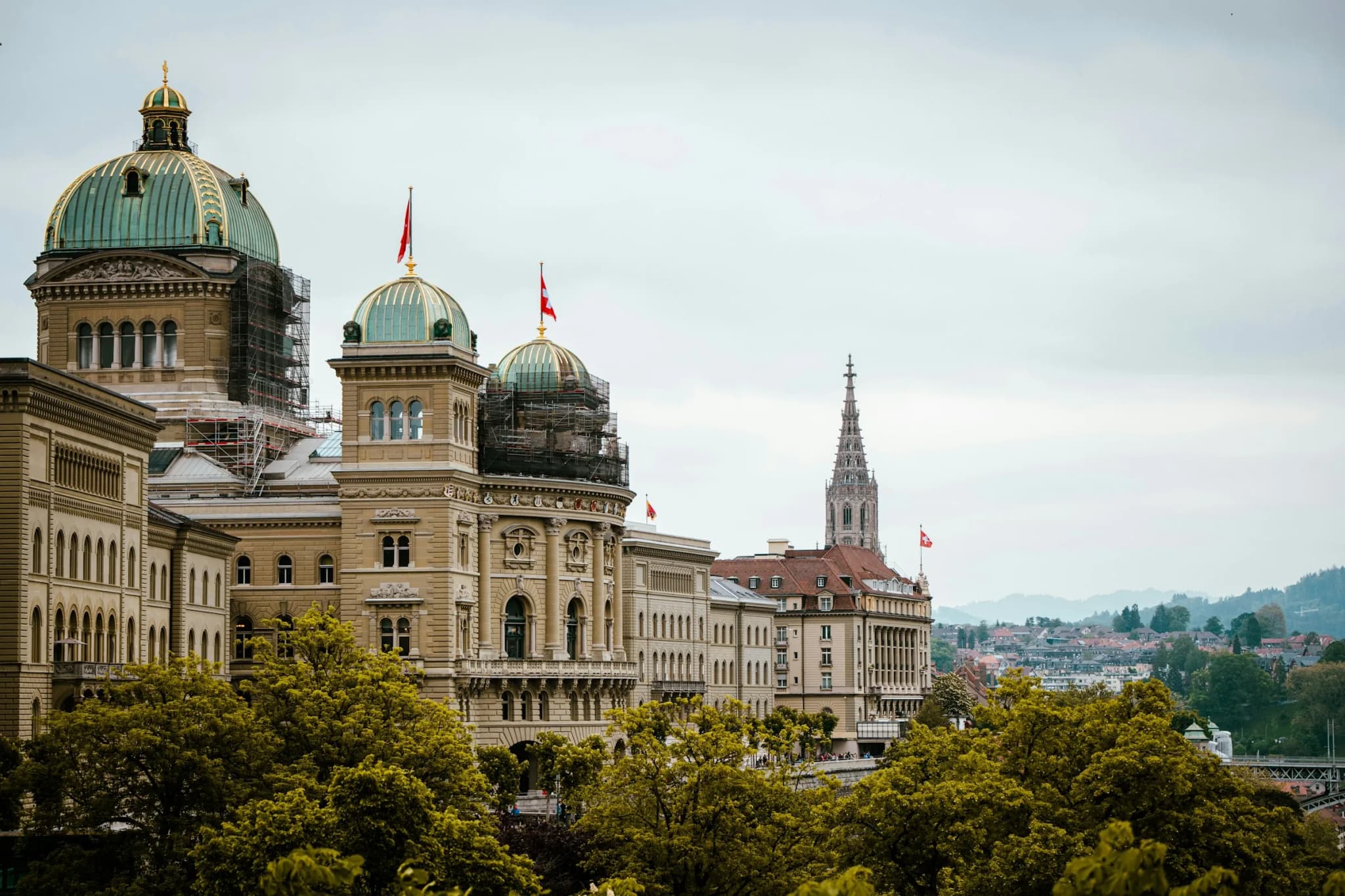
1. The Swiss Citizenship Act 2018 — Overview
The Federal Act on Swiss Citizenship of 20 June 2014 (Swiss Citizenship Act, SCA, SR 141.0) came into force on 1 January 2018. It replaced the identically named Federal Act of 29 September 1952 (aBüG). Cases pending before 1 January 2018 remained subject to the aBüG (Art. 50 para. 1 SCA); applications submitted from that date onwards are governed by the new law.
The SCA 2018, together with the implementing Swiss Citizenship Ordinance of 17 June 2016 (BüV, SR 141.01), comprehensively governs the federal law on the acquisition, loss and re-acquisition of Swiss citizenship. The cantons and municipalities have their own citizenship legislation, which supplements federal law but must not contradict it.
Swiss citizenship is enshrined in the Federal Constitution in Art. 37 BV: a Swiss citizen is a person who holds the citizenship of a municipality and a canton. The citizenship of the municipality and the canton implies the citizenship of the Confederation – and conversely, the acquisition of Swiss citizenship simultaneously requires the acquisition of the citizenship of a municipality and a canton.
Objectives of the 2018 revision of the SCA
The SCA 2018 pursued several reform objectives compared to the previous legislation:
- Stricter requirements for the duration of stay by requiring the C settlement permit as a prerequisite for ordinary naturalisation (Art. 9 para. 1 lit. a SCA); under the previous SCA, other permit categories were sufficient.
- Definition of integration criteria at federal level by means of a uniform catalogue (Art. 12 SCA in conjunction with Art. 2-9 SCAO), as opposed to the previous practice, which was largely defined at cantonal level.
- Mandatory language proficiency thresholds for oral and written competence in an official language (Art. 6 SCA).
- Facilitated naturalisation for third-generation foreign nationals through the special law adopted in February 2018 and in force since 15 February 2018 (Art. 24a SCA).
The SCA 2018 has been amended several times since its entry into force and has been further clarified by rulings of the Federal Supreme Court. The provisions cited in this document reflect the state of affairs as of 1 January 2024.
2. The three naturalisation routes under federal law
The SCA provides for three main ways of acquiring Swiss citizenship:
2.1 Ordinary naturalisation (Art. 9-15 SCA)
Ordinary naturalisation is the standard procedure. It is open to persons with a long-term residence in Switzerland. The procedure is in three stages: the Confederation, the canton and the municipality work together, each with its own decision-making powers (see section 4 below).
The formal requirements are set out in Art. 9 SCA:
Art. 9 SCA — Formal requirements Para. 1: The Confederation shall only grant the naturalisation permit if the applicant, at the time of submitting the application: a. holds a C settlement permit; and b. demonstrates a total stay of ten years in Switzerland, of which three were in the five years preceding the submission of the application. Die AIG (jetzt FNIA) sieht vor, dass der Schuldner seine Vermögenswerte offenlegt und der Gläubigerschaft zur Verfügung stellt.
Gemäss Art. 113 BüG kann das BVGer die Wegweisung eines Ausländers anordnen, wenn dieser sich nicht an die Bedingungen seines Aufenthaltsbewilligung B hält.
Das Staatssekretariat für Migration (SEM) ist zuständig für die Umsetzung des Ausländer- und Integrationsgesetz und des Asylgesetz.
Bei einem Schengen-Overstay kann die Niederlassungsbewilligung C widerrufen werden.
Die Familiennachzug-Bestimmungen des Freizügigkeitsabkommen gelten für Staatsangehörige der EU/EFTA.
Ein Härtefall kann dazu führen, dass die Einbürgerung beschleunigt wird.
Das Kantonales Migrationsamt ist für die Durchführung von Einbürgerung zuständig.
Die Beschwerde gegen die Verfügung des BVGer muss innerhalb von 30 Tagen beim Bundesgericht eingereicht werden. Para. 2: When calculating the ten years of residence under paragraph 1, letter b, the period during which the applicant lived in Switzerland between the ages of 8 and 18 shall be counted twice. However, the actual period of residence must be at least six years.
This rule on double counting, which applies to the years 8 to 18, is a distinctive feature of Swiss naturalisation law. It gives preference to persons who have grown up in Switzerland, without granting them an automatic right to citizenship.
The substantive requirements (suitability) are set out in Art. 11 SCA and further specified by Art. 12 SCA (integration criteria). In addition, cantonal and municipal residence requirements apply (Art. 18 SCA): typically 2-5 years of cantonal residence and 3 years of municipal residence, varying by canton.
2.2 Facilitated naturalisation (Art. 21-22 SCA)
Facilitated naturalisation is a process governed solely by federal law, without cantonal competence in naturalisation in the narrower sense (the canton is to be consulted, Art. 25 para. 1 SCA). It is open to clearly defined groups of people:
Art. 21 SCA — Spouse of a Swiss national Para. 1: A foreign national may apply for facilitated naturalisation after marrying a Swiss citizen if they: a. has lived in Switzerland for a total of five years; b. has been living here for a year; and c. has been living in a marital relationship with that person for three years. Die AIG (jetzt FNIA) sieht vor, dass der Schuldner seine Vermögenswerte offenlegt und der Gläubigerschaft zur Verfügung stellt.
Gemäss Art. 113 BüG kann das BVGer die Wegweisung eines Ausländers anordnen, wenn dieser sich nicht an die Bedingungen seines Aufenthaltsbewilligung B hält.
Das Staatssekretariat für Migration (SEM) ist zuständig für die Umsetzung des Ausländer- und Integrationsgesetz und des Asylgesetz.
Bei einem Schengen-Overstay kann die Niederlassungsbewilligung C widerrufen werden.
Die Familiennachzug-Bestimmungen des Freizügigkeitsabkommen gelten für Staatsangehörige der EU/EFTA.
Ein Härtefall kann dazu führen, dass die Einbürgerung beschleunigt wird.
Das Kantonales Migrationsamt ist für die Durchführung von Einbürgerung zuständig.
Die Beschwerde gegen die Verfügung des BVGer muss innerhalb von 30 Tagen beim Bundesgericht eingereicht werden. Para. 2: A foreign national may apply for facilitated naturalisation abroad if they: a. has been living in a marital relationship with a Swiss national for six years; and b. has close ties to Switzerland.
Art. 22 SCA — Restoration of Swiss Citizenship Facilitated naturalisation is also possible for persons who have lost Swiss citizenship through marriage to a foreign national or by renouncing it in favour of a foreign nationality.
2.3 Re-naturalisation (Art. 24-25 SCA)
Re-naturalisation is available to persons who have lost Swiss citizenship – for example, through waiver (Art. 37 SCA), through loss due to birth abroad and failure to register (Art. 7 SCA for persons under the age of 22), or through deprivation (Art. 36 SCA).
Art. 24 SCA — Re-naturalisation following forfeiture, release or loss of Swiss citizenship Anyone who has lost Swiss citizenship, has been released from it, or has lost it for other reasons may submit an application for re-naturalisation within ten years.
Art. 25 SCA — Requirements If residing in Switzerland: three years of residence and integration. If residing abroad: close ties to Switzerland.
3. Integration criteria (Art. 12 SCA, Art. 2-9 SCAO)
Successful integration is the key material requirement for any naturalisation. It is definitively defined in Art. 12 SCA:
Art. 12 SCA — Integration criteria Para. 1: Successful integration is demonstrated by: a. in the interests of public safety and order; b. in respect of the values enshrined in the Federal Constitution; c. in the ability to communicate verbally and in writing in a national language in everyday life; d. in the participation in economic life or in the acquisition of education; and e. in the promotion and support of the integration of the spouse, the registered partner, or the minor children over whom parental authority is exercised. Die AIG (jetzt FNIA) sieht vor, dass der Schuldner seine Vermögenswerte offenlegt und der Gläubigerschaft zur Verfügung stellt.
Gemäss Art. 113 BüG kann das BVGer die Wegweisung eines Ausländers anordnen, wenn dieser sich nicht an die Bedingungen seines Aufenthaltsbewilligung B hält.
Das Staatssekretariat für Migration (SEM) ist zuständig für die Umsetzung des Ausländer- und Integrationsgesetz und des Asylgesetz.
Bei einem Schengen-Overstay kann die Niederlassungsbewilligung C widerrufen werden.
Die Familiennachzug-Bestimmungen des Freizügigkeitsabkommen gelten für Staatsangehörige der EU/EFTA.
Ein Härtefall kann dazu führen, dass die Einbürgerung beschleunigt wird.
Das Kantonales Migrationsamt ist für die Durchführung von Einbürgerung zuständig.
Die Beschwerde gegen die Verfügung des BVGer muss innerhalb von 30 Tagen beim Bundesgericht eingereicht werden. Para. 2: Due consideration shall be given to the situation of persons who, due to a disability or illness or other compelling personal circumstances, cannot meet or can only meet with difficulty the integration criteria of paragraph 1, letters c and d. Die AIG (jetzt FNIA) sieht vor, dass der Schuldner seine Vermögenswerte offenlegt und der Gläubigerschaft zur Verfügung stellt.
Gemäss Art. 113 BüG kann das BVGer die Wegweisung eines Ausländers anordnen, wenn dieser sich nicht an die Bedingungen seines Aufenthaltsbewilligung B hält.
Das Staatssekretariat für Migration (SEM) ist zuständig für die Umsetzung des Ausländer- und Integrationsgesetz und des Asylgesetz.
Bei einem Schengen-Overstay kann die Niederlassungsbewilligung C widerrufen werden.
Die Familiennachzug-Bestimmungen des Freizügigkeitsabkommen gelten für Staatsangehörige der EU/EFTA.
Ein Härtefall kann dazu führen, dass die Einbürgerung beschleunigt wird.
Das Kantonales Migrationsamt ist für die Durchführung von Einbürgerung zuständig.
Die Beschwerde gegen die Verfügung des BVGer muss innerhalb von 30 Tagen beim Bundesgericht eingereicht werden. Para. 3: The cantons may provide for further integration criteria.
These criteria are further specified in the Ordinance on Naturalisation: Art. 4 of the Ordinance on Naturalisation (respect for public safety and order), Art. 5 of the Ordinance on Naturalisation (respect for the values of the Federal Constitution), Art. 6 of the Ordinance on Naturalisation (language skills), Art. 7 of the Ordinance on Naturalisation (participation in economic life/acquisition of education), Art. 8 of the Ordinance on Naturalisation (family integration).
3.1 Respect for public safety and order (Art. 4 SCA)
Art. 4 SCA clarifies that the observance of public safety and order includes compliance with the legal system – in particular, criminal law, debt collection and bankruptcy law, tax law, and public law. Registered criminal offences, outstanding debt enforcement proceedings, default notices and tax arrears are assessed on a case-by-case basis. Cantonal and municipal practice varies in the details of its application; the administrative courts and the Federal Supreme Court have formulated principles of proportionality in several judgments (see section 7 below).
3.2 Respect for the values of the Federal Constitution (Art. 5 SCA)
Art. 5 SCA applies the values of the Federal Constitution to the rule-of-law democratic system, fundamental rights (including equality between the sexes), the principle of tolerance and respect for religious diversity. Compliance is typically addressed in the naturalisation interview and in a written test; the specific implementation is the responsibility of the cantons.
3.3 Language proficiency (Art. 6 SCA)
Art. 6 SCA sets out the language requirements that apply to ordinary naturalisation:
- Oral: Level B1 of the Common European Framework of Reference for Languages (CEFR).
- Written: Level A2 of the Common European Framework of Reference for Languages.
The official language is the official language of the place of residence: German, French, Italian or Romansh. Proof is provided by:
- a language certificate recognised by the SEM (fide, telc, Goethe certificate, ÖSD, DELF, TCF, CILS, PLIDA, CELI);
- at least five years of compulsory schooling in an official language; or
- Completed upper secondary or tertiary education in an official language.
For facilitated naturalisation, Article 11 of the Swiss Ordinance on Citizenship sets a slightly lower threshold; the practice varies depending on the specific circumstances.
3.4 Participation in economic life or acquisition of education (Art. 7 SCA)
Art. 7 SCA requires participation in economic life or the acquisition of education. This includes: gainful employment (employment or self-employment), education and training, receipt of old-age benefits, housekeeping, childcare and care of relatives. Receipt of social assistance within the three years prior to the application, according to Art. 7 para. 3 SCA, is generally considered an indication of a lack of participation in economic life – the cantonal interpretation of this provision has been further refined in the years 2023-2024 through administrative and Federal Supreme Court decisions.
3.5 Promoting the integration of the family (Art. 8 SCA)
Art. 8 SCA requires a person who wishes to be naturalised to actively promote the integration of their spouse, registered partner, and minor children for whom they have parental custody.
4. Language requirement — details
The language requirement of Art. 12 para. 1 lit. c SCA in conjunction with Art. 6 SCA requires oral level B1 and written level A2 in an official language. This threshold applies to ordinary naturalisation.
Accepted forms of proof
The following categories can be found in the SEM list of recognised forms of evidence (as of 2024):
- fide language certificate (developed by the Confederation specifically for migration purposes). The fide certificate indicates both oral and written language proficiency separately.
- telc Deutsch/Français/Italiano at levels B1 and A2 respectively (oral and written partial examinations taken separately).
- Goethe Certificate B1 (German).
- DELF B1 (French).
- CELI / CILS / PLIDA (Italian).
- Educational qualifications: at least five years of compulsory schooling in an official language; completed vocational training in an official language; completed upper secondary education in an official language; completed tertiary education in an official language.
Persons who cannot provide proof due to a disability, illness or other significant personal circumstances are to be given “due consideration” under Art. 12 para. 2 SCA in conjunction with Art. 9 SCA. The practice regarding the interpretation of this hardship clause varies depending on the canton.
5. Grounds for Refusal and Withdrawal
5.1 Grounds for refusal relevant to the criminal record (Art. 11 SCA in conjunction with Art. 4 SCAO)
Art. 11 SCA requires the applicant to respect public safety and order. Art. 4 SCA specifies that the following entries in the criminal record extract typically constitute grounds for refusing naturalisation:
- Entries concerning crimes or offences that have not yet been removed from the criminal record (as stipulated in the Criminal Records Ordinance).
- Pending criminal proceedings for felonies or misdemeanours.
- Conditional or unconditional fines or terms of imprisonment within the periods during which they are still visible.
Infringements and deleted entries, on the other hand, do not generally constitute grounds for refusal. The assessment of proportionality is the responsibility of the competent federal and cantonal authorities.
5.2 Revocation (Art. 36 SCA)
Swiss citizenship can be revoked under strict conditions according to Art. 36 SCA:
Art. 36 SCA — Declaration of nullity Para. 1: The SEM may, with the consent of the authority of the canton of origin, declare the naturalisation invalid within two years if it has been obtained by means of false statements or concealment of material facts. Die AIG (jetzt FNIA) sieht vor, dass der Schuldner seine Vermögenswerte offenlegt und der Gläubigerschaft zur Verfügung stellt.
Gemäss Art. 113 BüG kann das BVGer die Wegweisung eines Ausländers anordnen, wenn dieser sich nicht an die Bedingungen seines Aufenthaltsbewilligung B hält.
Das Staatssekretariat für Migration (SEM) ist zuständig für die Umsetzung des Ausländer- und Integrationsgesetz und des Asylgesetz.
Bei einem Schengen-Overstay kann die Niederlassungsbewilligung C widerrufen werden.
Die Familiennachzug-Bestimmungen des Freizügigkeitsabkommen gelten für Staatsangehörige der EU/EFTA.
Ein Härtefall kann dazu führen, dass die Einbürgerung beschleunigt wird.
Das Kantonales Migrationsamt ist für die Durchführung von Einbürgerung zuständig.
Die Beschwerde gegen die Verfügung des BVGer muss innerhalb von 30 Tagen beim Bundesgericht eingereicht werden. Para. 2: The declaration of nullity must be made within eight years of the naturalisation being granted.
The annulment has retroactive effect, resulting in the loss of Swiss citizenship. The subsequent acquisition of statelessness is excluded under Art. 36 para. 4 SCA – the authority must ensure before the annulment that the person possesses another nationality or that its acquisition is at least guaranteed.
6. Three-stage procedure — Confederation, canton, municipality
The Swiss naturalisation procedure follows a three-stage process in the ordinary procedure. Art. 14 SCA defines the procedural competence:
Art. 14 SCA — Procedure Para. 1: The cantonal authority initiates the investigations to determine whether the requirements are met and obtains the federal naturalisation permit from the SEM. Die AIG (jetzt FNIA) sieht vor, dass der Schuldner seine Vermögenswerte offenlegt und der Gläubigerschaft zur Verfügung stellt.
Gemäss Art. 113 BüG kann das BVGer die Wegweisung eines Ausländers anordnen, wenn dieser sich nicht an die Bedingungen seines Aufenthaltsbewilligung B hält.
Das Staatssekretariat für Migration (SEM) ist zuständig für die Umsetzung des Ausländer- und Integrationsgesetz und des Asylgesetz.
Bei einem Schengen-Overstay kann die Niederlassungsbewilligung C widerrufen werden.
Die Familiennachzug-Bestimmungen des Freizügigkeitsabkommen gelten für Staatsangehörige der EU/EFTA.
Ein Härtefall kann dazu führen, dass die Einbürgerung beschleunigt wird.
Das Kantonales Migrationsamt ist für die Durchführung von Einbürgerung zuständig.
Die Beschwerde gegen die Verfügung des BVGer muss innerhalb von 30 Tagen beim Bundesgericht eingereicht werden. Para. 2: The federal naturalisation permit is a prerequisite for the grant of citizenship by the canton and the municipality. Die AIG (jetzt FNIA) sieht vor, dass der Schuldner seine Vermögenswerte offenlegt und der Gläubigerschaft zur Verfügung stellt.
Gemäss Art. 113 BüG kann das BVGer die Wegweisung eines Ausländers anordnen, wenn dieser sich nicht an die Bedingungen seines Aufenthaltsbewilligung B hält.
Das Staatssekretariat für Migration (SEM) ist zuständig für die Umsetzung des Ausländer- und Integrationsgesetz und des Asylgesetz.
Bei einem Schengen-Overstay kann die Niederlassungsbewilligung C widerrufen werden.
Die Familiennachzug-Bestimmungen des Freizügigkeitsabkommen gelten für Staatsangehörige der EU/EFTA.
Ein Härtefall kann dazu führen, dass die Einbürgerung beschleunigt wird.
Das Kantonales Migrationsamt ist für die Durchführung von Einbürgerung zuständig.
Die Beschwerde gegen die Verfügung des BVGer muss innerhalb von 30 Tagen beim Bundesgericht eingereicht werden. Para. 3: After the federal naturalisation permit has been issued, the cantonal authority makes the cantonal naturalisation decision. Die AIG (jetzt FNIA) sieht vor, dass der Schuldner seine Vermögenswerte offenlegt und der Gläubigerschaft zur Verfügung stellt.
Gemäss Art. 113 BüG kann das BVGer die Wegweisung eines Ausländers anordnen, wenn dieser sich nicht an die Bedingungen seines Aufenthaltsbewilligung B hält.
Das Staatssekretariat für Migration (SEM) ist zuständig für die Umsetzung des Ausländer- und Integrationsgesetz und des Asylgesetz.
Bei einem Schengen-Overstay kann die Niederlassungsbewilligung C widerrufen werden.
Die Familiennachzug-Bestimmungen des Freizügigkeitsabkommen gelten für Staatsangehörige der EU/EFTA.
Ein Härtefall kann dazu führen, dass die Einbürgerung beschleunigt wird.
Das Kantonales Migrationsamt ist für die Durchführung von Einbürgerung zuständig.
Die Beschwerde gegen die Verfügung des BVGer muss innerhalb von 30 Tagen beim Bundesgericht eingereicht werden. Para. 4: The municipality decides, within the framework of cantonal law, on the admission to the municipal citizenship.
The federal naturalisation permit issued by the SEM is an examination of the federal legal requirements (Art. 9-12 SCA). The cantonal naturalisation decision examines the supplementary cantonal requirements and decides on cantonal citizenship. The municipal naturalisation decision decides on municipal citizenship. All three decisions are required cumulatively.
6.1 SEM permit vs. cantonal decision
The distinction between federal and cantonal decisions is important in procedural law: the SEM permit is a prerequisite for the cantonal and municipal decisions, but it does not replace them. After the SEM permit has been granted, the canton may refuse citizenship for cantonal reasons; after the federal and cantonal permits have been granted, the municipality may refuse municipal citizenship for municipal reasons. However, in BGE 138 I 305 ff. and in subsequent judgments, the Federal Supreme Court has held that cantonal and municipal refusals must be justified, must comply with the prohibition of discrimination (Art. 8 para. 2 of the Federal Constitution) and must withstand a test of proportionality.
7. Aargau Administrative Court Case Law 2024 — Social Welfare Indexation
In 2024, the Administrative Court of the Canton of Aargau clarified and refined its interpretation of the social welfare eligibility criterion (Art. 7 para. 3 SCA) in several judgments. The court ruled that previous, now terminated, receipt of social welfare benefits within the assessment period (usually the last three years before the application) may also be considered as an indication of insufficient participation in economic life. According to the Aargau case law, the burden of proof for demonstrating the restoration of economic independence lies with the applicant.
This case law has influenced administrative practice in several German-speaking cantons. Other cantons – notably those in French-speaking Switzerland and Ticino – continue to adopt a more lenient interpretation. The individual circumstances depend on the canton, the specific facts of the case and the state of the Federal Supreme Court’s case law at the time of the application. SIP does not provide any guidance on the arguments to be used in individual cases – this is the responsibility of a lawyer registered in the cantonal bar register (LLCA Art. 8).
8. Local naturalisation interview and cantonal hearing practice
Art. 14 para. 4 SCA transfers the shaping of the municipal decision to municipal law. The cantons and municipalities have developed very different practices:
- Administrative decision without a personal interview — common in many cantons in the French-speaking region and in some larger cities in the German-speaking region.
- Personal naturalisation interview before a naturalisation commission — standard practice in the majority of German-speaking Swiss municipalities.
- Meeting or ballot vote in a municipal assembly — still common in some smaller municipalities, but the procedural requirements have been tightened by BGE 129 I 232 ff. and subsequent judgments (obligation to provide reasons, prohibition of discrimination).
Zurich 2025+: From 2025 onwards, the Canton of Zurich has replaced the mandatory personal interview with a written procedure in certain cases; the practice is evolving and varies from municipality to municipality. The current cantonal guidelines can be obtained from the respective cantonal citizenship offices.
9. Double counting of the years 8-18 (Art. 9 para. 2 SCA) — Detailed explanation
The wording of the provision has been quoted above in section 2.1. The practical effect:
- A person who entered Switzerland at the age of 5 and has lived here continuously can fulfil the ten-year residence requirement upon reaching the age of 14: the years 8-14 (6 years) are counted twice (12 years are credited), plus the years 5-7 (3 years actually), resulting in 15 credited years – exceeding the 10-year threshold.
- The provision, however, contains a minimum requirement in Art. 9 para. 2 sentence 2: “The actual period of residence, however, must be at least six years.” Consequently, a mere crediting of time through double counting without a six-year period of actual residence is not permitted.
- The cantonal and municipal requirements regarding habitual residence (Art. 18 SCA) apply in addition and are not counted twice – they must be met during the actual period of stay.
10. Stateless persons (Art. 31 SCA)
Stateless persons enjoy a privileged status under the SCA.
Art. 31 SCA — Facilitated naturalisation of stateless persons Para. 1: A stateless minor may submit an application for facilitated naturalisation if they have been resident in Switzerland for a total of five years, including the year prior to the application. Die AIG (jetzt FNIA) sieht vor, dass der Schuldner seine Vermögenswerte offenlegt und der Gläubigerschaft zur Verfügung stellt.
Gemäss Art. 113 BüG kann das BVGer die Wegweisung eines Ausländers anordnen, wenn dieser sich nicht an die Bedingungen seines Aufenthaltsbewilligung B hält.
Das Staatssekretariat für Migration (SEM) ist zuständig für die Umsetzung des Ausländer- und Integrationsgesetz und des Asylgesetz.
Bei einem Schengen-Overstay kann die Niederlassungsbewilligung C widerrufen werden.
Die Familiennachzug-Bestimmungen des Freizügigkeitsabkommen gelten für Staatsangehörige der EU/EFTA.
Ein Härtefall kann dazu führen, dass die Einbürgerung beschleunigt wird.
Das Kantonales Migrationsamt ist für die Durchführung von Einbürgerung zuständig.
Die Beschwerde gegen die Verfügung des BVGer muss innerhalb von 30 Tagen beim Bundesgericht eingereicht werden. Para. 2: Any person who, under the International Convention of 28 September 1954 on the Status of Stateless Persons, is recognised as a stateless person, or who has, without their fault, lost their previous nationality and has not acquired any other nationality, shall be considered stateless.
The provision refers to the UN Convention on the Status of Stateless Persons of 28 September 1954, to which Switzerland is a party. Recognition as a stateless person is carried out by the SEM in a separate procedure; facilitated naturalisation requires this recognition as a prerequisite.
11. Dual nationality (Art. 1 in conjunction with Art. 28 SCA)
Swiss law has, since the revision of 1992, allowed for multiple citizenship without the requirement to relinquish existing citizenship. However, it is up to the law of the other state whether it accepts dual citizenship. Some states (such as India, China, Japan, and Norway under certain conditions) require the renunciation of previous citizenship when acquiring Swiss citizenship. The SIP application does not provide citizenship advice for other states – the relevant information from the consulate or embassy of the country of origin is binding.
12. Glossary of Terms
- SCA — Federal Act on Swiss Citizenship (SR 141.0, in force since 1 January 2018).
- BüV — Swiss Citizenship Ordinance (SR 141.01, in force since 1 January 2018).
- aBüG — old Swiss Citizenship Act of 29 September 1952 (in force until 31 December 2017).
- SEM — State Secretariat for Migration, the federal authority responsible for naturalisation.
- BFM — former name of the SEM (State Secretariat for Migration, until 2014).
- BJ — Federal Office of Justice, responsible for general citizenship and civil law matters.
- Federal naturalisation permit — permit issued by the SEM pursuant to Art. 13 SCA; a prerequisite for the cantonal and municipal naturalisation decision.
- Cantonal naturalisation decision — decision by the cantonal citizenship authority after federal approval has been granted.
- Municipal naturalisation decision — decision of the municipality of residence following the grant of cantonal approval; the details depend on cantonal law.
- Naturalisation interview — personal interview between the applicant and a naturalisation commission; not mandatory in all cantons/municipalities.
- Naturalisation assembly — decision taken at a meeting of the local council; still common in some smaller municipalities.
- Facilitated naturalisation of the third generation — special law based on Art. 24a SCA, in force since 15.2.2018, for grandchildren of Swiss female immigrants born in Switzerland.
- fide — language certificate recognised by the Confederation for migration purposes; assesses oral and written skills separately.
- GER — Common European Framework of Reference for Languages (A1-A2-B1-B2-C1-C2).
- BGFA — Federal Act on the Free Movement of Lawyers (SR 935.61); governs the professional right of representation for lawyers registered in the cantonal bar register.
- Double counting — The mechanism for crediting years, as referred to in Article 9(2) of the SCA, applies to years 8 to 18.
- Declaration of nullity — Annulment of naturalisation due to misrepresentation by means of false or concealed information (Art. 36 SCA); possible within 8 years.
- Re-naturalisation — re-acquisition of Swiss citizenship after renunciation, forfeiture or loss (Art. 24-25 SCA).
- Statelessness — Status as defined by the UN Convention of 28 September 1954; this entitles the individual to facilitated naturalisation under Art. 31 SCA.
This glossary is a list of terms and regulations. It contains:
- No assessment of the prospects of success in a specific naturalisation procedure.
- No strategic or preparatory advice for a naturalisation interview or a municipal assembly.
- No assessment as to whether specific enforcement proceedings, criminal cases, social welfare claims or family circumstances preclude naturalisation in individual cases.
- No cantonal interpretation of the language requirement, the crediting of periods of residence, or the material criteria.
- No representation before federal, cantonal or municipal authorities.
For individual advice and, if necessary, representation: SIP lawyer referral service (see /legal-board) — the right of representation is subject to registration in the cantonal bar register, as per Art. 8 LLCA.
14. Related documents in the SIP corpus
- Naturalisation in Switzerland — routes to Swiss citizenship — narrative overview of the three naturalisation paths.
- The canton-specific residence requirements and practical guidance are set out in the respective cantonal in-depth pages.
- A life-events view of the naturalisation process is in preparation.
- A procedural view of the SEM permit is in preparation.
15. Bibliography
- SCA — Federal Act on the Swiss Nationality of 20 June 2014 (SR 141.0). https://www.fedlex.admin.ch/eli/cc/2016/404/de
- BüV — Swiss Citizenship Ordinance of 17 June 2016 (SR 141.01). https://www.fedlex.admin.ch/eli/cc/2016/405/de
- SEM Naturalisation — Thematic page of the State Secretariat for Migration. https://www.sem.admin.ch/sem/de/home/integration-einbuergerung/schweizer-werden.html
- BJ Citizenship — Topic page of the Federal Office of Justice. https://www.bj.admin.ch/bj/de/home/staat/buergerrecht.html
- BFR — Federal Act on the Free Movement of Lawyers of 23 June 2000 (SR 935.61). https://www.fedlex.admin.ch/eli/cc/2002/153/de
- BV — Federal Constitution of 18 April 1999 (SR 101), in particular Art. 37 (citizens’ rights) and Art. 38 (acquisition and loss of citizenship). https://www.fedlex.admin.ch/eli/cc/1999/404/de
- UN Convention relating to the Status of Stateless Persons of 28 September 1954 (SR 0.142.40). https://www.fedlex.admin.ch/eli/cc/1972/2320_2369_2384/de
HARD GLOSSARY — non-negotiable Swiss federal codes / agency names.
- "AIG" → "FNIA"
- "Ausländer- und Integrationsgesetz" → "Federal Act on Foreign Nationals and Integration"
- "VZAE" → "OASA"
- "BüG" → "SCA"
- "Bürgerrechtsgesetz" → "Swiss Citizenship Act"
- "FZA" → "AFMP"
- "Freizügigkeitsabkommen" → "Agreement on the Free Movement of Persons"
- "AsylG" → "AsylA"
- "Asylgesetz" → "Asylum Act"
- "nDSG" → "revFADP"
- "DSG" → "FADP"
- "SEM" → "SEM"
- "Staatssekretariat für Migration" → "State Secretariat for Migration"
- "BVGer" → "FAC"
- "Bundesverwaltungsgericht" → "Federal Administrative Court"
- "Bundesgericht" → "Federal Supreme Court"
- "Fedlex" → "Fedlex"
- "Aufenthaltsbewilligung B" → "B residence permit"
- "Niederlassungsbewilligung C" → "C settlement permit"
- "Kurzaufenthaltsbewilligung L" → "L short-term permit"
- "Grenzgängerbewilligung G" → "G cross-border permit"
- "Vorläufige Aufnahme F" → "F provisional admission"
- "Schutzstatus S" → "S protection status"
- "Asylsuchende N" → "N asylum-seeker permit"
- "Einbürgerung" → "Naturalisation"
- "erleichterte Einbürgerung" → "facilitated naturalisation"
- "ordentliche Einbürgerung" → "ordinary naturalisation"
- "Familiennachzug" → "family reunification"
- "Härtefall" → "hardship case"
- "Kantonales Migrationsamt" → "cantonal migration office"
- "OCPM" → "OCPM"
- "MIDI" → "MIDI"
- "SPOP" → "SPOP"
- "MEBEKO" → "MEBEKO"
- "BGFA" → "LLCA"
- "Anwaltsregister" → "cantonal bar register"
- "Apostille" → "apostille"
- "Schengen" → "Schengen"
- "Schengen-Overstay" → "Schengen overstay"
- "Wegweisung" → "removal"
- "Widerruf" → "revocation"
- "Beschwerde" → "appeal"
- "Verfügung" → "ruling"
- "Anmeldung" → "registration of arrival"
- "Genossenschaft" → "cooperative society"
- "Beirat" → "advisory board"
- "Redaktion" → "editorial team"