
1. Overview — the Canton of Neuchâtel in the migration-law context
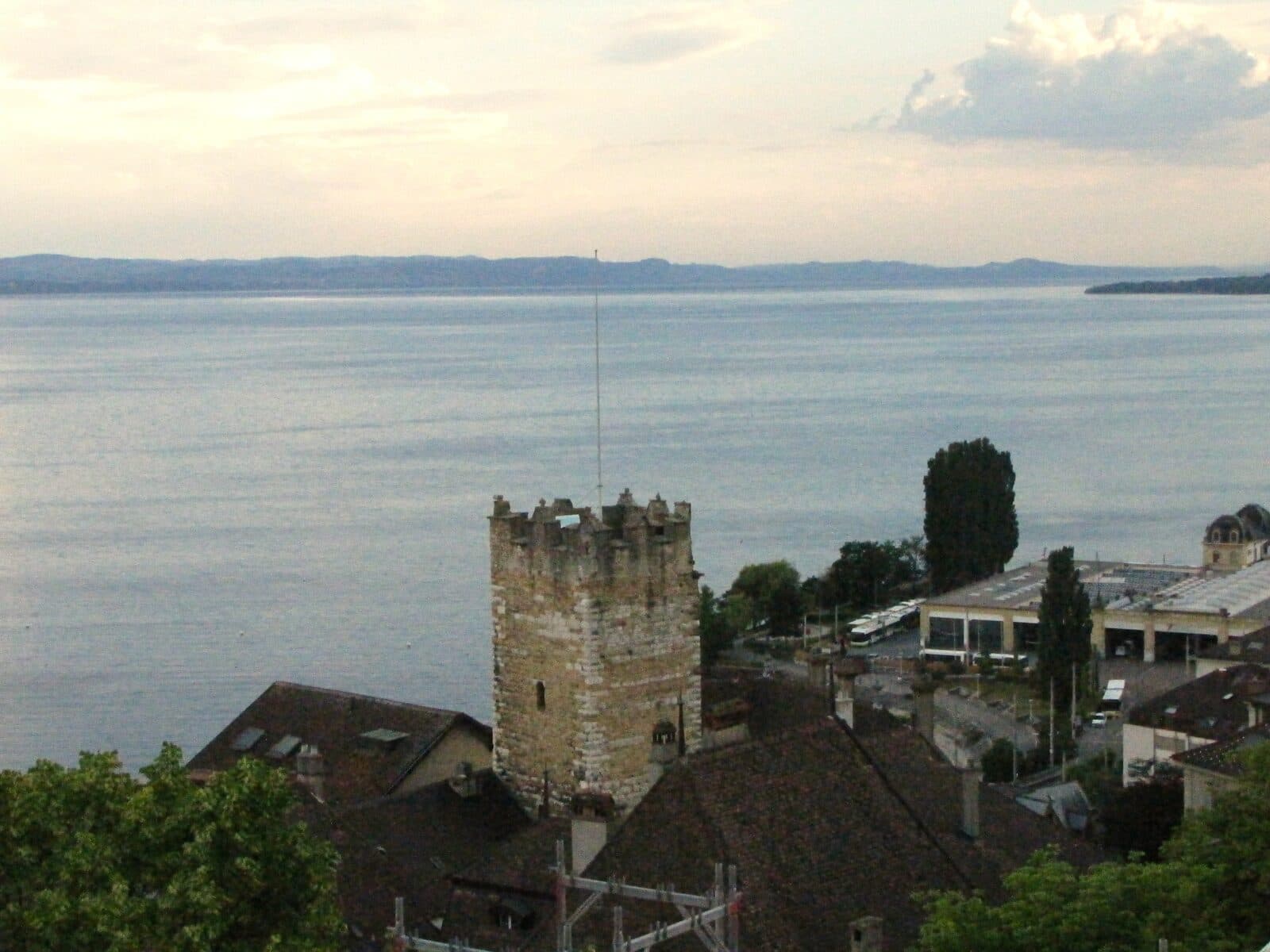
The Canton of Neuchâtel (in German: Kanton Neuenburg) is a French-speaking canton of the Romandie on the north-western shore of the lake of the same name. Its capital is the city of Neuchâtel.
The canton's resident population is in the low six-figure range; the share of persons without Swiss citizenship corresponds, according to the surveys of the Federal Statistical Office (FSO), to roughly one quarter and thus approximately to the Swiss average. The respective current population and foreign-national figures are to be obtained from the FSO or the cantonal statistical office; this deep-dive deliberately refrains from reproducing precise figures, which quickly become outdated.
Neuchâtel is strongly shaped economically by the watchmaking industry, micro-technology and the Université de Neuchâtel; the towns of La Chaux-de-Fonds and Le Locle are inscribed on the UNESCO World Heritage List under the designation Urbanisme horloger. These descriptive contextual details are expanded in Section 10. They are purely descriptive and do not constitute a recommendation to establish residence in this canton for economic reasons.
The competent cantonal authority for all residence-law procedures is the Service des migrations du canton de Neuchâtel (SMIG).
Service des migrations (SMIG) — Canton of Neuchâtel Official page (authoritative for address, contact, counter hours, fees and online procedures):
www.ne.ch/smigSEM directory of cantonal migration authorities:www.sem.admin.chThe street address, telephone, e-mail address, counter hours as well as the scope of procedures that can be handled digitally are to be obtained from the official SMIG page; they are not printed here in order to rule out any erroneous information.
2. Legal bases — federal law and cantonal implementing law
2.1 Applicable federal law
In migration law the Canton of Neuchâtel applies — like all cantons — primarily federal law. Of particular relevance are the Federal Act on Foreign Nationals and Integration (FNIA, SR 142.20), the Ordinance on Admission, Residence and Gainful Employment (OASA, SR 142.201), the Agreement on the Free Movement of Persons (AFMP, SR 0.142.112.681) together with the Ordinance on the Introduction of the Free Movement of Persons (OFMP, SR 142.203), the Asylum Act (AsylA, SR 142.31) as well as — for naturalisation — the Swiss Citizenship Act (SCA, SR 141.0) and the Swiss Citizenship Ordinance (SCO, SR 141.01), which is to be distinguished from it as a separate enactment. For the legal bases see the FNIA and OASA terminology glossary, the AFMP and OFMP glossary and the glossary on the Asylum Act.
Relevant provisions, given concrete form in the following sections, include, among others: admission for gainful employment (Art. 18 FNIA), admission for education and further training (Art. 27 FNIA), the hardship case (Art. 30 para. 1 let. b FNIA in conjunction with Art. 31 OASA), the residence permit and its renewal (Art. 33 FNIA), the settlement permit and its early grant (Art. 34 para. 2 FNIA and Art. 34 para. 4 FNIA), the change of canton (Art. 37 FNIA), family reunification (Art. 42–47 FNIA in conjunction with Art. 73 OASA), the entitlements following dissolution of the marriage (Art. 50 FNIA), the integration criteria (Art. 58a FNIA) and the promotion of integration (Art. 58b FNIA), the grounds for revocation and expiry (Art. 62 FNIA and Art. 63 FNIA) as well as the SEM approval procedure (Art. 99 FNIA).
2.2 Cantonal implementing law
At cantonal level, the cantonal implementing law on the FNIA applies (the Neuchâtel introductory and enforcement law on foreign-national and integration law), supplemented by the cantonal citizenship act as well as the cantonal act on administrative-law procedure and jurisdiction (which governs the appeal channels against rulings of the SMIG). The precise enactments and their respective current versions are deliberately not reproduced here with their number; they are to be obtained from the systematic collection of Neuchâtel legislation and checked against the consolidated status set out there before any use.
3. Competent authority — contact and accessibility
The Service des migrations (SMIG) is the cantonal migration authority of Neuchâtel. The organisational assignment of the service to a directorate or a département of the cantonal government may change in the course of administrative reorganisations; the respective current assignment as well as all contact and accessibility details are to be obtained from the official SMIG page.
The relevant key points are summarised in the authority box in Section 1; they are not repeated here in order to avoid discrepancies between two places. For the street address, telephone, e-mail address, counter and telephone hours, public-transport connection as well as the scope of procedures that can be handled fully digitally, the official source www.ne.ch/smig alone is authoritative.
The procedural language of the SMIG is French. Applications, enclosures and correspondence are in principle to be submitted in French; foreign-language documents are, according to general administrative practice, as a rule to be provided with a certified French translation. The specific formal requirements — for example regarding certification, apostille or admissible submission channels — follow from the SMIG's requirements in the individual case.
4. Procedure duration — cantonal benchmarks
The durations below are non-binding benchmarks and may deviate considerably depending on the state of the file, the completeness of the documents submitted, the authority's workload and the complexity of the individual case. They are based on a descriptive baseline figure — a cantonal processing benchmark of about six weeks for general processing — and are not guaranteed processing deadlines. Publicly published service-level commitments are not consistently available; the respective information from the SMIG in the individual case is authoritative.
| Procedure | Benchmark duration (descriptive) |
|---|---|
| Baseline benchmark (general processing) | about 6 weeks |
| B initial application (employment / family reunification) | tends to be longer than the baseline |
| B renewal | tends to be shorter than the baseline |
| C application (ordinary / early) | within general processing; variable depending on the depth of examination |
| Family reunification (third country) | tends to be longer; dependent on supporting documents and SEM approval |
Important reservation: the SEM approval of cantonal preliminary decisions (Art. 99 FNIA) is not included in the benchmarks stated above and may take additional weeks to months. Likewise, the submission of language certificates or foreign criminal-record extracts may effectively suspend the procedure until the supporting documents are available. The respective current processing status and any published benchmarks are to be obtained from www.ne.ch/smig.
5. Proof of language proficiency
The relevant integration language in the Canton of Neuchâtel is French. German proficiency — even at a high level — does not in principle replace the proof of French in the Neuchâtel procedure, since the language requirement is oriented to the official language spoken at the place of residence.
- Family reunification from a third country: in the relevant constellations, proof of French at level A1 oral under the Common European Framework of Reference for Languages (CEFR) is required, or proof of registration for a corresponding language-promotion offer (Art. 58a FNIA and Art. 58b FNIA in conjunction with Art. 73 OASA et seq.).
- Early grant of the C settlement permit after five instead of ten years (Art. 34 para. 4 FNIA in conjunction with Art. 60a OASA and Art. 77d OASA): a level of B1 oral and A2 written in French is required. This heightened language requirement is tied to successful integration; whether and in what form it also applies to EU/EFTA nationals in the individual case is assessed by the SMIG in accordance with the directives in force at the time.
- Recognised proofs: the Swiss fide certificate in French as well as the language diplomas recognised under federal law named in Art. 77d OASA. Among the French diplomas accepted in practice is in particular the DELF; the exhaustive list of recognised proofs is governed by Art. 77d OASA and the supplementary requirements of the SMIG.
The exact levels, recognised diplomas and any exceptions follow from Art. 77d OASA, the fide requirements and the information from the SMIG in the individual case.
6. Standard permit practice B / L / C
The Canton of Neuchâtel applies the standard federal-law practice under the FNIA/OASA and the SEM directives. The key points below are the general federal-law requirements, not a Neuchâtel special practice:
- B residence permit: granted to EU/EFTA nationals on the basis of the AFMP (SR 0.142.112.681) and the OFMP (SR 142.203); to third-country nationals in accordance with admission for gainful employment (Art. 18 FNIA), subject to the labour-market requirements, the quota logic as well as SEM approval (Art. 99 FNIA). See the B residence permit.
- L short-term permit: for fixed-term employment relationships as well as for education and further training (Art. 27 FNIA), in particular for students and researchers of the Université de Neuchâtel. See the L short-term permit.
- C settlement permit: ordinary after ten years (Art. 34 para. 2 FNIA); early after five years in the case of successful integration (Art. 34 para. 4 FNIA in conjunction with Art. 60a OASA), subject to the heightened language requirements stated in Section 5. See the C settlement permit.
Descriptive note: the watchmaking and micro-technology industry is an employment focus of the canton; in this environment constellations involving qualified specialists and technicians regularly arise. This classification is purely descriptive and establishes no strategy for the filing of an application and no statement on the prospects of success of a request.
Anti-scope: SwissImmigrationPro gives no pointers as to "favourable" times to file an application, as to individual caseworkers, or as to strategies for circumventing the labour-market requirements or the quota logic. The grant, renewal or early grant of a permit is a procedure governed by federal law with clear requirements; the case-by-case assessment is incumbent on the cantonal authority and — in the event of a dispute — on the legal profession.
7. Naturalisation
Naturalisation follows a three-tier procedure: federal (authorisation of the Confederation under the Swiss Citizenship Act, SCA, SR 141.0, and the Swiss Citizenship Ordinance, SCO, SR 141.01), cantonal (citizenship of the Canton of Neuchâtel under the cantonal citizenship act; the cantonal systematic collection of legislation is authoritative) and communal (citizenship of the municipality of residence). All three tiers must be authorised cumulatively.
- Substantive requirements under the SCA: ordinary naturalisation presupposes the requirements under Art. 9 SCA (SR 141.0) (among others a minimum residence duration and possession of the settlement permit), Art. 11 SCA describes suitability (integration, familiarity with the way of life, no endangerment of security) and Art. 12 SCA gives concrete form to the integration criteria. The language proficiency required for naturalisation is not regulated in the act but in the ordinance: Art. 6 SCO (SR 141.01) requires oral proficiency at level B1 and written proficiency at level A2 in a national language — in Neuchâtel, French. The act (SCA, SR 141.0) and the ordinance (SCO, SR 141.01) are to be read as separate enactments in this respect. See the glossary on the Swiss Citizenship Act 2018.
- Residence duration: the federal-law minimum residence duration is governed by Art. 9 SCA. In addition there are cantonal and communal residence requirements, which the Canton of Neuchâtel sets out in its citizenship act; the precise cantonal and communal periods are to be obtained from the cantonal systematic collection of legislation or from the municipality of residence, since they may change and vary at the communal level.
For the in-depth legal account of the naturalisation procedure see the glossary on the Swiss Citizenship Act 2018 and the naturalisation in Switzerland.
Anti-scope: SwissImmigrationPro gives no municipality-shopping recommendation — that is, no recommendation to relocate one's residence to a municipality with a supposedly "simpler" or "faster" naturalisation practice. Communal naturalisation practice varies; its assessment in the individual case as well as the support of a naturalisation procedure are not part of SIP's scope of services.
8. Asylum in the canton
Asylum procedures are conducted at federal level by the State Secretariat for Migration (SEM). In accordance with the SEM's distribution key (Art. 27 AsylA, SR 142.31), the Canton of Neuchâtel is one of the host cantons for persons in the extended asylum procedure.
- Asylum region and federal asylum centre (FAC): Neuchâtel belongs to one of the Confederation's six asylum regions. The exact assignment of the asylum region and the local FAC structure are to be obtained from
www.sem.admin.ch, since the locations and competences may change. - Legal advice and return counselling: in the asylum procedure there is an entitlement to free advice and legal representation; the legal-advice and provider organisation mandated by the SEM for this purpose for the respective asylum region follows from Art. 102f AsylA. The currently mandated organisation is to be ascertained via
www.sem.admin.chas well as via the Swiss Refugee Council (OSAR).
For the in-depth account of asylum law — N procedure, F provisional admission, S protection status — see the glossary on the Asylum Act as well as the N residence permit during the asylum procedure, the provisional admission (F permit) and the S protection status.
9. Taxes and withholding tax — migration-law context
Third-country nationals as well as EU/EFTA nationals without a settlement permit who hold a B or L permit are as a rule subject, for their employment income, to withholding tax (impôt à la source). The withholding taxation of employment income is a cantonally enforced tax, levied within the framework of the federal-law tax harmonisation and cantonal tax law; the applicable tariffs and modalities follow from the law of the Canton of Neuchâtel and the practice of the cantonal tax administration.
If the annual gross employment income exceeds a set threshold — under the regulation applicable Switzerland-wide, CHF 120,000 —, a subsequent ordinary assessment (SOA) is carried out ex officio; below this threshold the withholding tax is in principle levied in a discharging manner, whereby a SOA may be requested on application. The precise configuration — in particular the threshold, the application deadlines and the cantonal tariffs — is to be clarified with the cantonal tax administration of Neuchâtel.
The migration-law significance of the tax situation is limited and indirect: tax debts or debt-enforcement proceedings do not by themselves lead to the revocation or non-renewal of a permit. They may, however, play a role within the framework of the integration assessment (Art. 58a FNIA), since respect for public safety and order as well as the economic circumstances are among the integration criteria. The grounds for revocation under Art. 62 FNIA and Art. 63 FNIA, by contrast, are tied to security and order grounds, not to mere debts.
Descriptive note: the cantonal and communal tax burden of Neuchâtel is classified, in the present information, as rather above average. This classification is purely descriptive and is to be verified with the cantonal tax administration; it is no reason to choose or avoid the canton and constitutes no tax assessment.
Anti-scope: SwissImmigrationPro is not tax advice. Questions on withholding tax, on the SOA, on double-taxation agreements or on international taxation are to be answered by a qualified tax advisor or by the cantonal tax administration of Neuchâtel; its current contact details are available via
www.ne.ch.
10. Economy and largest municipalities
The following details are purely descriptive; they serve as context and constitute neither a recommendation nor an evaluation. For current numerical values, reference is to be made to the Federal Statistical Office (FSO) or the cantonal statistical office.
Neuchâtel is a French-speaking canton known for the watchmaking industry, the absinthe tradition and its university city on the lake. In constitutional-historical terms, Neuchâtel is known for granting settled foreign nationals, under certain conditions, political participation rights at the communal level. This classification is historical-descriptive and contains no evaluation of the cantonal migration practice.
Descriptive key figures:
- Foreign-national share: roughly one quarter of the resident population (order of magnitude; current value via the FSO)
- Rent level: moderate in the Romandie comparison; specific benchmark rents are to be obtained from the relevant rent-price surveys
- Tax burden (qualitative): rather above average
Largest municipalities (descriptive): Neuchâtel (capital), La Chaux-de-Fonds, Le Locle and Val-de-Ruz. La Chaux-de-Fonds and Le Locle together form the UNESCO World Heritage of watchmaking town planning (Urbanisme horloger).
11. Anti-scope declaration for the Canton of Neuchâtel
For reasons of the professional rules of the legal profession (Art. 12 of the Federal Act on the Free Movement of Lawyers, LLCA, SR 935.61), of clarity and of credibility towards users and the supervisory authorities, SwissImmigrationPro holds the following topics for Neuchâtel expressly outside its scope of services:
- No canton-shopping strategy: SIP gives no recommendation as to whether a procedure could be conducted "more advantageously" in Neuchâtel than in another canton. Competence follows residence; a strategic relocation of residence with a foreign-national-law background may be abusive.
- No comparative leniency assessment: SIP does not assess whether Neuchâtel is "simpler" or "stricter" than another canton.
- No individual-case strategy: SIP prepares no hardship-case argumentation (Art. 30 FNIA / Art. 31 OASA), no family-reunification strategy and no appeal strategy.
- No appeal templates and deadline calculators: the choice of legal remedy, the argumentation, the selection of evidence and timely submission belong to legal practice.
- No tax advice and no tax optimisation.
- No positioning or location advice and no lawyer recommendation outside the structured and transparent procedures provided for that purpose.
12. Cross-References
- FNIA and OASA terminology glossary — federal-law bases FNIA/OASA that the SMIG applies
- AFMP and OFMP glossary — Agreement on the Free Movement of Persons (AFMP) and OFMP for EU/EFTA constellations
- glossary on the Asylum Act — asylum law, FAC asylum region, legal-advice and representation mandate (Art. 102f AsylA)
- glossary on the Swiss Citizenship Act 2018 — naturalisation procedure, language and integration requirements (SCA/SCO)
- Romandie standard cluster — Romandie cluster overview (sibling cluster for the standard cantons of the Romandie)
- B residence permit
- C settlement permit
- L short-term permits
- G cross-border permit
- naturalisation paths
- N asylum procedure
- F provisional admission
- S protection status
- family reunification with Swiss citizens
- integration agreement (Art. 58a FNIA)
- change of canton (Art. 37 FNIA)
- dissolution of the marriage (Art. 50 FNIA)