
SwissImmigrationPro (SIP) ist ein reines Informationsangebot im Sinne der Abgrenzung zum Anwaltsmonopol: SIP erklärt das anwendbare Recht, vertritt jedoch niemanden und erteilt keine individuelle Rechtsberatung. Die Grenze zur monopolisierten Rechtsdienstleistung ergibt sich aus dem Bundesgesetz über die Freizügigkeit der Anwältinnen und Anwälte (Anwaltsgesetz, BGFA, SR 935.61). Wo eine einzelfallbezogene Strategie, eine Härtefall-Argumentation, eine Beschwerdeführung oder eine Steueroptimierung verlangt wäre, verweist dieses Dossier ausdrücklich auf die im kantonalen Anwaltsregister eingetragene Anwaltschaft.
1. Überblick — der Kanton Solothurn im migrationsrechtlichen Kontext
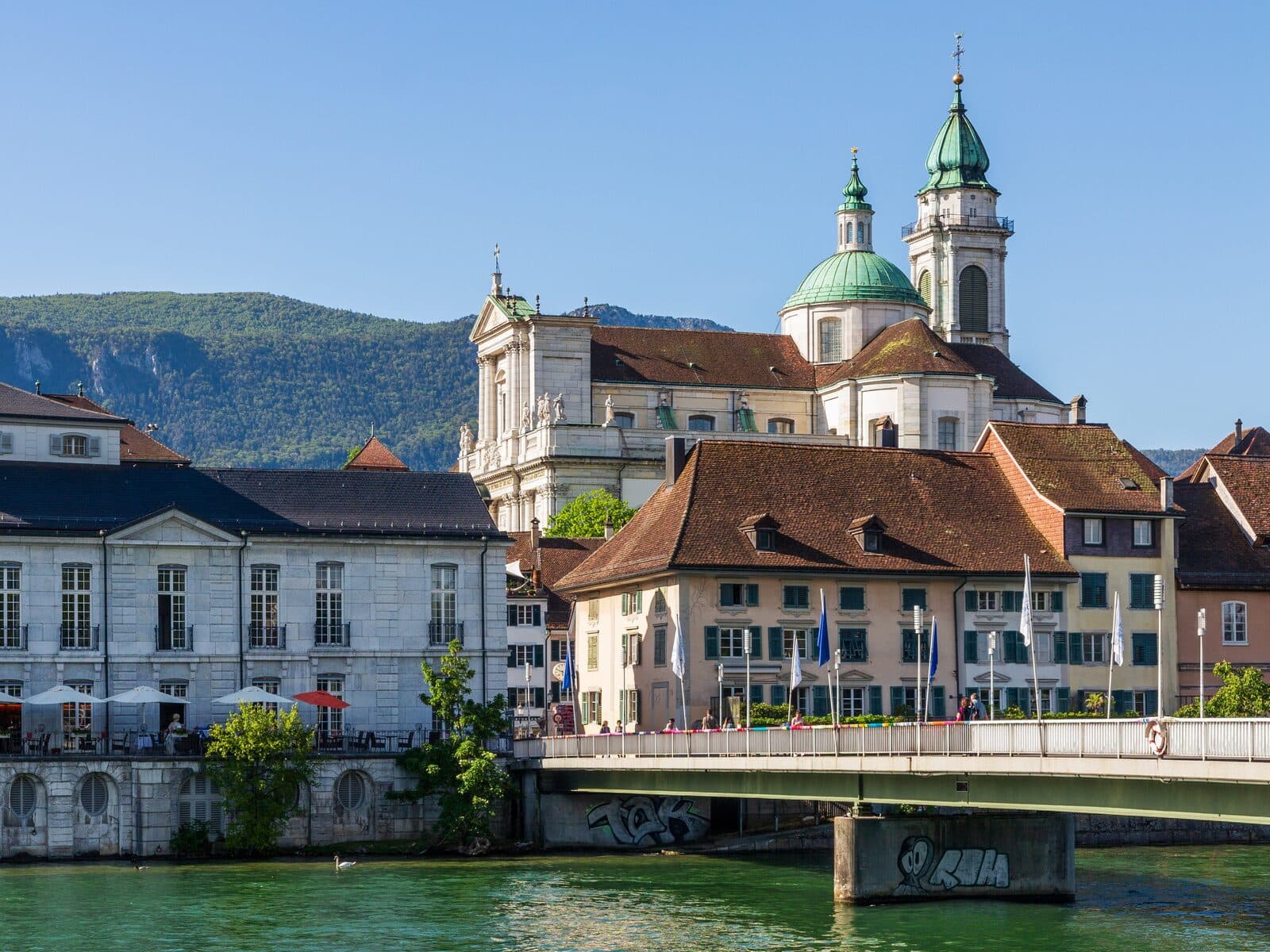
Der Kanton Solothurn liegt in der Nordwestschweiz am Südfuss des Juras und ist gut an die Wirtschaftsräume Basel und Bern angebunden. Hauptort ist die Stadt Solothurn, bekannt für ihre barocke Altstadt. Die Verfahrenssprache ist Deutsch. Die Wohnbevölkerung liegt grössenordnungsmässig im niedrigen Bereich von rund einer Viertelmillion Personen; der Anteil der ausländischen Wohnbevölkerung bewegt sich erfahrungsgemäss um die Grössenordnung rund ein Viertel. Die exakten, jahresaktuellen Bevölkerungs-, Ausländeranteils- und Flächenwerte sind über das Bundesamt für Statistik (BFS) sowie die kantonale Statistikstelle des Kantons Solothurn zu beziehen; dieses Dossier behauptet keine punktgenaue Zahl.
Die Wirtschaftsstruktur ist von der Uhren- und Präzisionsindustrie sowie von der Pharma- und Medizinaltechnik geprägt; die Lage zwischen Basel und Bern bringt zusätzlich eine breite Pendler- und Dienstleistungswirtschaft mit sich. Diese Struktur erklärt eine spürbare Migrationsbevölkerung aus EU/EFTA-Staaten (Erwerbstätigkeit nach FZA) und aus Drittstaaten (Familiennachzug, qualifizierte Erwerbstätigkeit nach Art. 18 AIG und folgende des Ausländer- und Integrationsgesetzes (AIG, SR 142.20)). Die nachstehenden wirtschaftlichen und demografischen Angaben sind deskriptiv, dienen ausschliesslich der Einordnung und sind ausdrücklich kein Grund, den Kanton Solothurn aufenthalts- oder steuerrechtlich zu wählen.
Die für sämtliche aufenthaltsrechtlichen Verfahren zuständige kantonale Behörde ist das Migrationsamt des Kantons Solothurn, angesiedelt im Departement des Innern. Die jeweils gültigen Kontaktdaten, Schalter- und Telefonzeiten sowie die genaue Verkehrsanbindung sind verbindlich nur auf der offiziellen Seite des Amtes zu beziehen (siehe Abschnitt 3).
1.1 Migrationsbevölkerung — qualitative Einordnung
Die Solothurner Migrationsstruktur lässt sich qualitativ wie folgt umreissen (die exakten Bestandeszahlen sind über BFS und die kantonale Statistikstelle zu beziehen):
- EU/EFTA-Staatsangehörige gemäss FZA, namentlich aus Deutschland, Italien, Portugal und weiteren EU-Staaten — getragen von Erwerbstätigkeit in der Industrie und im Dienstleistungssektor.
- Drittstaatsangehörige mit Communities aus den jeweils aktuellen Herkunftsstaaten des Familiennachzugs und des Asylbereichs.
- B-Bewilligungen als zahlenmässig häufigste Kategorie der ständigen Wohnbevölkerung; C-Bewilligungen bei langjährig Ansässigen; L-Bewilligungen für befristete Erwerbstätigkeiten und Studierende.
- G-Bewilligungen (Grenzgänger:innen) im Pendelverkehr in die umliegenden Wirtschaftsräume; F-, N- und S-Bewilligungen im Asylkontext.
Die exakten Solothurner Bewilligungs- und Bevölkerungsstatistiken sind über das Bundesamt für Statistik (BFS) bzw. die Statistikstelle des Kantons Solothurn zu beziehen; dieses Dossier nennt bewusst keine punktgenauen Bestandeszahlen.
2. Rechtliche Grundlagen — Bundesrecht und kantonales Ausführungsrecht
2.1 Anwendbares Bundesrecht
Im Migrationsrecht wendet der Kanton Solothurn — wie alle Kantone — vorrangig Bundesrecht an: das Ausländer- und Integrationsgesetz (AIG, SR 142.20), die Verordnung über Zulassung, Aufenthalt und Erwerbstätigkeit (VZAE, SR 142.201), das Abkommen über die Freizügigkeit (FZA, SR 0.142.112.681) samt der zugehörigen Verordnung über die Einführung des freien Personenverkehrs (VEP), das Asylgesetz (AsylG, SR 142.31) sowie die einschlägige Praxis und Weisungslage des Staatssekretariats für Migration (SEM). Zentrale Bestimmungen des AIG sind unter anderem: Zulassung zur Erwerbstätigkeit (Art. 18 AIG), Aus- und Weiterbildung (Art. 27 AIG), Härtefall (Art. 30 Abs. 1 lit. b AIG), Aufenthaltsbewilligung (Art. 33 AIG), Niederlassungsbewilligung ordentlich (Art. 34 Abs. 2 AIG) und frühzeitig (Art. 34 Abs. 4 AIG), Kantonswechsel (Art. 37 AIG), Familiennachzug (Art. 42–47 AIG), Auflösung der Familiengemeinschaft (Art. 50 AIG), Integrationskriterien und Integrationsvereinbarung (Art. 58a AIG bzw. Art. 58b AIG), Widerrufsgründe (Art. 62 AIG bzw. Art. 63 AIG) sowie das Zustimmungsverfahren des SEM (Art. 99 AIG).
Für die rechtliche Grundlage siehe das AIG- und VZAE-Glossar, das FZA/VFP-Glossar und das Asylgesetz-Glossar.
2.2 Kantonales Ausführungsrecht
Auf kantonaler Ebene relevant sind insbesondere:
- Das kantonale Ausführungsrecht zum AIG und zum AsylG des Kantons Solothurn (Einführungs- bzw. Vollzugserlass zum Bundesmigrationsrecht). Die formelle Bezeichnung und die Nummerierung in der kantonalen Gesetzessammlung können sich ändern und sind über die Bereinigte Gesetzessammlung des Kantons Solothurn (BGS) zu verifizieren.
- Das kantonale Bürgerrechtsgesetz des Kantons Solothurn: kantonale Konkretisierung des Bürgerrechtsverfahrens nach dem Bürgerrechtsgesetz (BüG, SR 141.0) (siehe Abschnitt 7). Bezeichnung und Nummer sind über die kantonale Gesetzessammlung zu verifizieren.
- Das kantonale Verwaltungsrechtspflegerecht: Verfahrensrecht für Verfahren vor den kantonalen Verwaltungsbehörden und dem kantonalen Verwaltungsgericht. Bezeichnung und Nummer sind über die kantonale Gesetzessammlung zu verifizieren.
Eine konsolidierte Übersicht der kantonalen Erlasse mit Migrationsbezug ist über die kantonale Gesetzessammlung des Kantons Solothurn zu beziehen. Eine kantonale Statutennummer (BGS o.ä.) wird hier bewusst nicht behauptet; sie ist über die kantonale Gesetzessammlung zu beziehen.
3. Zuständige Behörde — Kontakt und Erreichbarkeit
Zuständige Behörde für Bewilligungen, Verlängerungen, Statuswechsel, Familiennachzug, Niederlassung und Bürgerrechtskoordination ist das Migrationsamt des Kantons Solothurn.
Migrationsamt des Kantons Solothurn Träger: Departement des Innern des Kantons Solothurn Offizielle Seite (verbindliche Kontaktdaten, Adresse, Telefon, E-Mail, Schalter- und Telefonzeiten, Verkehrsanbindung): https://www.so.ch/verwaltung/departement-des-innern/migrationsamt/ Kantonsportal: https://www.so.ch
Adresse, Telefonnummer, E-Mail-Adresse, Öffnungszeiten und die Verkehrsanbindung des Amtes sind volatil und werden hier bewusst nicht als feste Werte abgedruckt; verbindlich sind ausschliesslich die Angaben auf der oben verlinkten offiziellen Seite.
Die Wohnsitzgemeinde (Einwohnerdienste / Einwohneramt) ist die kommunale Anmelde-, Wohnsitz- und Erstprüfungsstelle und arbeitet mit dem Migrationsamt zusammen. Die kommunalen Kontaktangaben sind je Gemeinde unterschiedlich und über die jeweilige Gemeindewebsite zu beziehen.
Ob das Migrationsamt ein elektronisches Antrags- oder Selfservice-Portal betreibt und welche Verfahrensschritte online abgewickelt werden können, ist über die offizielle Seite des Amtes zu prüfen.
4. Verfahrensdauer — kantonale Richtwerte
Die nachstehenden Dauern sind Richtwerte und können je nach Aktenlage, Vollständigkeit der Unterlagen, Auslastung des Amtes und Komplexität des Falles erheblich variieren. Als grobe Orientierung gilt eine Basis-Bearbeitungszeit in der Grössenordnung von rund sechs Wochen (B-Erstanträge tendenziell länger, B-Verlängerungen tendenziell kürzer). Die Tabelle leitet hieraus hedgende Bandbreiten ab und ersetzt keine offizielle Zusicherung; massgeblich sind allein die aktuellen Angaben des Migrationsamts.
| Verfahren | Richtwert Dauer (nicht amtlich zugesichert) |
|---|---|
| B-Verlängerung | ca. 3–6 Wochen |
| B-Erstantrag (Familiennachzug, Erwerbsantrag) | ca. 6–12 Wochen |
| L-Kurzaufenthalt | ca. 4–8 Wochen |
| C-Antrag ordentlich (nach 10 Jahren, Art. 34 Abs. 2 AIG) | ca. 8–14 Wochen |
| C-Antrag frühzeitig (Art. 34 Abs. 4 AIG, nach 5 Jahren) | ca. 8–16 Wochen |
| Familiennachzug Drittstaat (Art. 42–47 AIG) | ca. 8–16 Wochen |
Diese Richtwerte sind nicht amtlich bestätigt. Die einzig massgeblichen Dauern sind die offiziellen Angaben des Migrationsamts.
Hinweis: Wo ein kantonaler Vorentscheid der Zustimmung des SEM bedarf (Art. 99 AIG i.V.m. Art. 85 VZAE bzw. Art. 86 VZAE), ist die hierfür benötigte Zeit in den obigen Richtwerten nicht enthalten und kann zusätzliche Wochen bis Monate beanspruchen. Unvollständige Gesuche lösen eine Nachforderung aus und verlängern das Verfahren faktisch bis zur Nachreichung.
5. Sprachnachweis
Verfahrens- und Nachweissprache im Kanton Solothurn ist Deutsch (Hochdeutsch / Schriftdeutsch; der lokale Dialekt ist nicht prüfungsrelevant). Die nachstehenden Niveaus beziehen sich auf den Gemeinsamen Europäischen Referenzrahmen für Sprachen (GER).
- Familiennachzug aus einem Drittstaat: Für die Erteilung einer B-Bewilligung im Familiennachzug verlangt die Praxis in der Regel einen Sprachnachweis auf Niveau A1 mündlich in Deutsch bzw. den Nachweis einer Anmeldung zu einem entsprechenden Sprachförderangebot (Art. 43 AIG bzw. Art. 44 AIG i.V.m. Art. 73a VZAE der Verordnung über Zulassung, Aufenthalt und Erwerbstätigkeit (VZAE, SR 142.201)).
- Frühzeitige Niederlassungsbewilligung C nach fünf Jahren (Art. 34 Abs. 4 AIG i.V.m. Art. 60a VZAE und Art. 77d VZAE): In der Regel verlangt werden Sprachkompetenzen von B1 mündlich und A2 schriftlich in Deutsch. Die frühzeitige Erteilung ist eine Ermessensentscheidung der kantonalen Behörde und kein durchsetzbarer Anspruch; die konkreten Anforderungen können variieren.
- Anerkannte Nachweise: Das fide-Zertifikat in Deutsch wird als amtlich anerkannter Nachweis akzeptiert; daneben gelten die in Art. 77d VZAE genannten Diplome und Bescheinigungen (z.B. telc, Goethe, ÖSD auf entsprechendem Niveau).
Die exakten Niveauanforderungen und die Liste anerkannter Zertifikate der Solothurner Praxis sind über das Migrationsamt zu bestätigen.
6. Standard-Bewilligungspraxis B / L / C
Der Kanton Solothurn vollzieht die bundesrechtliche Standardpraxis nach AIG, VZAE und den SEM-Weisungen. Die kantonale Anwendung folgt dem bundesrechtlichen Rahmen; SIP nimmt keine Bewertung vor, ob diese Anwendung "grosszügiger" oder "strenger" sei als in anderen Kantonen.
- B (Aufenthaltsbewilligung, Art. 33 AIG): für Daueraufenthalte mit Erwerbstätigkeit (EU/EFTA gemäss FZA; Drittstaat gemäss Art. 18 AIG und folgende), Familiennachzug (Art. 42–47 AIG), Aus- und Weiterbildung (Art. 27 AIG). Drittstaat-Zulassungen unterliegen den Kontingenten und den qualitativen Voraussetzungen (Art. 18–24 AIG i.V.m. Art. 31 VZAE) und sind teils zustimmungspflichtig (Art. 99 AIG).
- L (Kurzaufenthaltsbewilligung): für zeitlich befristete Aufenthalte und Erwerbstätigkeiten (EU/EFTA und Drittstaat). Subkategorien siehe die L-Kurzaufenthaltsbewilligung.
- C (Niederlassungsbewilligung): ordentlich nach zehn Jahren (Art. 34 Abs. 2 AIG); frühzeitig nach fünf Jahren bei erfolgreicher Integration und erhöhten Sprachkompetenzen (Art. 34 Abs. 4 AIG i.V.m. Art. 60a VZAE) — die frühzeitige Erteilung liegt im Ermessen der kantonalen Behörde und ist kein durchsetzbarer Anspruch.
Der Vollzug folgt dem bundesrechtlichen Rahmen und den SEM-Weisungen; die Integrationsförderung richtet sich nach den eidgenössischen Standardrichtlinien. SIP trifft keine Aussage über die Erfolgsaussichten eines konkreten Gesuchs und nimmt keine vergleichende Bewertung der kantonalen Praxis vor.
Anti-Scope: SwissImmigrationPro stellt keine individuelle Bewilligungsstrategie zur Verfügung und bewertet nicht, ob ein Gesuch im Kanton Solothurn "leichter" durchgehe als anderswo. Die einzelfallbezogene Beurteilung der Zulassungsvoraussetzungen gehört zur Anwaltspraxis bzw. zur Auskunft des Migrationsamts.
7. Einbürgerung
Die Einbürgerung folgt dem dreistufigen Verfahren: eidgenössisch (Einbürgerungsbewilligung des Bundes), kantonal (Bürgerrecht des Kantons Solothurn nach kantonalem Bürgerrechtsgesetz) und kommunal (Bürgerrecht der Wohnsitzgemeinde). Alle drei Ebenen müssen kumulativ erfüllt sein.
Auf Bundesebene sind zwei getrennte Erlasse massgebend. Die materiellen Voraussetzungen regelt das Bürgerrechtsgesetz (BüG, SR 141.0) (in Kraft seit 1.1.2018): zehn Jahre Aufenthalt in der Schweiz (Art. 9 BüG), Niederlassungsbewilligung C als Voraussetzung (Art. 9 Abs. 1 lit. a BüG), erfolgreiche Integration (Art. 11 BüG bzw. Art. 12 BüG) sowie keine Gefährdung der inneren oder äusseren Sicherheit der Schweiz. Den konkreten Sprachnachweis regelt demgegenüber die Bürgerrechtsverordnung (BüV, SR 141.01) — ein eigenständiger Erlass, nicht Teil des BüG: verlangt wird in der Regel das Niveau B1 mündlich und A2 schriftlich in einer Landessprache (Art. 6 (SR 141.01) der Bürgerrechtsverordnung; im Kanton Solothurn: Deutsch). Für die vertiefte rechtliche Darstellung siehe das Glossar zum Bürgerrechtsgesetz 2018.
Auf kantonaler Ebene verlangt das kantonale Bürgerrechtsgesetz zusätzlich einen mehrjährigen Aufenthalt im Kanton sowie in der Wohngemeinde. Die genaue kantonale Wohnsitzdauer sowie Bezeichnung, Nummer und exakte Fristen des kantonalen Bürgerrechtsgesetzes sind über die kantonale Gesetzessammlung des Kantons Solothurn zu beziehen; dieses Dossier nennt bewusst keine punktgenaue kantonale Frist.
Auf kommunaler Ebene ist die Praxis je nach Wohngemeinde unterschiedlich (Aufenthaltserfordernis in der Gemeinde, allfällige kommunale Anhörung oder Einbürgerungsgespräch, Wissens- bzw. Integrationsnachweis). Die kommunalspezifischen Reglemente und die kommunale Anhörungspraxis sind pro Wohnsitzgemeinde über die jeweilige Gemeinde zu beziehen.
Anti-Scope: SwissImmigrationPro gibt keine Empfehlung ab, in welcher Solothurner Gemeinde eine Bewerbung "leichter" oder "schneller" sei. Eine solche Beratung wäre ein Beispiel für unzulässiges Anti-Gemeinde-Shopping; SIP erteilt hierzu keine Strategie.
8. Asyl im Kanton
Im beschleunigten Asylverfahren nach Art. 26b AsylG und folgende des Asylgesetzes (AsylG, SR 142.31) ist die Schweiz in Asylregionen mit je einem oder mehreren Bundesasylzentren (BAZ) des SEM gegliedert. Welcher Asylregion und welchem BAZ der Kanton Solothurn zugeordnet ist, ist über sem.admin.ch zu beziehen — die regionale Zuordnung und die Standorte können sich ändern.
Wird ein Asylgesuch in das erweiterte Verfahren überführt (Art. 26d AsylG), erfolgt die Zuteilung an einen Kanton nach dem Verteilschlüssel des SEM (Art. 27 AsylG). Während des erweiterten Verfahrens lebt die asylsuchende Person im zugeteilten Kanton, ist dort angemeldet und untersteht der kantonalen Asylkoordination.
Die Rechtsberatung und -vertretung im Asylbereich wird über die nach Art. 102f AsylG mandatierten Stellen bzw. über die im Kanton tätige Rechtsberatungsstelle (RBS) / Trägerorganisation sichergestellt. Die aktuell mandatierte Trägerorganisation für den Kanton Solothurn ist über sem.admin.ch sowie über die Schweizerische Flüchtlingshilfe (SFH/OSAR) zu erfragen. Für die vertiefte Darstellung des Asylrechts siehe das Asylgesetz-Glossar.
9. Steuern und Quellensteuer — migrationsrechtlicher Kontext
Sowohl Drittstaat-B-Bewilligte als auch EU/EFTA-B-Bewilligte ohne Niederlassungsbewilligung unterliegen für ihr Erwerbseinkommen in der Regel der Quellensteuer (Steuerabzug an der Quelle durch die Arbeitgeberin). Die Quellenbesteuerung des Erwerbseinkommens ist eine kantonale Steuer: Sie wird durch das Steuerrecht des Kantons Solothurn erhoben, eingebettet in den bundesrechtlichen Harmonisierungsrahmen des Bundesgesetzes über die Harmonisierung der direkten Steuern der Kantone und Gemeinden (StHG, SR 642.14) sowie — für den Bundesanteil — des Bundesgesetzes über die direkte Bundessteuer (DBG, SR 642.11). Übersteigt das jährliche Brutto-Erwerbseinkommen den massgebenden Schwellenwert (üblicherweise CHF 120'000), erfolgt eine obligatorische nachträgliche ordentliche Veranlagung (NOV); bei tieferen Einkommen wirkt die Quellensteuer grundsätzlich abgeltend, wobei eine NOV auf Antrag möglich ist. Mit Eintritt in die Niederlassungsbewilligung C bzw. mit Heirat einer Schweizer Bürgerin oder eines Schweizer Bürgers endet die Quellensteuerpflicht für das Erwerbseinkommen und es greift die ordentliche Veranlagung.
Eine vergleichende Aussage über die Höhe der Solothurner Steuerbelastung trifft dieses Dossier bewusst nicht; eine solche Einordnung wäre weder migrationsrechtlich relevant noch ein zulässiger Grund, den Kanton zu wählen. Migrationsrechtlich ist die Steuersituation nur mittelbar von Bedeutung: Erhebliche, selbstverschuldete Schulden — auch Steuer- oder Quellensteuerschulden — können in die ausländerrechtliche Integrationsbeurteilung (Art. 58a AIG) einfliessen und sich dort indirekt auf eine Verlängerung oder Statusentscheidung auswirken. Die Widerrufsgründe nach Art. 62 AIG bzw. Art. 63 AIG knüpfen demgegenüber an Sicherheits- und Ordnungsgründe an; eine bestehende Verschuldung oder eine Betreibung allein löst keinen automatischen Widerruf aus.
Anti-Scope: SwissImmigrationPro ist keine Steuerberatung. Für Fragen zur Quellensteuer, zur NOV, zur Steuerstatus-Optimierung oder zu Doppelbesteuerungsfragen ist die Steuerverwaltung des Kantons Solothurn oder eine qualifizierte Steuerberatung zu konsultieren.
10. Wirtschaft und grösste Gemeinden
Die folgenden Angaben sind deskriptiv und dienen ausschliesslich der Einordnung, nicht der Standortwahl.
Der Kanton Solothurn liegt in der Nordwestschweiz entlang des Juras und ist gut an Basel und Bern angebunden. Prägend sind die Uhren- und Präzisionsindustrie sowie die Pharma- und Medizinaltechnik. Die Stadt Solothurn gilt als barockes Zentrum des Kantons. Aktuelle Miet-Benchmarks und der jahresaktuelle Ausländeranteil sind über das Bundesamt für Statistik (BFS) bzw. die kantonale Statistikstelle zu beziehen; dieses Dossier nennt bewusst keine punktgenauen Miet- oder Anteilswerte, um interne Widersprüche und veraltete Zahlen zu vermeiden.
Zu den grössten Gemeinden des Kantons zählen üblicherweise:
- Solothurn (Hauptort)
- Olten
- Grenchen
- Zuchwil
Die kommunale Reihenfolge nach Einwohnerzahl ist über die kantonale Statistikstelle zu beziehen. Die Integrationsförderung richtet sich nach den eidgenössischen Standardrichtlinien.
11. Anti-Scope-Erklärung für den Kanton Solothurn
SwissImmigrationPro erklärt das anwendbare Recht und stellt für den Kanton Solothurn ausdrücklich nicht zur Verfügung:
- Keine Kanton-Shopping-Beratung und keine vergleichende Milde-Bewertung ("leichter/strenger als Kanton X").
- Keine individuelle Fallstrategie — insbesondere keine Härtefall-Argumentation (Art. 30 Abs. 1 lit. b AIG), keine Familiennachzugs-Strategie und keine Beschwerdestrategie.
- Keine Beschwerde- oder Rechtsmittelvorlagen und keine fristberechnenden Hilfsmittel.
- Keine Steuerberatung oder Steueroptimierung.
- Keine Empfehlung zur Wahl von Wohnsitzgemeinde oder Kanton aus aufenthalts- oder steuerrechtlichen Gründen.
Diese Grenzen folgen aus dem Bundesgesetz über die Freizügigkeit der Anwältinnen und Anwälte (Anwaltsgesetz, BGFA, SR 935.61) und der SIP-Compliance-Verfassung. Für einzelfallbezogene Anliegen ist eine im kantonalen Anwaltsregister eingetragene Anwältin oder ein eingetragener Anwalt beizuziehen; für Auskünfte zum Verfahren ist das Migrationsamt des Kantons Solothurn zuständig.
12. Cross-References
- AIG- und VZAE-Glossar — AIG/VZAE-Grundlagen
- FZA/VFP-Glossar — FZA/VFP-Grundlagen
- Asylgesetz-Glossar — Asylrecht
- Glossar zum Bürgerrechtsgesetz 2018 — Bürgerrechtsverordnung 2018
- Deutschsprachiges Standard-Cluster — deutschsprachiges Schwester-Cluster (Überblick)
- Bewilligungen: B-Aufenthaltsbewilligung, C-Niederlassungsbewilligung, L-Kurzaufenthaltsbewilligung, G-Grenzgängerbewilligung, Einbürgerung (falls vorhanden)
- Lebenslagen: Familiennachzug durch eine Schweizer Staatsangehörige, Härtefall nach Art. 30 AIG, Scheidung und Aufenthaltsbewilligung, Sprachnachweis, Kantonswechsel nach Art. 37 AIG (falls vorhanden)